Dr. David R. Marples: Ukraine’s Survival Hinges on Defeating Russia as Global Focus Shifts
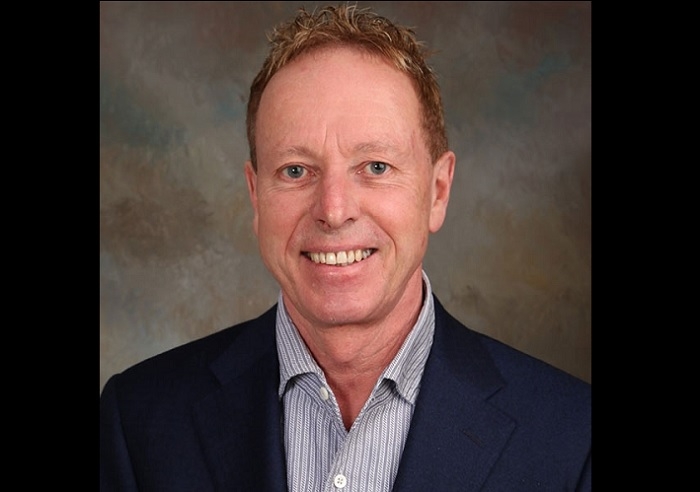
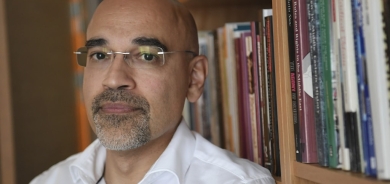
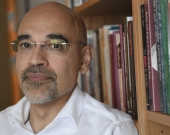
Dr. David R. Marples is a Distinguished University Professor of Russian and East European History at the University of Alberta. A leading expert on Belarus, Ukraine, and the former Soviet Union, he has authored over a dozen major books, including works on Chernobyl, Stalinism, and contemporary authoritarianism in Eastern Europe. He earned his PhD in Economic and Social History from the University of Sheffield.
Gulan: With the war in Ukraine appearing to reach a military stalemate and global attention shifting toward conflicts in Asia and the Middle East, do you believe the West is gradually losing focus on Ukraine? What are the risks of such fatigue for Kyiv and for Europe?
Dr. David R. Marples: Yes, there is some fatigue, mainly in central Europe (Hungary, Slovakia). But the neighboring regions of the European Union are very alert to the dangers of ignoring the Russian occupation of Ukraine. Poland is strengthening its defenses as well as fortifying its eastern border with Belarus. In the United States, Donald J. Trump has reduced the deadline for Russia to return to the bargaining table from 50 to 12 days, which suggests that he is anxious for an agreement to be reached. The UK, France, and Germany are all committed to the future of Ukraine, so I think the country will remain a focus for the immediate future.
Gulan: One Year After Navalny’s Death: Putin’s Grip and Russian Society
More than a year has passed since the death of Alexei Navalny in a Russian prison, yet the Kremlin has only tightened its grip. In your view, did Navalny’s death extinguish the last major source of organized dissent? Or do you see signs that Russian civil society is preparing for a long-term resistance under the surface?
Dr. David R. Marples: At present, there is no discernible sign of opposition inside the Russian Federation. That is not to say there is no dissent but rather that manifestations of such disaffection would result in a harsh response. In short, there is a general fear of repressions. The Russian leadership, however, requires certain conditions to be in place to succeed. These are a) economic stability; b) progress in the so-called Special Military Operation; c) the maintenance of a propaganda campaign that depicts NATO and the West as the main enemies of Russia and Ukraine as a coerced puppet regime.
Gulan: Iran's provision of drones, ballistic missile parts, and its role in constructing air defense systems inside Russia mark a deepening strategic bond. How significant is this alliance for the balance of power in Eurasia, and should NATO treat it as a long-term threat?
Dr. David R. Marples: The recent responses of Israel and the United States to the threat of Iran suggest that the Ayatollah’s regime is relatively weak. Keep in mind that Russia has worked for years on the development of a nuclear power facility in Iran and yet Moscow did not provide any response to the recent attacks by United States and Israel. Similarly, Russia made no attempt to keep Syria’s Bashar-al-Assad in power when the rebels approached Damascus. That suggests on the one hand that Russia has limited ability to operate as a global power, and second, that Iran is unable to defend itself against missile attacks. Therefore, I do not think it is a major threat to NATO.
Gulan: China has recently hosted peace summits on both the Ukraine conflict and Israel-Gaza war, presenting itself as a neutral broker. Do you see Beijing’s growing diplomatic involvement as genuine peacemaking, or part of a broader strategy to displace U.S.-led institutions?
Dr. David R. Marples: I am not convinced that one negates the other. China acts as a major power and a realistic rival to the United States. And I don’t see any major advantages for China in fomenting or prolonging wars in regions in which it has significant trading interests. That certainly applies to Russia-Ukraine and somewhat less so to Israel-Gaza. China seeks to challenge the United States in areas close to its borders and to present itself as a potential peacemaker.
Gulan: With U.S. presidential candidates openly questioning NATO commitments and foreign military aid, are we witnessing the mainstreaming of isolationism in American foreign policy? How might this impact Ukraine, the Baltics, and broader European security?
Dr. David R. Marples: As a historian, I see a cyclical phenomenon. After the First World War, the United States adopted a similar isolationist policy and withdrew from any activity in the League of Nations, which contributed to the rise of an expansionist Nazi Germany in the 1930s. Even after the Second World War broke out in September 1939, the USA remained neutral until a direct attack on its territory by Imperial Japan. But after 1945, the global order saw—putting it simplistically—the United States replace the British Empire as the main world power. Although one can criticize some of the policies it employed, there was a certain stability and the system endured for over 75 years. To maintain this stability, the European Union, Britain, Canada, Japan, and perhaps Australasia must unify efforts to replace the United States as the guarantors of current East European borders, either within or outside NATO. That will take time, since the USA is by some margin the world’s first military power. It will require an enormous commitment and strong will. But it is possible.
Gulan: Assuming a frozen conflict persists into 2026, how do you see Ukraine’s political and economic reconstruction evolving? Can Ukraine maintain its democratic trajectory and reform agenda under the shadow of continuous militarized borders?
Dr. David R. Marples: I am not convinced that it can. Martial law has already involved some restrictions that reduce the democratic trajectory: the rejection of a presidential election, the subjugation of the campaign against corruption to Ukrainian government control, a potential ban on the Ukrainian Orthodox Church, and others. Russia continues its campaign of destruction of Ukrainian cities and economic objects, as well as Russifying the regions it has occupied. Though the Russian invasion has failed to occupy much more of Ukraine since the initial incursion, Ukraine cannot eliminate this enormous threat to its future without aid. One could say also that without inflicting a convincing defeat to Russia or the removal of the current Moscow leadership, that threat will never recede. Thus, the reform agenda and democratic future of Ukraine remain in jeopardy. I believe that Putin’s goal from the outset has been the destruction of the Ukrainian state. Thus, Ukraine’s first task is survival.