Professor Andreas Wimmer to Gulan: Globalization has accelerated the worldwide diffusion of ideologies that are related to identities
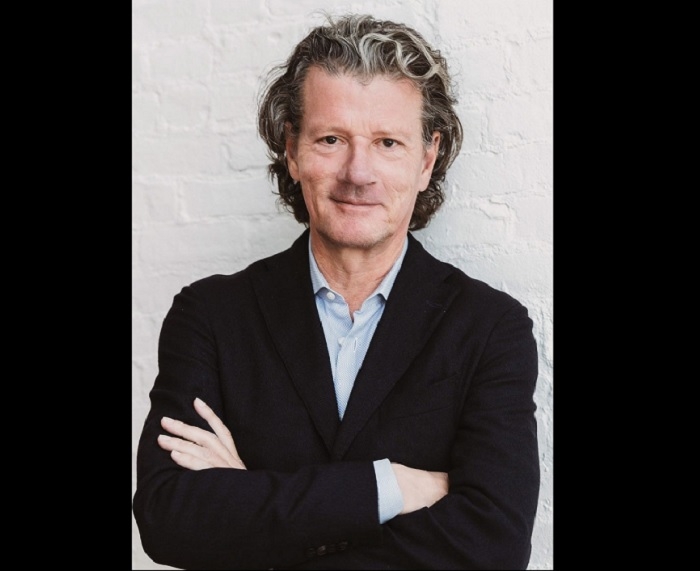
Andreas Wimmer is Lieber Professor of Sociology and Political Philosophy, Department of Sociology, Columbia University in the City of New York, Andreas Wimmer’s research brings a long term historical and globally comparative perspective to the questions of how states are built and nations formed, how racial and ethnic hierarchies form or dissolve in the process, and when this will result in conflict and war. Most recently, he is trying to understand how ideas and institutions travel across the world and with what consequences. Using new methods and data, he continues the old search for historical patterns that repeat across contexts and times. He has pursued this agenda through the fields of anthropology, sociology, and political science and using multiple methods, from qualitative to quantitative, from small to large N, from online experiments to offline ethnography. He did research in Northern Iraq during the 1990s. In a written interview he answered our questions like this.
Gulan: In many Western democracies, identity politics and ethnic nationalism are resurging. Do you see parallels between these developments and the patterns of ethnic exclusion and nationalist mobilization?
Professor Andreas Wimmer: A lot depends on what exactly we think is going on. From my point of view, we see a resurgence of majoritarian nationalism, that is, political movements who seek to restore the national majority to the center of political attention, rather than focusing on women, sexual minorities, immigrants, and so on. Some of these majoritarian nationalisms have a clear bias or are even mostly directed against domestic ethnic minorities as a kind of enemy within. This is the case in India. In other cases, however, the majoritarian nationalists are not explicitly doing this or even embracing implicitly a multi-ethnic understanding of the majority. This is the case in France, where the standard bearer of the nationalist right is of Italian immigrant origin, and the United States, where I don’t see a politicization of domestic ethnic divides (I don’t see an anti-black mobilization, for example), but rather an attempt to depoliticize such divides (e.g. by outlawing diversity initiatives). Where exclusionary, anti-minority agendas take hold, I expect counter-mobilization by excluded minorities to follow sooner or later. Where the majoritarian nationalism includes minorities in the definition of “the people”, a depoliticization of ethnic divides may result in those cases where minorities are not only rhetorically part of the renewed national project but effectively integrated into the ruling elite.
Gulan: How has globalization influenced or reshaped the dynamics of identity-based inclusion and exclusion in nation-states? Is the nation-state still the most viable political unit for managing diversity?
Professor Andreas Wimmer: Globalization has accelerated the worldwide diffusion of ideologies that are related to identities. The spread of ideas of “systemic racism” after the Black Lives Matter protests is an example. An even more consequential example is the preceding mushrooming of the ideas of the identitarian left (an uneasy combination of feminism, anti-racism, post-colonialism, and gender identity advocates) in academic and cultural circles. The more recent diffusion of anti-Diversity-Equity-Inclusion ideologies, including majoritarian nationalism, is perhaps equally consequential.From an institutional point of view, if we don’t look at all ideas and rhetorics but only those that are foundational for how institutions define and treat people, the nation-state remains the only game in town for managing diversity. And it remains thoroughly based on nationalist principles, that is, in defining worthy and unworthy, legitimate and illegitimate, “us” and “them” on the bases of membership in the nation, variously conceived. The idea of a post-national world, prominent among politicians and intellectuals after the end of the Cold War and into the 2010s, has definitively proven to be an illusion.
Gulan: Can identity politics be a constructive force in nation-building, or does it inherently risk deepening societal divisions?
Professor Andreas Wimmer: Indeed it can. Nation building can be based a definition of the national community that embraces a variety of identity-based communities. This was the case in Caribbean rainbow nationalisms, in Switzerland, in India until the rise of the Hindu nationalist right, and so on. In these cases, the multi-ethnic rhetorics were accompanied by real power sharing and thus “worked” from a nation building point of view. If identity politics means defining the national sphere as a zero-sum competition between identity groups, as if these were corporate actors similar to football teams, the results is invariably a deepening of divides, the curing of old injustices by new injustices, and the piling up of identity-related grievances.
Gulan: The Middle East is often cited as a region where nation-building has struggled. Based on your framework, what structural or historical reasons explain why some Middle Eastern states have failed to foster inclusive national identities?
Professor Andreas Wimmer: In the Middle East, ethnic divides are mostly defined in religious terms, a legacy of the Ottoman empire. As in many other post-colonial states, political alliances, in the late colonial period all the way to early independence, remained confined to these religious blocs. Depending on which party or movement gained the upper hand in the struggle for power after independence, other blocs remained excluded from power. You see this in Sunni dominated Iraq, in Alawi dominated Syria, and so on. Why the power sharing regime of Lebanon did not work is another story, but the fragmentation of the political arena along sectarian lines plays a crucial role here as well.
Gulan: In contexts like Iraq, Lebanon, or Syria, where sectarianism remains politically salient, what realistic strategies could be employed to overcome zero-sum identity politics?
Professor Andreas Wimmer: Nothing will work if there is no elite consensus that these countries should remain together. If you have actors with the long-term strategic goal of secession, as is the case with the Kurdish parties of Northern Iraq, for example, then the question of sovereignty needs first to be solved. Once all major political actors agree that they share a political space with each other and a long-term, multi-generational future, there needs to be a consensus that de-politicization of ethnic divides is desirable. That’s extraordinarily difficult because a lot of existing ethnic parties in power are organized as gigantic patronage organizations and thus the leaders have strong incentives to maintain a sectarian regime. If there is such a consensus to move away from sectarianism, then one can consult with constitutional engineers who can advise on party registration rules, electoral systems, and so on that are most likely to help de-politicizing ethnicity. But the crucial bottleneck is the political will of established elites, which I doubt exists in many countries.
Gulan: How do regional interventions (e.g., by global powers or neighboring states) influence the trajectories of nation-building in the Middle East? Do they tend to reinforce or undermine the formation of cohesive national identities?
Professor Andreas Wimmer: Global or regional powers have a notorious history of intervention in the Middle East, starting with the mobilization of Christian nationalisms in the Ottoman empire by British, Russian, and other powers and leading all the way to how Turkey interferes in Northern Syria or in Iraq today. The same goes for Iran, Saudi Arabia, and Israel as well as Russia and the United States. As their interest is usually not the strengthening of the national bond, but its weakening for the sake of its own power agenda (and sometimes for protecting its co-religionists or co-ethnics), the consequences have been almost invariably bad for national political cohesion.
Gulan: Given your comparative work, how do the nation-building experiences of European states differ fundamentally from those in the post-colonial Middle East?
Professor Andreas Wimmer: Europe is big and diverse. Eastern European history bears some very strong parallels with the Middle East. The West stands out for the comparatively strong states—emerging from centuries of warfare against each other—that were able to pull off successful nation-building projects. But the differences are gradual and not of a principal nature. There is much to learn from systematic comparisons of historical trajectories across Continents and regions.