"I Am Pleased to Know That Religious Minorities Have Found a Place of Refuge There" — Savelsberg on the Kurdistan Region
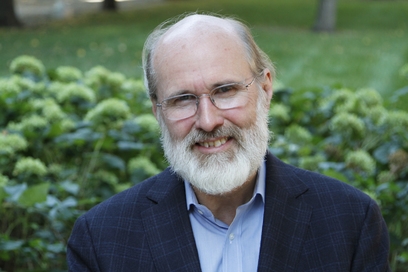
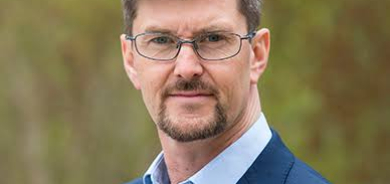
Joachim J. Savelsberg is Emeritus Professor of Sociology at the University of Minnesota and a leading expert on the sociology of law, collective memory, and mass violence. His work focuses on how societies remember atrocities, with major studies on the Armenian Genocide and Darfur. He is the author of Knowing about Genocide and recipient of multiple lifetime achievement awards.
Gulan Media: In 2014, ISIS terrorists committed genocide against the Yazidis. They took the women as spoils of war. To this day, many mass graves have been discovered, and the fate of thousands of Yazidi girls and women remains unknown. We thank some of the European parliaments for recognizing this act as genocide. How do you compare the Yazidi genocide with the Holocaust and the Armenian Genocide?
Joachim J. Savelsberg: Comparisons always show commonalities and differences. Commonalities between the Holocaust and the Armenian genocide are the fulfillment of core criteria of the Convention for the Prevention and Punishment of the Crime of Genocide: “any of the following acts committed with intent to destroy, in whole or in part, a national, ethnical, racial or religious group, as such: (a) Killing members of the group; (b) Causing serious bodily or mental harm to members of the group; (c) Deliberately inflicting on the group conditions of life calculated to bring about its physical destruction in whole or in part; (d) Imposing measures intended to prevent births within the group; (e) Forcibly transferring children of the group to another group.” All these criteria were fulfilled in all three genocides about which you inquire. Differences comparisons reveal speak to the mode and scale of destruction of human lives. The Holocaust was the most meticulously planned genocide, executed with industrialized means of destruction and killing about half of the targeted population. The Ottoman Empire’s genocide resulted in the deaths of more than half of the Empire’s Armenian population. The genocide against the Yezidis, while causing death and irreparable physical and psychological harm to tens of thousands and displacement to hundreds of thousands, left most of the population alive. This may only be due to the eventual military defeat ISIL suffered before it was able to further advance the genocide against the Yezidis.
Gulan Media: The experience of transitional justice, particularly through the framework of “truth and reconciliation,” has been seen as a successful method to end racist policies and achieve peace. Do you believe such an approach could be successfully implemented in Middle Eastern countries to bring back stability to the region? What is your recommendation for states like Iraq and Syria, where genocides have been committed against parts of their populations, especially against the Kurds?
Joachim J. Savelsberg: Experience with transitional justice has shown that a combination of methods is needed to achieve accountability, to secure peace, and to write the history of past injustices. “Truth and reconciliation” through “truth commissions” (as in Argentina) or “truth and reconciliation commissions” (in South Africa) can only be a partial answer. Research shows that they at times are accompanied by criminal trials, at other times they are followed by them. Note though that the choice of methods of transitional justice is often dictated by the balance of political and military power under which transitions occur. Germany after WWII was militarily defeated, which allowed for trials against leading actors of the Nazi regime and its affiliates. In South Africa, the transition may not have been possible if leaders of the Apartheid regimes had be threatened with criminal prosecution.
Gulan Media: Legal intervention is one of the principles that emerged in international politics after the Cold War. It was intended to protect nations from oppression and the success of dictatorial regimes. Based on this principle, interventions took place in Yugoslavia, and Milosevic was tried as a war criminal. Likewise, based on this principle, the international community intervened and overthrew the Taliban regime in Afghanistan and Saddam’s Ba'ath regime in Iraq. However, these interventions failed to produce democratic systems that made the people feel secure. The question is: does the principle of legal intervention still hold today, or has it reached its end?
Joachim J. Savelsberg: The principle of legal intervention is only in its infancy. After hybrid or international ad hoc courts of the 1990s, the first permanent International Criminal Court was established in 2002 based on the Rome Statute of 1998. The Rome Statute subsequently allowed for the incorporation of international criminal law against war crimes, crimes against humanity, genocide, and the crime of aggression into domestic criminal codes. Many hopes invested in these new institutions have been disappointed. Yet, again, they are in their infancy. The 20th century (and the beginning 21st) are not unique when compared to cruelties and mass violence committed in previous centuries. Yet they are unique in that they are the first time in human history norms and institutions have been created to prevent and to respond to mass atrocity crimes.
Gulan Media: In Iraq today, different ethnic and religious communities—especially Christians—have left most of the country’s provinces and have resettled in the Kurdistan Region. Even the Pope of the Vatican visited the Kurdistan Region to thank the KRG for creating this peaceful coexistence. How do you assess this tolerant society in Kurdistan, especially considering that this same region once experienced genocide and the horrors of the Anfal campaign?
Joachim J. Savelsberg: I am afraid I am not sufficiently informed about the current state of the Kurdistan Region of Iraq. I am pleased to know that religious minorities have found a place of refuge there. I am aware of the long Kurdish struggle for a Kurdish state, a struggle that spans Türkiye, Iraq and Syria. It seems uncertain that the dream of such a state (in the minds of some) can ever be reached without massive bloodshed, an insights that the current PKK leadership seems to share. Maybe an autonomy of Turkish parts of the three countries can provide a partial solution. But much remains uncertain here and, again, scholars with greater expertise may be better suited to answer this question.
Gulan Media: One of the core values of liberal democratic societies is respect for human rights and mutual acceptance. But now we see this trend shifting in Western societies, with populist movements on the rise. If we look at the recent elections in Germany, the Alternative for Germany (AfD) party has significantly increased its seats compared to previous elections. The question is: do you believe these dramatic changes will impact the future of Western society?
Joachim J. Savelsberg: The rise of right wing and extreme right populist parties is indeed a feature of the current era, and it is deeply disquieting. Simultaneously, large segments of the populations of countries such as France, Germany and the United States are staunchly opposed to such developments. It seems necessary to address the roots of this polarization, which include the fact that globalization and the current shift in economic transformations toward information technology driven economies produces winners and losers. It is crucial to provide opportunities to those at the losing end of this current modernization shift. Yet that is not easily accomplished and not in the short run. The future is thus unknown.
Gulan Media: To what extent have war crimes and civilian massacres been committed by both sides in the Russia-Ukraine war? How many millions of people have been displaced by this war so far? And when do you believe these wars will come to an end?
Joachim J. Savelsberg: The Russia-Ukraine war, better named the Russian War of Aggression against Ukraine, constitutes an international crime in the form of aggressive warfare. In addition to the systematic and enduring assault on civilian populations, the destruction of civilian infrastructure, schools and hospitals, the abduction and forced adaptation of Ukrainian children constitutes a war crime. As is the case in all wars, war crimes have been committed by both sides, but that hardly allows for an equalization of crimes committed by the two sides.