“I Am Not Pessimistic About the Future of the Middle East”: Ambassador Satterfield on Iran, Iraq, the Kurds, and America’s Strategic Stakes
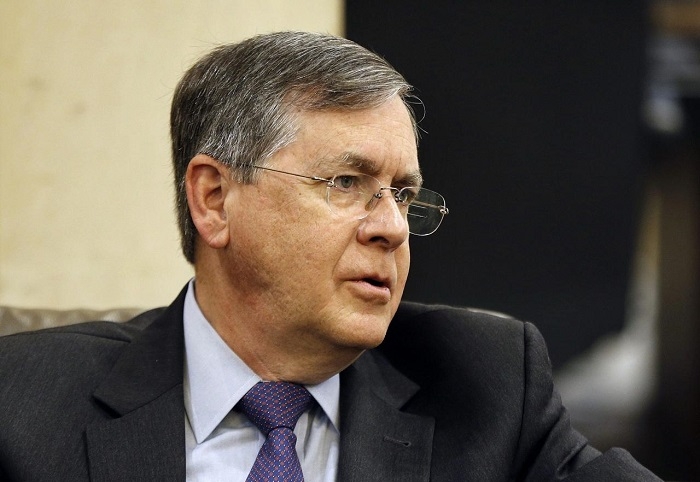
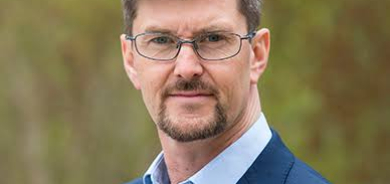
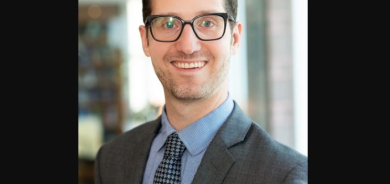
Ambassador David Satterfield is a veteran American diplomat with over four decades of experience in the Middle East. He has served as U.S. Ambassador to Lebanon and Turkey, Chief of Mission/Chargé to Egypt and Iraq, Acting Assistant Secretary of State for Near Eastern Affairs, and most recently as U.S. Special Envoy for Middle East Humanitarian Issues. Known for his deep expertise in regional diplomacy and conflict resolution, Ambassador Satterfield has played a key role in some of the most complex negotiations in U.S. foreign policy.
Gulan: The Middle East has truly become a major battleground, making it extremely difficult to predict a future of peace and stability in the region. You are an experienced diplomat who has worked practically on Middle Eastern issues—how do you see the future of the Middle East evolving? How will Trump’s administration handle the region’s complex current state?
Ambassador David Satterfield: Looking back over the past 45 years of my experience in the region—while it is true that the region still suffers from far too much violent conflict and disputes, both at national and subnational levels—I am not pessimistic about the future of the Middle East, or the greater Middle East. I say this because I have witnessed significant changes over the course of nearly half a century, particularly within the last decade.
These changes have, broadly, led to greater prosperity for more residents in the region. They have contributed to a reduction—though not the complete elimination—of traditional violent disputes between countries. Importantly, they have also demonstrated a growing understanding and appreciation of the critical need for countries in the Middle East to engage not only with one another but also with the broader international community. This is part of the phenomenon of global economies and global societies, and it has been a positive development for the region.
Let me point to some specific examples. Consider Saudi Arabia and the extraordinary social changes that have taken place there in a very short period of time. It is an indication that the people were ready to move beyond a very isolated, tightly controlled society into a more open and globally connected world.
Another example is the growing regional acceptance of normalization by many countries with Israel. This would have been unthinkable a decade or more ago—certainly not 40 years ago. But once again, it reflects a movement toward pragmatism and an understanding of what is required to meet the needs of people, as opposed to clinging to rigid ideologies.
Now, turning to where problems remain—where violence continues to be generated—we must look first and foremost at Iran. While Iran’s nuclear enrichment program has been seriously set back by actions undertaken by Israel and subsequently by the United States, Iran continues to be a source of regional instability and destabilization. It remains a major generator of violence and instability.
Iran’s use of regional and national proxy groups—including the Houthis in Yemen and elements of the so-called Popular Mobilization Forces (PMF) in Iraq and Syria—continues to fuel ongoing violence and instability. In the case of Yemen, for instance, the country’s ability to develop as a state and meet the critical needs of its people—who are in extremely desperate humanitarian conditions—is severely hindered by the ambitions of the Houthi leadership, as well as Iran’s exploitation of the Houthis as a proxy to further its own hegemonistic regional designs.
In Iraq, the enormous outpouring of violent fragmentation that followed the ouster of Saddam Hussein in 2003 has, to a significant extent, been overcome and moderated. We are no longer seeing in Iraq the same levels of violence witnessed through 2007–2008, and again during the rise of ISIS. However, Iraq remains a country deeply affected by Iran’s negative influence—both through Iraqi elements closely aligned with Tehran and through proxy groups that are funded, armed, and directed by Iran itself.
Iraq cannot fully develop as a sovereign nation—nor can any part of Iraq—so long as this negative Iranian influence and hegemonic ambition persists. The United States has recognized, since 2003, that Iran, as a neighboring country, has a legitimate and significant role to play in Iraq. That has never been something the United States has challenged. We understand Iran’s interest in trade relations, energy cooperation, and its desire to ensure its own national security from any potential threat emanating from Iraq.
However, what Iran is currently doing goes far beyond those interests. Iran is actively working to manipulate Iraq’s political system and economy in ways that serve its own hegemonic ambitions. This manipulation takes place through Iraqi political parties, through Iranian-backed militia groups, and through other, more indirect means—whether by encouragement or coercion.
This remains a major factor of concern. And, frankly, it has not yet been sufficiently or satisfactorily addressed. It continues to be a serious problem.
Gulan: And regarding the second part of my question—how do you think his administration would handle the current turmoil in the region? Could you elaborate on that a bit more?"
Ambassador David Satterfield: I think what the United States has sought to do—rather than taking a very specific position on the details of governmental structures or, frankly, on human rights issues in the narrowest sense—is to look at how to secure broad and enduring stability in the Middle East. The administration has focused on addressing the specific sources of instability in the region, and those sources have been several.
Iran looms very large as a principal source of insecurity. Its nuclear enrichment program has been a major element of that insecurity. While this issue has been addressed to some extent by both Israel and the United States, Iran is not yet at a point where it has agreed to reintegrate itself into the regional or international system. It has not taken the steps that would lead to the lifting of the various sanctions imposed on it by the United States, Europe, and the UN Security Council.
However, the administration unquestionably wants to see that reintegration achieved. The incentives for Iran to move in that direction are enormous, and the President and the administration have made those incentives clear. Ultimately, what is at stake for Iran is the opportunity to escape its economically desperate situation, which could be possible through the lifting of sanctions. But that relief can only come as a result of specific actions—actions that address Iran’s enrichment program, its support for proxies, and its missile program, all of which threaten the region as a whole.
The administration wants to see Iran brought back into the global fold, but Iran must first make the necessary decisions to allow that to happen.
Let’s move aside from Iran and consider other problem areas, though many of these remain linked to Iran. One such case is the destabilization in and through Lebanon, caused by Hezbollah. All of us should welcome the ouster—after more than 50 years—of the criminal Assad regime in Syria. That was an enormous development.
Of course, there are still many uncertainties surrounding the ability of the current Syrian government—the al-Sharaa government—to maintain national unity, to genuinely seek national unity, and to avoid falling back into jihadist practices. These concerns are legitimate, and they are widely shared in the region. Israel has those concerns, and that is understandable.
But today, there is an opportunity for Syria to move forward—an opportunity that frankly has not existed since at least 1967, if not earlier. It’s an opportunity the Trump administration wants to see fully explored and taken advantage of. No one can guarantee Syria’s future, but steps can be taken now to create a better chance for progress—steps that frustrate Iran’s traditional use of Syria as a platform to threaten the region. All of that is encouraging. It’s a positive development. We don’t know where it will end, but it’s a step in the right direction, and it’s one that the administration has strongly supported.
Now, regarding Lebanon, the ceasefire agreement reached through U.S. mediation—following the weakening of Hezbollah’s ability to defy the Lebanese state and impose its own policies, regardless of the harm caused to the people of Lebanon—was another very positive development in the past year.
Hezbollah remains armed; that is true. It also continues to hold significant political influence—again, true—but it is no longer in the same position it was before September 2024, when the campaign against it began in earnest. The administration wants to see a stable Lebanon, one that is finally able to move forward.
But progress in Lebanon does not rest solely on constraining Hezbollah. The Lebanese political leadership and economic elites must come together to agree on the necessary reforms to restart the country’s devastated economy. That devastation was not caused by Hezbollah, but rather by the enormous greed and corruption of many of the political, banking and economic elites in Lebanon over many, many decades. Nonetheless, a chance now exists for positive steps to be taken—steps that were not possible before the fall of last year.
Turning to another area of regional instability: Gaza. The administration wants to see the fighting—and the suffering of the Palestinian people in Gaza—come to an end. The President has been very clear about this. It has not happened yet, obviously, but I believe the President has made—and will continue to make—clear that the current status quo is unacceptable and cannot continue.
Ultimately, there must be an enduring resolution. In an ideal world, such a resolution would bring about the release of the remaining living hostages, account for the deceased hostages, and address the humanitarian needs of the people of Gaza—not as a temporary fix, but in a more lasting, sustainable way.
If we can end the violence in Gaza, if we can alleviate the suffering of the Palestinian people, and if we can secure Israeli acknowledgment that there must be a political framework to stabilize Gaza—a "day after" plan both for the people of Gaza and for Israel, offering long-term security—then we open the door to one of the President’s key goals.
That goal, which was also shared by President Biden, is the normalization of relations between Saudi Arabia and Israel.
Gulan: Iraq appears to be the only country, post-October 7 attacks on Israel, that can be described as pro-Iranian. Yet, it has not been attacked by either the U.S. or Israel. Currently, U.S. Secretary of State Marco Rubio has called the Iraqi Prime Minister and stated that “the Popular Mobilization Forces (PMF) must be dissolved, oil from the Kurdistan Region must be exported, and salaries of Kurdish civil servants must be paid.” How do you see Iraq and its role in the broader Middle Eastern conflict? Is the current Iraqi government likely to comply with the U.S. Secretary of State’s demands?
Ambassador David Satterfield:What Secretary Rubio meant were the very broad headlines outlining the kind of steps the United States—and most countries in the region—would like to see in Iraq. They want to see a stable, prosperous, and sovereign Iraq, capable of conducting its policies for the benefit of the Iraqi people, rather than being constrained by Iran’s direct influence, as well as its indirect influence through Iranian-supported militias. They want to see Iraq move forward and take its rightful place in the world.
The potential of Iraq—economically and socially—is enormous. It always has been. However, that potential was sharply diminished under Saddam Hussein’s rule and continues to be constrained today, largely but not exclusively due to ongoing instability and political manipulation by Iran and Iranian elements operating within Iraq.
Now, of course, there are other contributing factors. Iraq is a complicated country. I have spent many years of my life and service there, and I don't want to oversimplify things. Factors within the Sunni community and between Sunni and Shia leaderships also play a role. There are divisions within the Kurdish community that are important and have a negative impact as well. But the most important factor remains the Iranian hand—Tehran’s persistent efforts to manipulate political factions and use economic levers, such as electricity and gas, whenever it can to gain and maintain influence. Again, these are not the only problems confronting Iraq, but they have been the primary sources of instability, both in Iraq as a whole and in the Kurdistan Region of Iraq specifically.
You asked how I believe the Iraqi government will respond, and you also asked why Israel or the United States has not acted more directly in Iraq. Let me start with the position of the United States—and I believe Israel, as well.
There are clear expectations of the Iraqi government, and they are quite appropriate. That’s the message you heard from Secretary Rubio. At the same time, there is a recognition that the Iraqi government is operating under significant pressures and constraints. These pressures can be, and have been, partially mitigated by the actions that have already taken place against Hezbollah in Lebanon and against Iranian interests directly. These actions have shown Iran that when it pushes too hard or acts too violently through its proxies, it and its proxies suffer real consequences.
Look at the record on the ground in Iraq. There have essentially been no direct attacks on bases or facilities housing U.S. forces for many, many months now. That reflects Iran’s understanding of the message sent by events in Lebanon, in Yemen, and even within Iran itself. So, the need to act militarily in Iraq has not arisen recently.
That said, I will offer a reflection on both previous policies and those of the first Trump administration: if U.S. forces or U.S. personnel are directly attacked by Iran or its proxies, the United States will respond. That message has been clear for a number of years now, and I believe it is well understood by Iran. Iran is capable of tightly reining in the most violent of its proxy groups operating in Iraq when it sees it in its interests to do so.
Will the government of Iraq be able to respond to Secretary Rubio’s challenges—even those that are internal, such as the payment of salaries, the reopening of the Iraq-Turkey pipeline (ITP), and reaching an understanding on respect for the status of existing hydrocarbon contracts entered into by the Kurdish ministries? These contracts are vital to allowing oil and gas development for the benefit of all of Iraq—and particularly the Kurdish region. Will the government be able to do that?
It has been a hesitant and difficult process, with many different actors involved—not only Iran. There are Sunni elements, Shia elements, and those who oppose the development of the Kurdish federal region. Some believe that the Kurdish region took advantage of chaos in Baghdad for many years to export hydrocarbons and now should be made to pay a price. All of these are real and complex political factors.
Do I know whether the al-Sudani government will be able to respond? I cannot say. But I can tell you this: the international community, including the international hydrocarbon industry, very much wants these issues resolved. It is in the interests of both Baghdad and Erbil for these types of arrangements to be reactivated.
I will add that the Turkish government also wants to see the pipeline reopened. Türkiye benefits economically from the flow of hydrocarbons. But for this to happen, it must be the result of a clear understanding between Erbil and Baghdad. I’m not offering a prediction—I’m simply stating that the incentives are enormous, for both Baghdad and the Kurdistan Region of Iraq.
I believe this U.S. administration, like its predecessors, has a very good understanding of the extent of Iranian influence in Iraq, and of the role played by the Popular Mobilization Forces (PMF), particularly the most violent PMF elements.
I also believe that the U.S. government views the Government of Iraq, as well as the administration in the Kurdish region, as partners in the effort to move Iraq forward. It is a partnership—whether with Kurdish leaders or with the federal government in Baghdad—that faces real challenges. But the United States sees these actors as partners with whom it can and does work toward shared goals wherever possible.
Gulan: Abbas Araghchi, Iran’s Deputy Foreign Minister, stated in an interview with Fox News that Iran is ready to start a “win-win” negotiation with the United States, while emphasizing that Iran will not give up its right to use nuclear energy for civilian purposes. In your view, are Iran and the U.S. about to resume negotiations? Will this lead to peaceful agreements or a return to military tensions?
Ambassador David Satterfield: I believe Iran, at a very senior leadership level, understands just how difficult a social and economic situation it is currently facing—and that this situation is likely to deteriorate further in the future. It is not going to get better; it’s going to get worse. Iran needs to address this reality.
I believe the Iranians are still in the marketplace for a deal. I don’t think they ever left. I think they remain engaged, but the challenge lies in the terms of the deal: how it is structured, how it is implemented, and the manner in which the process is carried out. All of these remain complex issues.
The United States has never—at any point—rejected the idea of Iran having a peaceful nuclear energy program. That position was reaffirmed not only during the 12-day conflict, but also in the aftermath of the U.S. strike that followed. The issue has always been Iran’s indigenous enrichment program on its own territory. That is not something the United States finds acceptable.
However, there are proposals on the table—proposals for how enrichment could be done in a way that provides absolute oversight and monitoring of all parts of the process, including the end product. Such a framework would not involve Iran’s traditional, indigenous enrichment program, which was to a large extent set back—if not entirely destroyed—during the 12-day conflict involving Israel and the United States.
Do I believe a solution is possible? Yes, I do. Is one apparent right now? No. But I think the door is absolutely open.
Do I see the potential for renewed conflict? Not unless Iran undertakes measures that signal to Israel and to the United States that it is actively and aggressively resuming its enrichment program—such as trying to retrieve highly enriched uranium from wherever it may be stored or buried under rubble now—or unless its proxies carry out violent attacks directly targeting Israelis, Israel itself, or U.S. citizens.
Barring those scenarios, I believe negotiations remain open.
Gulan: Regarding the Kurdish issue in the Middle East, in Syria, the U.S. continues to support the Syrian Democratic Forces (SDF), many of whom are Kurds. Meanwhile, in Turkey, a peace process has started to resolve the Kurdish issue, and for the first time, the PKK symbolically laid down its arms. How do you assess the future of Kurds in Syria and Turkey? Will the U.S. engage more directly to ensure a peaceful resolution to the Kurdish issue?
Ambassador David Satterfield: Well, let’s start with Türkiye. The extraordinary handshake extended by the MHP leader across the aisle in the Turkish Assembly to DEM, the Kurdish political party, marked the opening of what has now begun—and what many of us have long hoped to see. The laying down of weapons is not merely symbolic; it is and must be a very real process. It represents a revival of the effort that began over a decade ago to resolve the issue of Kurdish violence in a way that ensures Türkiye's security—Türkiye free from terror, as the slogan goes. And it also means an IKR free of the threat from the PKK.
It is an attempt to bring the PKK—if I may use another expression—down from the mountains, out of Qandil, and back into a normal, peaceful world. There is a real opportunity here.
Now, this opportunity is undoubtedly motivated by Turkish domestic politics—and that’s perfectly fine. There is nothing wrong with that. If domestic political calculations lead to a lasting peace, an end to violence, and mutual understanding regarding the status and role of the Kurdish people in Turkey—Kurds who are also Turkish citizens—then that is a very good outcome.
Such an outcome would include respect for the Kurdish language, Kurdish culture, and recognition of institutional rights. And while it is by no means guaranteed, the chances of achieving that outcome are certainly greater today than they were before the MHP extended that handshake.
As I believe you and your readers are aware, there are strong political incentives within Türkiye for President Erdoğan to see this process move forward in more than just a symbolic fashion—and that is a good thing.
The United States strongly supports this process. However, this administration—like the Biden administration before it—has made clear that we view this as an internal Turkish-Kurdish matter. While we can and do express our encouragement, the process itself and its outcomes must be determined by the Turkish government and its Kurdish interlocutors.
I believe our role is simply to say: this is a positive development for all parties involved. It is not something in which we should have a direct negotiating hand. And in my view, we should not.
This is an issue best resolved by Turks and by the Kurdish citizens of Türkiye and the region. It is best kept that way.
Am I optimistic? I would say I’m hopeful.
Gulan: Yes—and if you don’t mind, could you also clarify your position regarding the situation in Syria?"
Ambassador David Satterfield: Syria is more complex, and let me begin with what the United States wants to see in Syria as a whole. We wish to see—and I believe this accurately reflects the work of Ambassador and Special Envoy Barrack and the ambitions of the President—a unified, sovereign Syrian state. We do not want to see fragmentation. We do not want to see the breakup of Syria. We do not want a repeat of what happened in Libya or what occurred in Iraq following the fall of Saddam Hussein in 2003 to manifest itself in Syria.
That is why the President made the decision to recognize the al-Sharaa government and to lift those sanctions that are within his authority to lift. There are other sanctions that only the U.S. Congress can address, and still others that must be handled by the UN Security Council—those are beyond the reach of the U.S. administration. But the President has signaled very clearly what his goals are.
In that context, the President’s response—and Secretary Rubio’s response—to the Israeli strikes in Damascus were quite graphic. The administration does not believe that these kinds of actions support the objective of building a unified, integrated Syrian state.
What does that mean for the Kurds? It means we support a process of integration, acceptance, and respect for the Kurds—just as we wish to see in Türkiye. That includes respect for Kurdish language, culture, and local institutions—but within the framework of a single, unified Syrian state.
So, you may ask: what does this mean for the so-called SDF (Syrian Democratic Forces) and for the so-called Democratic Administration of North and Northeast Syria—the "DANES"?
The answer is that the United States government has been clear from the beginning—since we entered into a relationship with the SDF for the purpose of defeating ISIS—that our relationship was always temporary, transactional, and tactical. It was a relationship built to achieve a specific strategic goal: the defeat of ISIS in the Euphrates Valley. It was never intended to be an enduring recognition of independence, autonomy, or the creation of a Kurdish-dominated state in northeast Syria.
This relationship would, at some point, need to transform—and eventually come to an end.
Gulan: And made clear to whom exactly?
Ambassador David Satterfield: To Mazloum Abdi and to the senior political and military officials of the SDF, this has always been the position of the United States government. What you are now hearing from the Trump administration is fully consistent with what we communicated throughout the last decade: this relationship was never intended to be permanent or enduring.
From the beginning, it was never designed to support an independent, quasi-independent, or autonomous political entity in northeast Syria—an area that is majority Sunni, governed by a Kurdish minority. That was never in the cards.
And let me be clear—this was not a one-time message. It was a consistent and deliberate position, conveyed repeatedly by the United States government.
I must also emphasize that what you are hearing from the Trump administration today is not fundamentally different from the position I fully expect would have been taken by a second Biden administration—or even a Harris administration, had she been elected.
This should not be viewed as a break from Biden-era policy. Rather, it reflects the same general trajectory, the same strategic thinking, and the same kinds of steps that would have been pursued—especially given the collapse of the Assad regime.
Gulan: Recently, the Prime Minister of the Kurdistan Region signed two major energy contracts with American companies, amounting to $110 billion, in the presence of U.S. Energy Secretary Chris Wright. These agreements aim to develop Kurdistan’s oil and gas fields. As Chris Wright said, “We want trade, not war or conflict.” Will these agreements encourage the U.S. to protect Kurdistan? Or is the protection of Kurdistan merely aligned with American interests?
Ambassador David Satterfield:Well, U.S. policy is based on how it aligns with U.S. interests. This is an administration that, by its own declaration, has an "America First" policy. It does not take action for charitable reasons. It does not take action for ideological reasons. But when U.S. interests align with development—particularly energy development—in Kurdistan, then there is a clear U.S. stake in the matter.
There was such an interest in the preceding administration and there is now in working with the parties not just in Erbil and Sulaymaniyah but also in Baghdad. Our goal is to underscore the expectation that Baghdad’s policies, like those in the Kurdistan Region, should be aligned in a way that promotes the development of both regions—rather than being driven by sectarianism, past grievances, external (Iranian) pressure, or other factors.
My colleagues and I, going back 22 years—from 2003 onward—sought a comprehensive hydrocarbon law for Iraq. This would be a national framework, recognized in the Constitution, that provides for the development of energy resources across Iraq, including the Kurdistan Region. It would establish arrangements for revenue sharing, mechanisms for managing exports, and a legal structure for international investment.
To this day, there is no such law. But practical arrangements can still be made.
There were, in fact, steps taken in the Iraqi Parliament last year that could have led not to a full legal framework, but to practical arrangements that would allow for the reopening of the Iraq-Türkiye Pipeline (ITP), the resumption of appropriate revenue transfers, transparent pricing, accountability mechanisms, and recognition of existing international contracts.
Those are the kinds of steps that I believe the current administration strongly supports—because they are in the interest of the United States, of the Kurdish people, and of Iraq as a whole.
Gulan: A few days ago, Emmanuel Macron announced that France has decided to recognize the State of Palestine. Could this move become a foundation for resolving the Israeli-Palestinian conflict based on the two-state solution? Or will Israel reject it, and the conflict continue indefinitely?
Ambassador David Satterfield: My answer to this is swift and simple: no.
This step will not produce, in any fashion, any substantive positive movement toward the goal of a mutually agreed resolution or settlement between Israel and the Palestinians. It will not.
Will it lead to violence? No, I do not believe it will. I don’t think it will have a positive effect, but the only negative consequence I foresee is that certain radical Palestinian movements—including Hamas—might take some comfort from it. That would be very regrettable.
But overall, it will not help in any meaningful way. It is a purelypolitical gesture that lacks any real, affirmative, or substantive impact.