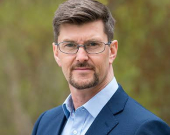
Professor Bryan Tripp to Gulan: Robotics can ultimately fill a gap in brain-like AI
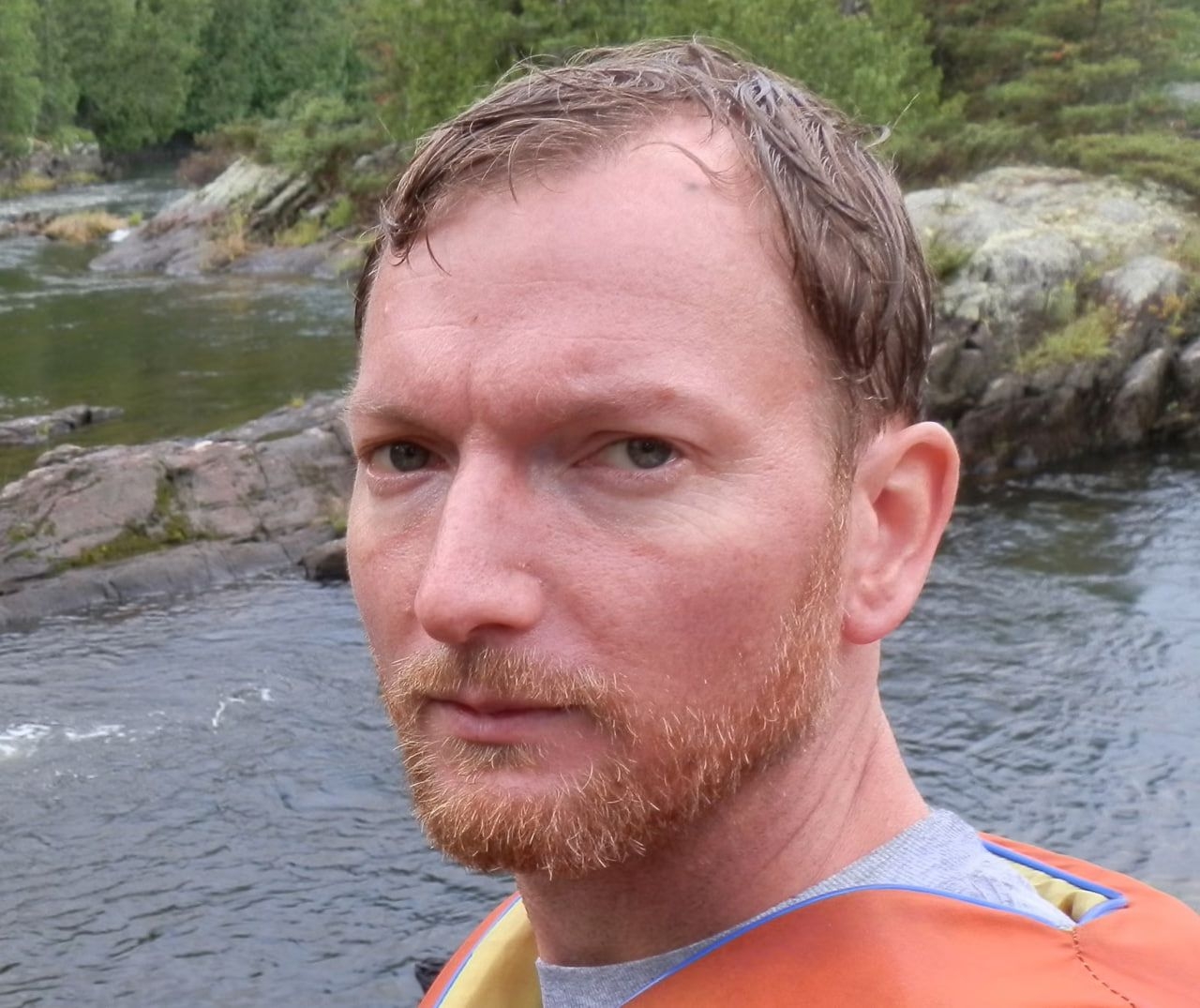
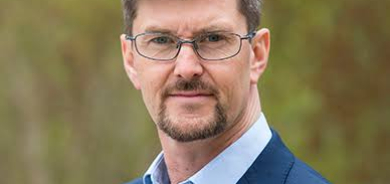
Professor Bryan Tripp, Professor at University of Waterloo, uses computational models to study how the brain processes information. He integrates neurobiological models and deep learning to study visuomotor processes. He is also interested in applying these models in challenging robotics tasks, to better understand how the brain deals with the complex physical world. Recent progress in his lab includes: The first deep-network architecture that is based quantitatively on a large cortical network (Tripp, 2019); the most comprehensive model of a higher cortical representation (Rezai et al., 2018); the largest dataset of human-demonstrated robotic grasps (Iyegar et al., 2018); the only robotic head that has movement capabilities on par with humans (including saccade velocity, stereo baseline, and range of motion) (Huber et al., 2018); and the first spiking neural network model of the planning of complex actions (Blouw et al., 2016). In a written interview He answered our questions like the following:
Gulan: In the next five to ten years, what new developments or trends in computational neuroscience should we keep an eye on?
Professor Bryan Tripp: Much of computational neuroscience in the past has focused on accounting for clusters of related low-level phenomena. I think the field will get better at developing larger models that incorporate diverse data and perform complex functions.
Gulan: What connections exist between robotics, AI, and computational neuroscience?
Professor Bryan Tripp: There are lots of connections. Robotics uses AI methods. Robotics can ultimately fill a gap in brain-like AI, giving artificial systems a perspective associated with a specific group of sensors. Computational neuroscience also uses AI methods. A lot of the key ideas in AI (reinforcement, neural networks, hierarchies of abstraction, attention) are drawn from the brain and have often started out with people trying to model the brain (i.e. doing computational neuroscience).
Gulan: How does computational neuroscience relate to psychology or cognitive science?
Professor Bryan Tripp: Computational models are used especially in cognitive science. Some cognitive models have less physiological grounding than one expects in computational neuroscience, but there is a continuum, and some models could be considered part of both fields.
Gulan: What dangers come with using these models in surveillance or military technologies?
Professor Bryan Tripp: I don't think there is much additional danger from computational neuroscience beyond the dangers posed by AI. I hope that if future AI models draw more from neuroscience then we may be less surprised by their behaviour, but I am not sure.
Gulan: Does the use of models that replicate the functioning of the brain raise ethical questions?
Professor Bryan Tripp: At some point it might. There may be a difficult period in the future when we are able to simulate the brain well enough that the simulation has rich subjective experience, but not well enough that we know how to make this experience positive or meaningful.
Gulan: Do you believe that a full "digital twin" of the human brain will ever be available?
Professor Bryan Tripp: We are very far from this. I don't know of a fundamental barrier, but it isn't clear at this time how to collect detailed enough information from a living brain to replicate its function in detail. At best one might try to fit parameters to all available data or wait until the brain is dead to slice it thinly and collect detailed connection information. However, this is all quite far away.