Dr. François-Pierre Gingras to Gulan: political parties are here to stay, at least in democratic systems and complex societies
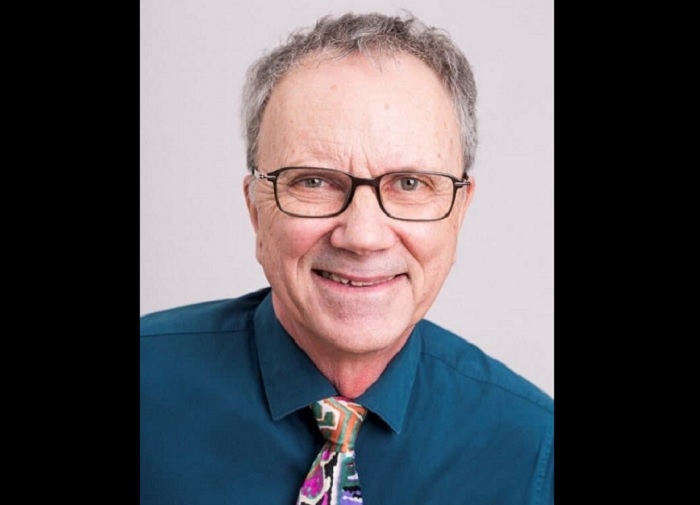
Dr. François-Pierre Gingras, Retired Professor, School of Political Studies and Centre on Governance, University of Ottawa, Canada, Dr. François is A sociologist by training (McGill, Paris–René Descartes), professor of political science (McMaster, Ottawa), innovative educator, speaker, and prolific author in his fields of expertise, he has held several administrative positions in professional associations and served as an expert advisor to governments and community organizations. He also worked to preserve and enhance built residential heritage, an area in which he received several awards of excellence. In an Exclusive interview He answered our questions like the following:
Gulan: What fundamental duties do political parties have in maintaining democratic ideals and norms in democracies?
Dr. François-Pierre Gingras: Regardless of inequalities, in all societies, people tend to appreciate the maintenance of a reasonable level of social, economic, and political stability over time. Stable processes are valued because they reduce uncertainties. Hence, rules ensuring stability of social and political life tend to persist over time, irrespective of the nature of the political system, in kingdoms and democracies alike. People tend to be more comfortable with what they know, what they have experienced for a long time and what they can reasonably predict for the near future. Persistent inequalities are often more tolerable than ongoing uncertainty.
Autocratic rules have lasted for centuries in some societies as long as generation after generation could hold realistic expectations of what would happen in the foreseeable times.
The same applies to democracies: they tend to last as long as people experience a satisfactory – though not necessarily very high – level of stability and predictability, socially, economically, and politically.
Democratic life is a process, and processes have norms (the constitution, statutes, unwritten conventions and traditions). Social and political stability and predictability require the respect of these norms by most political actors.
In democracies, the key actors are political parties, organized groups competing for the exercise of political power.
If the objective is a stable democracy, the first duty of a political party is to respect the democratic process and accept “the rules of the game” – even when these rules put the party at a disadvantage. Respecting the democratic process implies recognizing that there may be disagreement by political actors over what policies are desirable for a society, but that accepted rules will determine which actors will ultimately make the decisions and have them enforced. This is called governance by the rule of law.
If we value stability and predictability, a party advocating a change in the democratic process (a modification of the “rules of the game”) should first obtain popular support for the desired change through the existing channels of competition for the exercise of power. This may take a long time and considerable efforts of persuasion. The desired change may also never happen.
The above considerations apply mainly to existing, stable, functional democratic systems.
In new, developing, or dysfunctional, democracies, in societies with incomplete democratic institutions or lacking a democratic tradition, the first duty of a political party should be to commit to establish, or consolidate, stable democratic norms based on the legitimacy of actors exercising political authority.
The second duty of political parties is to foster citizen interest and encourage active citizen participation in the political process.
I wish to stress this point: norms may change over time, but the acceptance of new or modified “rules of the game” is largely conditional upon how the changes are achieved, and the extent to which the exercise of power is perceived to be legitimate.
Changes from within the system tend to last longer than imposed changes.
Gulan: In increasingly heterogeneous societies, how have political parties changed how they represent various national identities?
Dr. François-Pierre Gingras: I understand that you are interested in how political parties try (or don’t try) to represent different regional, ethnic, tribal, and national identities with a given State.
My observations lead me to say that there is not a general pattern across democracies.
One might think that, in societies with a long democratic tradition, parties would try to accommodate new cleavages within their customary political claims, but this must be nuanced.
For instance, in many Western countries, left-wing parties have always been open to the grievances of disadvantaged or vulnerable groups: this predisposition has been extended to include the issues related to refugees and immigrants. On the other hand, right-wing parties have tried to attract voters by emphasizing how new cleavages weaken the moral fibre and the traditional character of the country. In this context, support may tend to decline for middle-of-the-road parties that customarily trying to appeal to a very broad spectrum of interests. This polarization is likely to produce political instability.
In other words, increased heterogeneity means increased polarization of political forces.
Gulan: Is it the responsibility of political parties to combat exclusionary nationalism, and if yes, how successful are they in doing so?
Dr. François-Pierre Gingras: Let us consider two mottos expressing the ideals of democracy: “government of the people, by the people, for the people” and “Liberty, equality, fraternity”. Achieving (or even simply approaching) these ideals is impossible if the dominant political actors hold exclusionary views, whether based on gender, religious, social, economic, regional, ethnic, tribal, or national differences within a State.
As groups competing for control – or at least influence – over the allocation of scarce resources in a given society, some political parties build a following by stressing sectional interests (such as interests based on religious, ethnic or national origin). In weak or unstable democracies, exacerbating these cleavages has often led to increased social unrest and intersectional violence.
Gulan: In States that have regional or provincial governments, how do political parties strike a balance between supporting regional autonomy while maintaining national unity? Can you give an example from Canada?
Dr. François-Pierre Gingras: The first part of this question is very complex because no two countries have the same arrangements interconnecting the different orders of government (State/central vs. sub-State/regional/provincial).
In the case of federal systems (such as Canada, the United States, and Australia, for example), the constitution determines the respective areas of jurisdiction of each order of government (such as defence, health, transportation, education). It is usually very difficult to modify the constitution, and the distribution of powers is normally not questioned – at least, not the principles. Of course, conflicts regularly arise between the different orders of government over the application of these principles: if provinces have exclusive or preeminent jurisdiction over health or education, can there be country-wide standards? Generally, these conflicts are regulated peacefully by established processes and political bargaining. Typically, national unity is not put into question despite diverging regional or provincial interests. Country-wide parties have a vested interest in constitutional stability.
In the specific situation of Canada, ever since the Treaty of Paris in 1763 (that ceded the colony of New France to the British crown), there has always been a strong movement for increased autonomy of what is now the province of Québec, that is culturally distinct with French as the official language.
At the provincial level, the four established parties advocate various degrees of political autonomy for Québec; two parties support the idea that Québec should become a distinct country. In the last fifty years, the independentist Parti Québécois and the federalist Parti Libéral have alternated in forming the provincial government. Two referenda on independence have yet failed to garner support from a clear majority of the Québec population (40.44% in 1980 and 49.42% in 1995) – but the question is still hotly debated.
At the federal level, one Québec-based party (Bloc Québécois) advocates independence for the province and champions Québec-first interests in parliamentary debates. All other federal parties are present across the country and try to conciliate a broad spectrum of regional – including Québec – interests, with varying success.
Gulan: Canada is a country with great cultural diversity. How do political parties conciliate this diversity with Canadian identity?
Dr. François-Pierre Gingras: Over the last one hundred years, the proportion of Canadians born abroad has more or less consistently been over 22%. Historically, the majority of immigrants came from Europe, but today most come from Asia, Africa, and Latin America. With such diversity, cynical observers would say that the main characteristic of Canadian identity is the consensus over not being American (i.e., not being like the United States). This is, of course, an exaggeration, but it contains a lot of truth.
Today, all Canadian federal political parties (except the Bloc Québécois that advocates Québec independence) accept the official policy of multiculturalism, a policy encouraging Canadians from different origins to celebrate and maintain characteristics from their respective origins: this is the representation of Canada as a mosaic or a patchwork.
However, two groups claim special recognition. First Nations (sometimes referred to as indigenous peoples) who inhabited the land before Europeans colonization, and French Canadians whose ancestors established the bases of Canadian society in the 17th century.
It is worth noting that multiculturalism is not the official policy of the province of Québec, where all provincial parties – advocating or opposing independence – support interculturalism, defined as a model of integration for immigrants and cultural minorities aimed at promoting coexistence in a society where French is the common language and cultural diversity is recognized, while valuing a common culture. It differs from Canadian multiculturalism by emphasizing integration into a common culture rather than the preservation of cultural diversity as such.
Gulan: Are decentralized, online grassroots movements making traditional political parties less relevant?
Dr. François-Pierre Gingras: There have always been grassroots movements, that is, a form of advocacy originating from the local level, driven by ordinary citizens, rather than by established institutions. Grassroots movements existed long before structured political parties.
What is different today is that information technologies enable grassroots movements to broadcast their appeal more rapidly to more people. Their capacity of large-scale mobilization is much greater than ever before, and they can channel grievances and claims with much more flexibility than any structured organization.
Grassroots movements can shake the political system, but they rarely succeed in bringing lasting solutions to the grievances they channel. In the long run, they tend to either evaporate in thin air or transform themselves into structured organizations like interest groups or political parties or even armed bands. Grassroots claims may also be taken over by existing structured organizations better equipped to exercise power effectively.
Gulan: Will political parties be able to endure at a time when people may organize support without official support thanks to digital platforms?
Dr. François-Pierre Gingras: I don’t read in crystal balls, but I think that political parties (or equivalent structures) are here to stay – at least in democratic systems and complex societies.
The objective of political parties is to exercise control – or at least influence– over the allocation of scarce resources in a given society. Some parties are essentially ideological vehicles; some parties are strictly pragmatic electoral machines; most are a little bit of both.
Digital platforms are communication tools that can be used to catalyze grievances, disseminate ideas, facilitate mobilization. A mass movement it is a network of informal interactions fostering mobilization for collective demands. It is not a group of people making political decisions.
The level of organization required to generate enough support to assure a legitimate governance in a complex, heterogenous, democratic society is so high that I cannot foresee the disappearance of political parties or similar formal structures.
On the other hand, mobilization through digital platforms may destabilize some democracies and facilitate the emergence (or the re-establishment) of totalitarian regimes, even in countries with a long democratic tradition.
Gulan: Could there be a democratic vacuum or room for more direct democratic models as a result of political parties collapsing or becoming weaker?
Dr. François-Pierre Gingras: Cynicism about traditional politics, distrust of political actors and the ensuing destabilization of democracies may indeed create a vacuum.
Simply put, the alternative models of governance are rule by consensus, so-called direct democracy, and various forms of absolutism (including some hiding behind respectable labels).
Rule by consensus may function in small communities and at the local level, but is unrealistic in highly populated, complex societies.
Direct democracy is a form of government in which policies and laws are decided by a majority of all those eligible rather than by a body of elected representatives. Despite the existence of digital platforms and the feasibility of online debates and votes, the ins and outs of complex issues make it certain that different positions will be espoused by groups that will tend to structure over time and amass monetary resources to support their views. And you are back with political parties or equivalent political action organizations.