Joost Hiltermann: No New Middle East—Just Shifting Instability and a Fragile Balance of Power
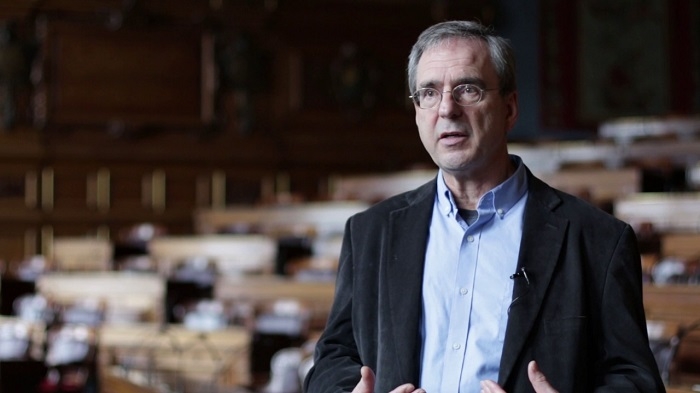
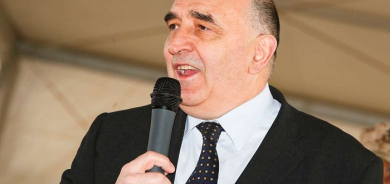
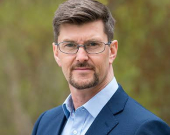
Joost R. Hiltermann is the Program Director for the Middle East and North Africa at the International Crisis Group, where he oversees regional research, analysis, and policy initiatives. A Dutch journalist, scholar, and human rights advocate, he holds an M.A. in International Relations from Johns Hopkins University and a Ph.D. in Sociology from the University of California, Santa Cruz.
He previously served as Chief Operating Officer of Crisis Group and was the director of Human Rights Watch’s Arms Division from 1994 to 2002. He is the author of A Poisonous Affair: America, Iraq, and the Gassing of Halabja and Behind the Intifada, and has written extensively for leading publications on Middle Eastern affairs.
Gulan: You have long served as the director of programs related to international crises at the International Crisis Group, and have done extensive work on global conflicts. Currently, the Middle East is facing a major crisis and a large-scale war. As an expert on international conflict, what is your reading of this new situation in the region? Could this “new Middle East” become a factor in restoring stability in the region?
Joost Hiltermann: Well, I don't think there's a new Middle East. There's great instability throughout the region, most of it involving Israel. You have the war between Israel and Iran, the ongoing conflict in Lebanon, conflicts in Syria where Israel is involved, and Israel's clashes with the Houthis in Yemen. All of this stems from the initial attack by Hamas in October 2023. The situation has not yet stabilized, and it’s unclear whether it will. What is clear is that Israel has proven to be the stronger actor in these conflicts — strong enough to inflict military setbacks on Hezbollah and Iran. But it has not been able to defeat its enemies. So the question becomes: will there be further rounds of conflict as Israel determines that these actors still pose a threat?
Gulan: So, in your view, it’s not that a “new Middle East” has emerged, but rather that recent conflicts are actively reshaping the region?
Joost Hiltermann: I mean, you could say every day there's a "new Middle East," but it depends on what you mean. If you mean a fundamentally different situation, then maybe — but it's in flux. It’s not a stable situation; it's not stagnant. It's moving rapidly. If you want to say we've entered a period of calm, I think we’re far from that. Israel and Iran are now engaging in direct military contact — that’s never happened before. The U.S. is also directly fighting Iran — something it had never done before either. So we’re in a highly dangerous situation, and it’s not over.
Gulan: You are familiar with the victims of the Kurdistan Region of Iraq, and you have even written a book on the chemical bombardment of Halabja and the Anfal campaign. After 1991, under UN Security Council Resolution 688, a safe haven was established, which allowed elections to be held and the Kurdistan Parliament to be formed as a functioning regional government. If you were to assess the Kurdistan Region within the current framework of Middle Eastern developments, what would your view be?
Joost Hiltermann: There’s no question that the situation before 1991 or 1992 was a whole lot worse for the Kurdistan Region than it is today. Before, it was under severe repression by the regime of Saddam Hussein. From 1992 until 2003, the Kurds had their own region, but it was contained — Turkey was essentially an enemy during that period, and Saddam Hussein was still in Baghdad. Plus, the main Kurdish parties were fighting each other during that decade. So the situation was far from optimal. Of course, that changed with the American intervention in Iraq in 2003 and the creation of a federal Kurdistan Region. This was great progress. The Kurds were able to govern themselves as part of a federal Iraq. But there are also important weaknesses.
One is the overreliance on oil and gas for income. That’s not just in Kurdistan it’s all over Iraq. Second is the rampant corruption. In Iraq, it’s widespread. In Kurdistan, it’s more, especially within the leadership — and that has held back the development of the Kurdish region.
Gulan: Recently, PKK militants, in response to Abdullah Öcalan's symbolic message, laid down and burned their weapons. In your opinion, could this step by the PKK mark the beginning of a peaceful resolution to the Kurdish issue in Turkey? Do you think Turkish President Recep Tayyip Erdoğan is serious about resolving the Kurdish question?
Joost Hiltermann: First of all, I should say I’m not an expert on Turkey or the PKK — it never fell within my area of expertise. But I do look at it because Turkey is Iraq’s neighbor and the PKK is present inside Iraq and so is Turkey.So I can’t talk about internal Turkish processes. I don’t know how serious Turkey is about making peace with the PKK. I also don’t know how serious the PKK is about making peace with Turkey. But I can say these developments are very positive. I hope they continue and that a deal can be reached between Turkey and the PKK that helps address — I won’t say resolves — the Kurdish issue in Turkey. I don’t want to say “resolves” because, as you know very well, the Kurdish question spans four countries. The question is: will there be a resolution in each country, or an overall solution? I think there will be new generations to come who will raise that question until and unless a Kurdish state exists. There will always be groups that emerge and claim to advocate for that idea. Right now, the PKK played that role, but now it says it’s disarming and ready to make a deal with the Turkish government.So now we’re looking at a potential solution for the Kurds in Turkey that could last for generations. I certainly hope so. But eventually, the original question that came out of the collapse of the Ottoman Empire may come back. People may say this doesn’t work anymore — especially if there’s a new government in Ankara that becomes repressive again.We can’t predict the future. But for the time being, this is a very positive development. Let’s hope it continues — and let’s hope it lasts.
Gulan: Even if peace is achieved between Turkey and the PKK, do you think the emergence of another Kurdish resistance movement is inevitable?
Joost Hiltermann: I wouldn’t use the word “inevitable,” because I don’t believe in inevitability. But yes — it’s very likely. Maybe not in the next 10 or 20 years. But if the question of Kurdish freedom is not effectively addressed, it’s likely another group will emerge to champion that cause.
Gulan: It has been 22 years since the fall of Saddam Hussein’s regime in Iraq. You have visited Iraq closely and are aware of the complexities of its political process. After these 22 years since the fall of the Ba'ath regime, have the Shiite leaders in Iraq been able to implement the 2005 constitution and build a federal state? Or is their goal to establish a theocratic system resembling Iran’s Islamic Republic?
Joost Hiltermann: The Constitution remains unimplemented in many areas — not only regarding the Kurds. In that sense, it’s like constitutions in many other countries in the region — none of which have been fully implemented. Unfortunately.
So it remains a project. It requires improvement in implementation, and maybe even a revision — because it had flaws from the beginning.I don’t want to blame just the Shiite leadership. No leadership in Iraq today can resolve this alone. It would require all parties to come together and agree unanimously that steps must be taken — either to revise the Constitution or to fully implement it. For example, it calls for a Federal Supreme Court, but that still doesn’t exist. So we don’t really have the institutions of a federal state.
As for the nature of the current governing system — I’d say it’s very far from theocratic. It’s not unified like Iran’s system. Iraq has many competing parties. The dominant ones are Shiite Islamist parties, but they can’t rule alone. They need the Kurds, sometimes the Sunnis. They’re not capable of setting up a theocratic system, nor do I believe most Shiites in Iraq want one.
Some people do — especially those who receive money from Iran — but they’re a minority. They may have weapons, but they haven’t been able to impose their will. Now that Iran has been weakened in the region, we’re even further away from that prospect.
Gulan: Until 2003, the Kurdistan Region of Iraq existed as a de facto autonomous entity and enthusiastically joined Iraq’s political process, even participating in drafting the 2005 constitution. The aim was to be a recognized region within a federal Iraq. However, today, Iraq seems intent on violating the constitutional rights of the Kurdistan Region and diminishing its autonomy. To what extent is the international community, particularly the United States, willing to support the Kurdistan Region as a constitutional entity within Iraq?
Joost Hiltermann: I don’t think you should expect anything from the United States — unless you’re facing total destruction. And even then, I’m not sure. The U.S., especially under Trump, is not interested in doing anything for people outside the United States. Kurdistan is very low on its list of priorities.If there’s a wider war and the U.S. gets involved, things might change — but only depending on whose side the Kurds choose to be on. Otherwise, I don’t see it happening. The U.S. simply doesn’t want to be drawn into regional political conflicts anymore.
Even with the attack on Iran last month, there were big divisions within the U.S. administration. The strike was launched from outside Iran — not on the ground — and the U.S. does not want to get involved directly in the future. It only acted because Iran’s nuclear program is seen as a transnational threat to the U.S. and to Israel.
There are no other threats in the region of that scale. So there’s no need — and no will — to intervene militarily like before.
Gulan: The Middle East is currently undergoing a massive geopolitical shift. The Assad regime has collapsed, Hamas and Hezbollah have been severely weakened, and for the first time, Iran and Israel are directly engaged in conflict. Meanwhile, Gulf states are seeking to distance themselves from tensions and confrontation. In your view, who is likely to emerge as the dominant regional power in the Middle East in the near future?
Joost Hiltermann: That’s a difficult question. I don’t want to make predictions — I’ll only get it wrong.
Israel is clearly the most powerful military force in the region. And it has U.S. backing. The U.S. will defend Israel. It even joined Israel in the attack on Iran. But Israel is not the dominant power — only the dominant military one. It can’t launch a major ground invasion. It doesn’t have the population or scale for that. It can try to impose its will, but not in a sustainable way.
As for Saudi Arabia — historically, it’s not very good at fighting wars. Look at Yemen. And it relies entirely on U.S. defense.
The UAE has military strength but doesn’t want regional conflict. It’s lost in Yemen, Libya, and Syria. It wants to protect its own economic future and has limited military ambition.
Iran has been weakened. Its clients — Hezbollah, Hamas, the Houthis, and segments of Hashd al-Shaabi — have also been weakened.
So now, the power balance has shifted. There won’t be one dominant regional power anymore. You’ll see countries like Turkey, the Gulf states, Israel — all balancing each other out.
they’ll have to learn to live together.
Israel isn’t going to work with Iran, but it has to live with it. It can’t eliminate Iran or its leadership — that would require a ground invasion, and Israel can’t do that, and the U.S. doesn’t want to. The Gulf states and Iran have already found a way to live with each other. So has Turkey. Israel is the outlier.We’ll have to see how Israel behaves — whether it stays a garrison state relying solely on military force, or whether it starts making meaningful deals. Not just with states like the Emirates or Saudi Arabia who don’t care much about the Palestinians — but maybe even with Iran.