Ambassador Dennis Ross: “Respect, Autonomy, and Integration — Not Independence — Should Define the Kurdish Future”
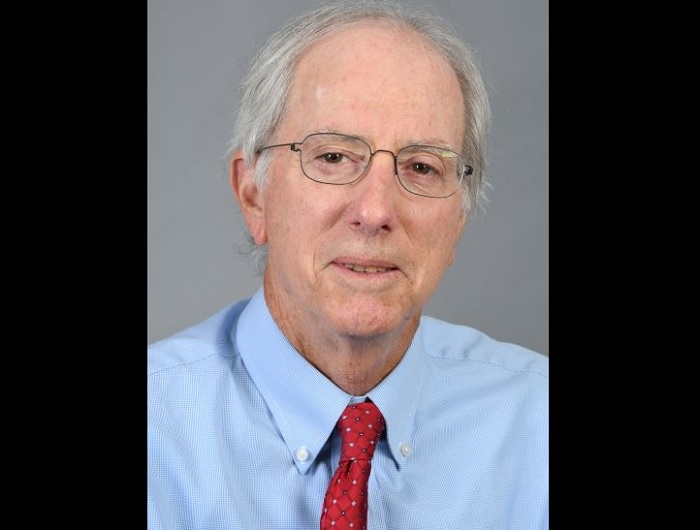
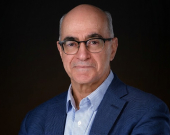
Ambassador Dennis Ross is the counselor and William Davidson Distinguished Fellow at The Washington Institute for Near East Policy. He also teaches at Georgetown University’s Center for Jewish Civilization. For more than twelve years, Amb. Ross played a leading role in shaping U.S. involvement in the Middle East peace process, dealing directly with the parties as the U.S. point man on the peace process in both the George H. W. Bush and Bill Clinton administrations. He served two and half years as special assistant to President Obama and National Security Council senior director for the Central Region, spending the first 6 months of the Administration as the special advisor on Iran to Secretary of State Hillary Rodham Clinton. His newest book is Statecraft 2.0: What America Needs to Lead in a Multipolar World (Oxford University Press, March 2025).
Gulan: As a prominent American diplomat and strategic thinker who has authored numerous studies and books on Middle Eastern issues, do you believe the Middle East will ever return to peace and stability? Or will it continue to remain a region plagued by unending conflict?
Ambassador Dennis Ross: It is obviously the place — it's the region that has been characterized by conflict for a long time. there have been cycles of conflict. I think what we're continuing to deal with are forces that want to change the region for the better in terms of progress, and prosperity and growth for people. And there are forces that, ideologically, are driven by a desire to turn the clock back on the one hand, to threaten their neighbors on the other — because either of the ideology basic press impulse, and radicals who want to create the region in their own image.
So these cycles, in some ways, I think, reflect an interesting reality. There's a sense throughout the region of people wanting to be respected and have dignity, but also there's a deep sense of powerlessness. And you have ideologies that promise they're going to deliver power, but they always deliver it only for a few — at the expense of the many.
I think the question is: do we see the prospect now of those forces that would like to change the region for the better, in terms of growth and prosperity, development, modernization — or those that, in effect, have an ideology of power and control.
Now, Iran represents one of those ideologies, and it's been dramatically weakened. All of its proxies have been dramatically weakened. A big question in my mind is whether or not the reality of their weakness creates an opportunity — but that requires being able to turn the current moment into something that strengthens a coalition in the region that is basically geared towards the future and modernization.
It's too soon to know that answer. I still think that the Islamists — whether they are the Shia version led by the Iranians or a Sunni version, which is basically the Muslim Brotherhood or those groups that represent variations of that. The question becomes: are those kinds of radical ideas been weakened from the Shia standpoint — are they likely to be weakened over time in terms of the Muslim Brotherhood, who did not really deliver either.
Can we see a change where the hope for decent governance comes to dominate the region? I think it's too soon to say. But I do think there's a moment of opportunity right now.Whether it will be capitalized on remains to be seen.
Gulan: Which actors or groups in the region could seize this opportunity?
Ambassador Dennis Ross: The Saudis, the Emiratis — what they seem to want for the future, what they're shaping through education and internal change, social and economic change — they represent something quite promising. Do I think that you can have a broader coalition that includes them and others? Israel as well? I think there's a possibility.
I think, you know, little can change unless we see the war in Gaza end. We need to see it end in a way where Hamas is not in control, and where there's a formula for demilitarization in return for reconstruction. There’ll be no reconstruction without demilitarization, because no one's going to invest if they think this could happen again.
But if that happens, then you begin to deal with a process on the Palestinian issue. You're not going to have any immediate change because the Palestinians remain split. You need to see decent governance on their side, but you can begin a process. This is an issue that radicals seize upon. So you're trying to take away the issues that radicals exploit.
And the coalition of those who are geared towards the future — who want development, modernization, effective governance — there are those who want that. And there are those who, basically, whether it's the Muslim Brotherhood or the Iranians, who want a very different region that they dominate.
Gulan: You have worked extensively on U.S. foreign policy under both Republican and Democratic administrations and have specialized in Middle Eastern issues. In one of your panels, you mentioned that the Sykes-Picot map should perhaps be replaced by "Lawrence of Arabia's" map. Could you expand more on that and what are the differences between the "Lawrence of Arabia" map and the Sykes-Picot map?
Ambassador Dennis Ross: Yeah, very good question. So if you go back and look at what happened after World War I, the boundaries that were drawn were basically reflecting Sykes-Picot — they served the colonial interests of the British and the French.
When T.E. Lawrence was part of the Arab delegation to the Paris Peace Conference, he came with a map that suggested drawing boundaries that seemed to fit more sectarian and even tribal realities. So the states that would have been created would have been more homogeneous. I'm not saying there would have been no diversity., but they would have been more homogeneous than the borders that were drawn — which were designed to fit what the British and French thought served their interests, not what would have served the interests of the peoples in the region.
So what Lawrence had in mind was to try to make the maps more consistent with the demographic, sectarian, ethnic reality — which I think would have created a basis for greater stability. Now, you can't go back to it now, because states have been created, and redrawing borders at this point would be a prescription for generating conflict, not for avoiding or minimizing it.
So, you know, I don't think you could recreate what might have existed in 1919, but that's what I was getting at — the logic of what Lawrence had in mind versus what the British and French had in mind at the time.
Gulan: Do you believe the ongoing cycle of conflict is directly linked to the immense diversity within the borders drawn under the Sykes-Picot Agreement?
Ambassador Dennis Ross: I mean, I think sources of instability were built into those borders. Have events since then been shaped solely by that? No of course not.
As I said, these ideologies have emerge, why do these extremist ideologies emerge? Partly,in response to control colonialism. But largely, over time, they emerge whether you go back to Nasserism, or Ba’athism — they were all prescriptions for dealing with what was perceived to be a failure.
This is a region that, at one time — historically, if you go back to the 10th century — dominated the rest of the world and led it in every cultural, educational, and scientific field. There’s been a longing in the region. A lot of these ideologies appeal to this longing — not to be backward, not to be left behind. You have an era, historically, where the region led the world, and this kind of longing for greatness lost has been part of the appeal of some of these ideologies.
They offer a very simplistic notion. They offer a diagnosis for why this condition exists — why the region has fallen behind — and then a prescription, which is to put all the power in their hands, with the promise that they will produce wellness, as it were.
I don’t think you can place all the problems in the region at the hands of what was done in 1919 — but I do think that was a contributor. In the past, you have these ideologies that promise a kind of utopia that by definition are bound to fail. And the more they fail, the more they rely on coercion. The more they can’t fulfill the imagination — the vision — that they promise, the more they have to coerce their opposition to maintain power.
Gulan: You have always believed that "diplomatic power" is the best way to end conflicts and achieve stability. However, today, the Trump administration openly advocates for "power-based diplomacy" to achieve peace. Do you see Trump’s approach as similar to George W. Bush's diplomacy, which led to the wars in Afghanistan and Iraq and ultimately failed to bring any gains for the U.S., or lasting peace and stability in the world?
Ambassador Dennis Ross: I guess what I would say is, it’s always been a mistake to think it’s either force or diplomacy. Diplomacy that isn’t backed by force is frequently not very credible, because those who are prepared to be aggressive recognize that they can exploit that.On the other hand, force that isn’t combined with diplomacy produces military achievements that aren’t translated into political outcomes. So what I’m saying is: you need both.
I think if people look at the second term of George W. Bush, it was different than the first term. There was more of a recognition that you needed to marry the two, and that force by itself wasn’t going to produce diplomatic outcomes. But the imagery from the first term tended to dominate, even if the reality of what the administration was doing later was different.
I have a new book out called Statecraft 2.0: What America Needs to Lead in a Multipolar World, and I have a long chapter on the Bush approach to Iraq. I point out that the approach in the first term and the second term were basically different, especially after 2006. So I think there was a time later in the Bush administration where they understood the blend of the two.
I think it’s too soon to know with Trump. Trump thinks about force, but on a very limited basis. What was done with the Houthis was a very limited use of force, and it wasn’t tied to any real diplomatic outcome.
The strikes against the Iranian nuclear program — in many ways, they probably should have been done earlier. it could have been done earlier if there had been more of an effort to highlight diplomacy. And if diplomacy had failed, you would have had more justification for using force. But here again, you need to think about the use of force and tying it to a diplomatic outcome — and what’s the diplomatic effort you’re going to make to produce that outcome?
So I think with the Trump administration, we hear talk about wanting to have deals — but deals have to result from negotiations. Deals that are imposed aren’t deals.
So the question is: is the administration prepared to engage in diplomacy? Look, if you look at people like Tom Barrett and Steve Whitcock, they clearly are charged with doing diplomacy. The question is: do they have the support? Do they have the kind of teams that make it possible to achieve that?
it’s premature to give an answer. I don’t think we can say the Trump administration is driven only by force, because when force has been used, it’s been used in a very targeted, limited way. I do think there’s an understanding that leverage is a part of negotiations, and it can be both military and non-military. But I think it’s too soon to make a judgment on the Trump administration in terms of whether it’s really combining force with diplomacy.We haven’t seen many results yet, but to be fair to them, you probably still need more time. I’m not making a judgment yet. But I guess what I’m saying is: I haven’t yet seen the proof of a close integration of force and diplomacy — but maybe that will come. I hope it does.
Gulan: You mentioned that people in the Middle East are particularly proud. Given that, how can long-term diplomacy succeed — especially with Iran — when their countries have been the target of military attacks?
Ambassador Dennis Ross: Well, I think the key here is, are you driven to use force because there's no alternative? When it's clear that you're using force because you've tried other means, then that force becomes, almost by definition, more credible.
do I think it makes America more credible to make deals when it shows its force? Well, when it's ready — when it shows that there's first been a serious effort to negotiate outcomes — yes.
But when it's left with no choice. Again, it depends on who you're dealing with. I don't think the Iranians left much option, because their approach was basically one where they were determined to maintain having a nuclear weapons option. They say all they want is civil nuclear power, but they’ve created a nuclear infrastructure that isn’t geared toward developing nuclear power. They're the only country in the world that, at this point, is producing enrichment up to 60% and hasn’t produced nuclear weapons. You don't need 60% enrichment if you're interested in civil power. You're only going to use it if you're not.
Gulan: The U.S. administration has recently demanded that Baghdad ensure that only state forces possess weapons and that the Iran-backed Popular Mobilization Forces (PMF) be disarmed. Do you think Baghdad will comply with this demand from the Trump administration? If not, how do you think the Trump administration will respond to Baghdad?
Ambassador Dennis Ross: It’s a good question. It’s hard to see how the Shia-backed militias can contribute anything to the real growth and development of Iraq, other than limitations and burdens.
I think this is also part of how one deals with the issue of Iran. I think we have to have a realistic idea that we should not want Iran and Iraq to be enemies. That should not be in our interest. On the other hand, we want an Iraq that is independent and whose policies are not determined by coercion, leverage, and intimidation from Iran.
What is the role of Shia militias in Iraq? It does not seem as if they're there to serve anybody’s interests other than Iran’s — or maybe their own narrow interests. So I think the question is not whether it would be desirable if they were independent. If they are supposedly part of the security forces, but they seem to act independently, it would be better if they were fully integrated and if you had a very clear command and control line of authority — and it’s Iraqis who are making decisions for the betterment of Iraq, not Iraqis making decisions because the Iranians are putting pressure on them.
I think there’s a new opportunity now because Iran has clearly been weakened. The fact that the Shia militias did very little during the 12-day war suggests a combination of factors — but at least some indication that they were more responsive to the Iraqi Prime Minister and his insistence that they stay out of this.
I think there has to be a realistic approach to what can be done, how it can be done, and when it can be done. But there should be a goal — and the goal should be that Iraq is for Iraqis, are the ones who make the decisions about what they do internally and what they do externally. And it isn’t a function of what the Iranians try to tell them they should do or must do.
Gulan: As an expert in U.S. foreign policy, you are familiar with the case of the Kurdistan Region of Iraq. In the current turbulent Middle East context, often referred to as the "New Middle East," how do you think the Kurdistan Regional Government should manage its relationship with Baghdad, given that Baghdad does not seem willing to recognize Kurdistan as a fully autonomous entity within Iraq's federal framework?
Ambassador Dennis Ross: Well, I think it has to continue to press for what are its constitutional rights — yes. I think it's useful for them to try to work with those who can also help them with the central government, and I think that's where the U.S. can come in in a very effective way.
I think the central government wants a certain kind of relationship with the U.S. We do want that relationship. But, you know, I don’t think it’s going to be built on the central government not fulfilling its constitutional responsibilities vis-à-vis Kurdistan — which is supposed to be a federal arrangement.
Gulan: Currently, a peaceful resolution process for the Kurdish issue in Turkey is underway. PKK fighters have expressed readiness to lay down their arms, and just last week they symbolically surrendered their weapons in a ceremony. The question here is: Do you think the Kurdish issue in Turkey can truly be resolved through the PKK’s disarmament? More broadly, how do you see the future of the Kurdish issue in each of these countries: Iran, Syria, Turkey, and Iraq?
Ambassador Dennis Ross: I think that the better integration of the Kurds on the one hand, and greater respect for their autonomy within Turkey, is important.
Certainly the threat of terror has been largely removed. This is a time, for effective outreach and recognition from the Erdoğan government — of the Kurds having achieved what they wanted with regard to the PKK.
I think to the extent that Kurds, wherever they are, are accorded respect — their language is respected, their culture is respected — increasing autonomy within states (not independence, but autonomy) is something that I think should guide the future. That’s what we should be hoping to see and that the U.S. can contribute to over time.
I think the question becomes: is there a vision of autonomy? There may be some who are not willing to accept autonomy. But if there’s genuine autonomy — and there’s space for Kurdish culture that is allowed to develop and is respected — under those circumstances, that should be enough. And those who want that kind of autonomy have to be prepared to take on those for whom nothing short of independence will ever be enough. They’re not going to get independence. Those who press for independence are not, ultimately, serving Kurdish interests.