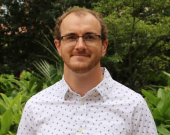
Professor Michael C. Munger: "AI Can Empower or Oppress—Its Impact Depends on Governance, Not Just Technology"
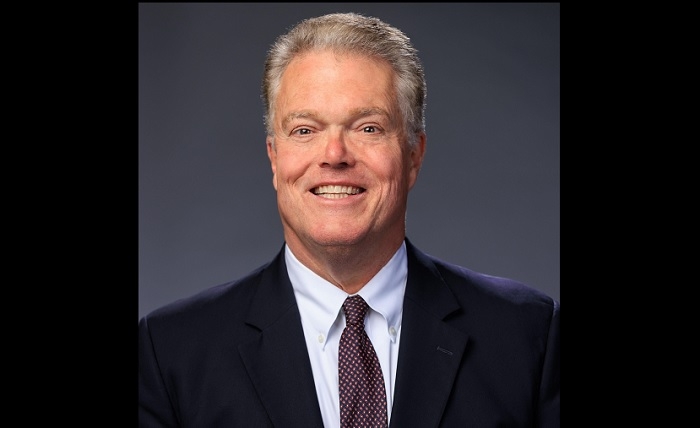
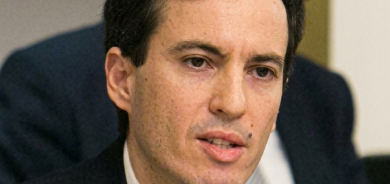
Professor Michael C. Munger is a professor of political science, economics, and public policy at Duke University. A prominent scholar in public choice theory and political economy, he has authored numerous books and articles exploring markets, regulation, and the dynamics of political institutions. He is also a frequent commentator on classical liberal ideas and economic policy.
Gulan: Under the current Trump administration, there is much talk about pursuing peace through the concept of "Peace through strength." Do you believe that peace can truly be achieved through the use of power? To what extent do you think the Trump administration will be able to end conflicts and bring lasting peace?
Professor Michael C. Munger: The doctrine of "peace through strength" has a long tradition in international relations, and while it can serve as a deterrent against aggression, it is not a sufficient basis for lasting peace. The Trump administration's emphasis on projecting military power may prevent certain adversarial behaviors in the short term, but the deeper foundations of peace—diplomatic trust, mutual economic interests, and functional international institutions—require more than force. Coercive strength might end immediate hostilities, but sustainable peace depends on positive-sum relationships, transparency, and respect for international norms. Without these, any cessation of conflict may only be temporary. Moreover, relying too heavily on unilateral power can erode the moral authority necessary to mediate or lead globally. Thus, while strength is part of the equation, it must be coupled with institutional legitimacy and cooperative strategies.
Finally, many of Trump’s “MAGA” core supporters would define peace as the safety of the U.S. They would prefer that the U.S. withdraw from all foreign conflicts, and focus on defending the U.S. borders. Given U.S. military strength, and our geographic isolation, this could easily be done. But it might not be “peace” if war breaks out in many parts of the world, or if China, Russia, and other powers expand to fill the vacuum.
Gulan: Today, it appears that the global system as we know it no longer exists. The United Nations and international security organizations are unable to play any effective role in conflicts and crises. The United States, along with several UN bodies such as the WHO, COP, and the International Criminal Court, seem to be stepping back or withdrawing. How do you see the future of the global system? Given the current global "uncertainty," do you expect a new international system to emerge, and the world to be reorganized?
Professor Michael C. Munger: The post-World War II international order, built on multilateralism and institutional cooperation, is facing a profound crisis of legitimacy and capacity. Institutions like the United Nations, the World Health Organization, and various international treaties once served as platforms for shared problem-solving, but they now appear increasingly impotent in the face of geopolitical fragmentation. The United States’ retreat from global leadership—evident in its withdrawal from institutions like the WHO, COP, and the ICC under Trump—accelerates this decline. We are unlikely to see a complete collapse of international governance, but a fragmentation into regional or ideological blocs is probable. Instead of a singular liberal order, the world may move toward a competitive pluralism of rival coalitions. Whether this will lead to a more balanced global structure or greater instability depends on the willingness of emerging powers to craft and commit to new norms of cooperation.
Gulan: Regarding the "New Middle East," it is clear that old borders no longer hold, and new maps are being drawn — sometimes called "blood borders." How do you view this New Middle East? Do you think it can provide a basis to resolve the Palestinian-Israeli conflict through a two-state solution?
Professor Michael C. Munger: The borders in the Middle East have been “blood borders” for more than a century. It is true that the idea of a “New Middle East” reflects the growing recognition that colonial-era borders—particularly those imposed by the absurd Sykes-Picot Agreement—no longer reflect the on-the-ground realities of ethnic, religious, and political divisions. As states like Syria and Iraq fracture under internal and external pressures, non-state actors and informal power structures fill the void, leading to de facto “blood borders.” In this context, the traditional two-state solution for the Palestinian-Israeli conflict becomes both more urgent and more complicated. The disintegration of centralized authority in much of the region may open new possibilities for local autonomy and confederal arrangements, but it also risks further entrenching conflict if not accompanied by legitimate governance structures. Long-term resolution of the Israeli-Palestinian conflict will require not only diplomatic will but also regional frameworks that acknowledge and manage pluralism rather than attempting to impose rigid state borders where they no longer function.
There is a theory in international relations, and in domestic constitutional analysis, that is called “the proportionality theorem.” The observation is actually simple, but important: The “de jure” or formal legal distribution of power and rights imposed by a constitution (for a nation) or by a treaty (for multiple nations) cannot differ (much) from the “de facto” (facts on the ground, realpolitik) distribution of power. So, the collapse of Iranian military dominance will result in a fast expansion of Turkish power and influence. The effects on border is hard to predict. The collapse of Syria may mean that borders are redrawn. The problem is that it is impossible to predict these changes in advance, because the results will be based not on agreements but on the threat of effective violence. It is a very sad and dangerous situation!
Gulan: As part of the Kurdistan Region, which is a part of Iraq, how do you see our fate within the Middle East — especially as Iraq seems to be moving towards an Iranian-style system rather than a federal and democratic one?
Professor Michael C. Munger: Kurdistan finds itself in a precarious position as the central Iraqi state increasingly aligns with theocratic and sectarian tendencies reminiscent of Iran’s political model. For the Kurdish people—who have long sought autonomy and recognition—this trend poses both a threat and an opportunity. If Baghdad continues to erode federalism, the Kurdistan Region may need to double down on building credible and transparent institutions of its own, thereby strengthening its internal legitimacy and capacity for self-governance. The region must also pursue a delicate balancing act in foreign policy, maintaining relationships with both regional actors and global powers without becoming a pawn. Autonomy in practice, if not in formal legal status, may be the most viable path forward, especially if accompanied by economic development, institutional reform, and international diplomatic engagement.
I wonder if the Kurds will end up like Taiwan. China claims Taiwan as a territory, but “allows” autonomy, yet only so long as Taiwan plays along and does not openly try to get recognition as an independent nation. It seems that Turkey and Iraq cannot allow a separate Kurdish entity, and will not even accept a “federal” system where some powers are delegated to local control. And if Kurds try to separate, there will be war, a war that Turkey, especially, can easily win because of its enormous military.
Taiwan has managed this frustrating ambiguity, at least so far. Kurdistan may have to do the same thing. The difference is that the U.S. guarantees Taiwan’s territorial separateness, but the Kurds have no such guarantee. However, Trump has hinted he might not fully support Taiwan if China were to try to take the island, so it’s all very complicated!
Gulan: On the level of U.S. relations with its allies, the Trump administration has promoted the slogan "not conflict, commerce." Among U.S. allies, especially Saudi Arabia, the UAE, and Qatar, they have plans for cooperation and trade. To what extent do you believe that trade and economic ties can serve as a foundation for building strong alliances and stability in a region like the Middle East?
Professor Michael C. Munger: The Trump administration's slogan "not conflict, commerce" suggests a pragmatic, transactional approach to foreign policy. There is a great deal of truth to the idea that trade fosters peace: when states are economically interdependent, the costs of conflict rise and the incentives for cooperation increase. However, commerce alone cannot create stability without the rule of law, property rights, and transparent institutions. Economic ties between the U.S. and its Middle Eastern allies—such as Saudi Arabia, the UAE, and Qatar—may yield short-term gains and mutual benefits, but their long-term sustainability requires more than shared business interests. Alliances built solely on financial incentives are inherently fragile unless grounded in mutual respect, legal predictability, and some measure of shared values. Commerce can be a foundation, but it must be embedded in broader political and institutional frameworks.
The argument for “free” trade is unilateral: countries should make what they can produce cheaply, and buy everything else. Trump’s trade deals are not free trade, but an assertion of power. The result is that no one can be sure that these structures will last, and so investors are afraid to spend money building new factories, because tariffs and quotas can change in an instant. Predictability is more important than power, when it come to stability.
Gulan: Another challenge facing Middle Eastern countries, including Iraq and the Kurdistan Region as part of it, is the lack of good governance and the absence of effective state institutions and security forces. How can good governance be established, and strong security institutions built in the region?
Professor Michael C. Munger: Establishing good governance in the Middle East requires more than external aid or institutional blueprints—it demands locally rooted legitimacy, institutional constraints on power, and a culture of accountability. Drawing on public choice theory, we can see how rent-seeking and corruption thrive in environments without checks and balances. The first step toward reform is the creation of legal structures that constrain arbitrary authority, including independent judiciaries and professional civil services. In parallel, security institutions must be depoliticized and trained to operate based on merit, not sectarian loyalty or party affiliation. External actors can play a supporting role by offering technical assistance and conditional aid, but the political will for reform must come from within. Governance is ultimately a product of incentives, and until those are aligned with the public interest, reform will remain cosmetic.
Gulan: Technological advancements have impacted many sectors worldwide. As a professor of political science, markets, and governance, how do you see technological progress, particularly artificial intelligence, influencing the political dynamics, markets, and governance within the target states?
Professor Michael C. Munger: Technological advancement—especially in artificial intelligence—poses both opportunities and challenges for states in transition. On the one hand, AI can streamline bureaucracies, improve service delivery, and enhance market efficiency by reducing transaction costs and improving access to information. On the other hand, in weak or authoritarian states, technology can become a tool of repression and surveillance. The political effects of AI depend largely on the institutional context: in open societies, technology can empower citizens and improve accountability; in closed regimes, it may entrench control. In the economic sphere, AI has the potential to disrupt labor markets and increase inequality, which could in turn destabilize governance. Policymakers in the Middle East must therefore not only invest in technological infrastructure but also build digital literacy, safeguard data privacy, and ensure that technological benefits are distributed fairly across society. In a region that has had trouble achieving equality even for votes in elections, I am skeptical that this will work out well…