Steven C. Roach: The Iran Strike Signals a Shift Toward Preemptive Hegemony
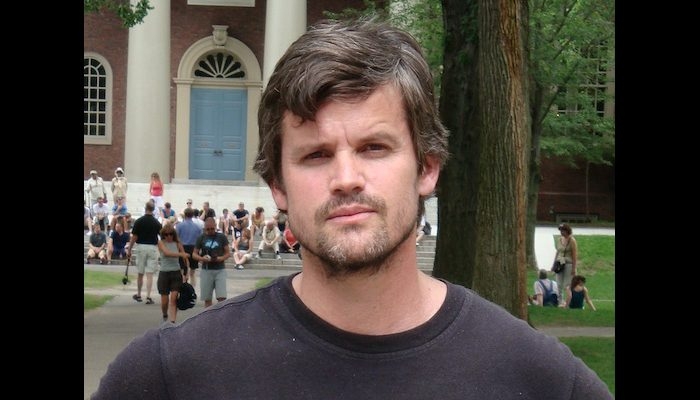
Steven C. Roach is a distinguished Professor of International Relations at the University of South Florida. He has extensive expertise in global ethics, human rights, global governance, critical international theory, and East African politics, with a particular focus on South Sudan. As a Fulbright Scholar and Honorary Professor, he has received prestigious awards and has published influential books on international affairs. Professor Roach's research contributions span various academic journals, and he serves on the editorial boards of several publications. He has also made significant contributions to the University of South Florida as the SIGS Director of Graduate Programs. Overall, Professor Roach is a highly respected scholar in the field of international relations.
Gulan: What does the U.S. strike on Iranian nuclear facilities indicate about Washington’s evolving military doctrine? Does this mark a return to preemptive force as policy, or was it a calculated one-off to reassert deterrence?
Steven C. Roach: The Trump administration’s military policy seems to be headed in a more pre-emptive direction, especially if one takes into account its ambitious plan of implementing a Golden Dome, a program that essentially undermines the calculus underlying deterrence or mutually assured destruction. As such, the plan would essentially lift the constraints against launching a presumptive strike on another country with nuclear weapons. If the Golden Dome is implemented before 2028, which seems to be unlikely given its complexity, then one might argue that the US strike on Iranian nuclear facilities is a precursor to a new hegemonic structure of preemption, in which the nuclear hegemon sets and enforces the new rules of nuclear engagement among countries.
Gulan: How does this strike align with Israel’s long-term strategic objectives regarding Iran, and what does Prime Minister Netanyahu’s public enthusiasm reveal about Israeli expectations for sustained U.S. engagement? Given the widespread reluctance among the American public to enter another Middle Eastern war, what are the risks of the U.S. being seen as acting more in service of allied interests than its own?
Steven C. Roach: Prime Minster Netanyahu has always made it clear that Iran, which has long called for the destruction of Israel, poses an imminent threat to Isael. Despite his public efforts to play down the need for US engagement in the conflict, Israel was for all intents and purposes relying on US military technology to bust the bunkers of Iran’s nuclear capabilities. Whether this actually occurred is still unclear, but it does seem that Netanyahu was not aiming for regime change, even though President Trump had alluded to this in one of his Truth Social announcements. Still, the risk of deviating from US national interests, or intervening where US interests are not at stake, is the loss of public support in the United States. A recent Quinnipiac University poll, for instance, indicated that nearly 54 percent of Americans opposed the strike. Those opposing the strike included high-profile MAGA supporters, such as Representative Marjorie Taylor Green, who saw the strike as foreign meddling and not serving (first) the interests of the American people. Another risk of the US’ catering to another county’s interest is that it reflects a loss of US leadership in the world. When the US is seen as servicing other countries interests, it loses the political and moral leverage and credibility to project its power to balance the conflicting interests in the region. This of course is made all the more important given the United States’ close ties with Saudi Arabia, which already declared that it would seek to manufacture an atomic bomb if Iran successfully developed one.
Gulan: President Trump’s decision to bypass congressional approval has reignited debate over presidential war powers. What does this signal about the shifting balance between executive authority and legislative oversight in matters of war and peace?
Steven C. Roach: I wish I could say that violating the War Powers Resolution Act will amount to something in this case. But since its adoption in 1973, Congress has yet to enforce it or for that matter, to carry out its constitutional prerogative in Article 1 of the US Constitution, which states that “only Congress shall declare war.” Naturally, it is this prerogative that appears to conflict with the President’s constitutional authority as the Commander-In-Chief. Given this constitutional conflict, I doubt that we will see a shift toward more legislative oversight any time soon, especially with a congress that has allowed the President to usurp its authority on a myriad of matters, including the dismantling of the Department of Education and the United States Agency for International Development (USAID) --- which were created by an act of Congress and required Congressional approval.
Gulan: If Iran retaliates with more than symbolic strikes—potentially targeting U.S. bases across the region, including in Iraq’s Kurdistan Region—how might Washington respond? What are the likely military and political consequences for the region, and could this draw the U.S. and its allies into a broader conflict they did not intend to enter?
Steven C. Roach: Iran did launch its missiles against a US airbase just prior to the current ceasefire deal. But the damage to the airbase was minimal. At the same time, the Trump administration insisted that its strike significantly damaged Iran’s nuclear reactors, which, if true, might explain why it did not retaliate against Iran. The ceasefire of course was a much welcome and somewhat surprising event. I believe few expected Israel (and the US) to exercise the needed restraint in this case to cease hostilities. The fact it did may have less to do with prudence than with its fear of the loss of more life of its civilian population -- which would have drastically diminished public support inside Israel for the war. One could say that by the 12th day, both Israel and Iran had begun to internalize the political and moral costs of the brief 12-day war. Not only did it shatter Iran’s invincibility, but it also exposed the limits of Israel’s Iron Dome -- its military vulnerability. Such internalization also helps underscore what I believe is an emerging new constraint against war in the region, one in which the fear of a pervasive war has become more tangible or made more real. It’s interesting to note here that many of the key regional actors, such as Saudi Arabia, the UAE, and Qatar, remained largely observers to the conflict -- unwilling to vouch for Iran’s right to retaliate while at the same time demanding an end to the war and denouncing the US strike as a violation of Iran’s sovereignty. If anything, such diplomatic posturing shows how the fear of escalating the war involved consensual restraint not only among regional actors, but also by powerful countries like Russia which feared the loss of influence over the region.
Gulan: Do you expect this crisis to deepen global polarization between Western and non-Western powers? Or is there still a viable path for multilateral diplomacy to step in and reduce tensions?
Steven C. Roach: It’s unclear at this point if it will further polarize Western and Non-Western countries. For even in the unlikely scenario that the ceasefire fails and Washington launches more attacks against Iran -- this time seeking regime change – Russia, which signed a partnership agreement with Iran earlier in the year, still looms as a factor. Russia of course has blamed Western intervention in Ukraine for extending the Russian-Ukrainian war. It might, for instance, choose to side with Iran and fuel further anti-Western sentiment and tension, thus undermining the prospects of multilateral diplomacy, But it might also use its influence to broker a peace that safeguards its interests in the Middle East, including its ties with Israel. The latter, in my mind, is the more likely scenario, It is also here where China, which also has brokered close ties with Saudi Arabia, can contribute to permanent peace talks by aligning its strategic interests with Russia on the need for long-term peace.
Gulan: What are the long-term implications of the U.S. strike for nuclear non-proliferation diplomacy and international legal norms? Could it prompt Iran to accelerate its nuclear program, and how might this affect the authority of the UN and IAEA in managing future crises?\
Steven C. Roach: I do believe that the US strike destroyed much of Iran’s nuclear capabilities. But the strike also came at a great cost to the non-proliferation of nuclear weapons. For it sent a dangerous message to not only Iran but also other nonnuclear countries that the best and only defense against such an attack is to build nuclear weapons – case in point, North Korea. To understand Iran’s underlying motivation to build its own program, we also need to stress the Trump administration’s decision to withdraw from the Joint Comprehensive Plan of Action (JCPOA) signed in 2015. Under the JCPOA, the United Nations permanent members agreed to lift UN sanctions on Iran’s nuclear activities provided that Iran comply with its international demands for uranium enrichment limits. It was later determined that Iran was complying with these demands and that diplomacy was in fact working. Yet the Trump administration’s decision left the agreement in disarray, prompting Iran to continue enriching its uranium close to a bomb making threshold in 2024. Given Iran’s decision to accelerate its enrichment program, the US strike on Iran’s nuclear facilities can be seen as the inevitable and self-fulling result of a reckless decision. So even if the US strike on its weapons program set the program back in years, Iran is far more likely now to (rapidly) rebuild its nuclear program by relying on its allies for material and support.
Gulan: How might key regional powers such as Saudi Arabia, Turkey, and the UAE reposition themselves in light of this escalation? Could this crisis catalyze new alliances or reinforce existing strategic divisions?
Steven C. Roach: The fact that Saudi Arabia, Turkey, and the UAE chose to condemn the escalation as a threat to peace and sovereignty suggests that they were largely interested in maintaining their economic and strategic ties with Western countries. Their diplomatic approach to the crisis was nonetheless calculated to not offend either side in the conflict and to advance efforts toward de-escalation. Diplomacy in times of crisis will always involve a combination of trust and goodwill that forms the moral, albeit tenuous, barrier(s) against long-term hostilities. This is one reason why the ceasefire is so crucial to a stable balance of power in the region and to reinforcing strategic alliances.