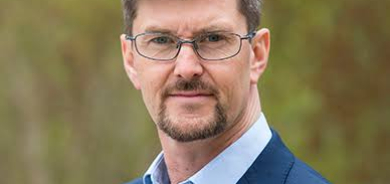
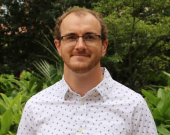
Bruce L. Mallory, professor emeritus of education to Gulan: Deliberative democratic practices can serve as a counterforce to authoritarian and oligarchic systems of governance

Bruce L. Mallory, professor emeritus of education, has been a practitioner and national leader in the deliberative democracy movement for the past fifteen years. At the Carsey School of Public Policy (formerly the Carsey Institute), he provides technical assistance and leadership related to the use of deliberative processes for citizen engagement. Co-founder and past co-director of New Hampshire Listens, which is a civic engagement initiative of the Carsey School, Bruce now serves as senior advisor, focusing on strategic development as well as research and dissemination. His primary objective at Carsey is to integrate effective forms of citizen deliberation into policy analysis and dissemination around research topics related to social and economic justice.
Bruce served as the interim director of the Carsey Institute from 2011 to 2014. In addition, he has served as department chair (1987-1993), graduate school dean (1997-2003), and provost and executive vice president (2003-2009) at UNH. His earlier scholarship focused on the relationship between early childhood disability and poverty, social policy affecting young children with disabilities and their families, the provision of early intervention services in rural communities, and more recently the role of higher education in strengthening democracy through deliberative practices. Bruce has served on numerous national committees concerned with higher education and deliberative democracy, and has provided technical assistance to organizations such as the Association of American Colleges and Universities, the Association of Public and Land-grant Universities, Campus Compact, the Spencer Foundation, and Everyday Democracy. He is a member of the board of directors of the Paul J. Aicher Foundation. Bruce earned his doctorate from George Peabody College of Vanderbilt University in Special Education and Community Psychology in 1979. In a written interview he answered our questions like the following.
Gulan: What is the philosophical justification for deliberative democracy in contrast to purely majoritarian or representative models?
professor Bruce L. Mallory: For this question and those that follow, I will first offer my understanding of terms. This understanding comes from my experience as a “pracademic,” one who both practices deliberation as a means to realizing democratic principles and who has studied and written about the role of deliberation and dialogue in communities and the higher education sector. My practice as a facilitator and designer of deliberative processes has been informed by the early 20th century Scandinavian study circle movement, later exemplified by Antonio Gramsci’s gestione sociale (collective management circles in Italian industry). These approaches emphasize democratic, equitable forms of encounter based on dialogic face-to-face deliberation that can lead to the discovery of common ground and the articulation of solutions to shared problems (whether on the factory floor, in the neighborhood, or in organizational and corporate settings). The socio-cognitive theories and related pedagogical practices advanced by Vygotsky, Bakhtin, Bruner, Rogoff and others provide a psychological rationale for deliberative practices that lead to both individual and collective learning. More broadly, Dewey’s emphasis on “learning by doing” (experiential learning) and his articulation of the interdependence of democracy and education provide further support for a commitment to socially constructed solutions to the “wicked problems” confronting modern, industrialized societies. Freire’s analysis of the ways in which vulnerable populations are oppressed through anti-democratic means of schooling illuminates the power structures in systems that perpetuate domination by the few over the many. Deliberative democratic practices can serve as a counterforce to authoritarian and oligarchic systems of governance.
These socio-cultural frameworks provide a critical lens for assessing majoritarian or representative forms of democratic governance. Barber’s distinction between “thin” and “strong” democracy is useful. Representative structures are thin in that a small number of elected officials are empowered to enact policies on behalf of thousands or millions of constituents. Deliberative processes that utilize diverse gatherings of everyday citizens to engage in facilitated, extended dialogue around pressing problems are strong forms of democratic action. Deliberation that relies on a maximum mix of perspectives, experiences, and identities is more likely to generate common ground that addresses the real needs of a community. As such, a participatory democracy that is legitimate, effective, and just (in the words of Fung) can serve the interests of a wider range of the public than representative, majority-rule approaches.
Gulan: Does the quality of public thinking, as opposed to just vote results, eventually determine the validity of democracy?
professor Bruce L. Mallory: Historically, in what Hunter calls the American hybrid-Enlightenment political culture, high quality deliberation assumes agreement on what counts as fact and how knowledge is created and tested as well as (since the civil rights movement) an inclusive table where every person’s voice is heard and validated. At the deliberative table, power is shared equally. Each participant is their own “special interest.” A multitude of diverse voices, heard over time, can produce solutions (policies) that advance the greater good. By contrast, voting results depend on who shows up to vote (which in turn depends on who is actually enfranchised and who believes that it matters to cast a ballot). Voting participation and outcomes are related to the ways that organized (and often amorphous) special interests influence (through the use of capital) who shows up, what they believe to be true, and how they vote. In recent years, the role of social media, AI, dark money, and efforts to disenfranchise segments of the voting population all have skewed voting outcomes in favor of those who are powerful as a function of wealth, identity, and control of the media. Participatory, deliberative democracy can be an antidote to these trends, but only when practiced at large scale over an extended period of time.
Gulan: Can democracy endure without a common dedication to reasoned discussion and respect for one another, even when opponents disagree?
professor Bruce L. Mallory: This is the great experiment we are in the midst of. I’m not sure there has ever been a “common dedication to reasoned discussion,” much less mutual respect across ideological boundaries. American democracy has always been characterized by schisms, competing epistemologies, wealth inequalities, and underlying racial tensions since the time of legal enslavement. Paradoxically, our pluralistic society works against efforts to find common ground. Economically segregated communities, wealth gaps (especially as a function of racial/ethnic identity), an education system that hasn’t fostered critical thinking and has excluded minority populations until recently, and the commodification and segmentation of news media have all weakened the pursuit of democratic ideals. The current situation in the US reflects these forces and makes it even harder to achieve respectful agreement. The ethos of citizenship, informed by an understanding of democratic principles and processes and a moral commitment to looking out for one’s neighbor, is under considerable stress. In a country where there is a near even, 50/50 split on views about major policy issues (e.g. abortion, gun ownership), and where governance is organized around 50 “sovereign” states united as a republic, achieving agreement through reasoned discussion seems elusive. In short, “E pluribus unum” remains a core but not yet realized ideal in the US.
Gulan: Does a deliberative democracy view its citizens as moral beings who can contribute to group reasoning in addition to being voters?
professor Bruce L. Mallory: Yes, practitioners of deliberative democratic practices assume good intentions, moral and ethical behavior, and a baseline of shared knowledge on the part of citizens. We assume that exposure to people of varying beliefs, experiences, and identities can generate meaningful insights and a commitment to compromise in order to improve our communities. As Haidt writes, “the only cure for bias is other people.” That is, we assume that civil, respectful encounters with those who are different from us can lead to empathic understanding and the provisional articulation of solutions.
Gulan: Why is deliberative democracy becoming more and more important in the face of growing division and democratic regression in the US and around the world?
professor Bruce L. Mallory: I think that deliberative forms of democratic practice, involving face-to-face or virtual dialogue among individuals who are providing input to policy-makers, is most effective at the local, community-based level. Community here can mean neighbors, an entire municipality, or a virtual community using moderated social media tools. In my experience, people who live in a particular place and time, who face shared challenges related to civic health and effective governance, are motivated to come together to hear each other out and find common ground that can lead to practical, feasible solutions. This is what democracy looks like when there are places and processes that assure equity in the dialogue, an agreed-upon set of facts to inform decision-making, skilled facilitators who create space for respectful and authentic conversation, and assurances that elected and appointed officials will act on the results of citizen deliberation. Such processes can exercise the civic muscles of inclusive participation and the often incremental work necessary to work through community problems. When such local practices are widespread in a society, there can be a bottom-up effect that sets the tone for governance at the regional and national level. This is a hard hill to climb of course. There are many factors that work against deliberative democratic practices, not the least being the entrenched interests of those who hold power and are threatened by broader, more egalitarian participation. Essentially, achieving the ideal of a government of, for, and by the people requires participation by active, informed citizens willing to engage in dialogue across difference. In a pluralistic society like the US, the inability to foster such participation can create a power vacuum to be filled by those with authoritarian agendas.
Gulan: Do you agree that divisiveness, misinformation, and institutional mistrust, characterize the current American political environment? And does this necessitate the adoption of more deliberative democratic practices?
professor Bruce L. Mallory: Yes, we definitely have a crisis of trust and legitimacy now in the US, fueled by the tribalizing effects of social media (including news outlets) as well as the scars left from the upheaval of the COVID pandemic, among other factors. Adopting more deliberative democratic practices is one part of the correction, but we also need broader reforms in electoral processes (e.g. reducing barriers to voting or eliminating the Electoral College), political parties, civic education, law enforcement, and regulation of emerging technologies. Deliberative practices can help to surface possible strategies for initiating these reforms, but in the end it will be Constitutionally-derived structures (legislative, executive, judicial) that will foster or hinder their implementation. I also note that processes of face-to-face (and virtual) dialogue across differences can strengthen social and civic trust such that neighbors understand and respect each other and are more likely to participate in civic duties such as voting, volunteering, and discussing challenges in their communities.
Gulan: In institutions susceptible to populist majoritarianism, how may deliberative democratic processes safeguard the rights of minorities and underrepresented voices? And how is deliberative democracy more important than ever in light of the rise of authoritarian populism and democratic backsliding?
professor Bruce L. Mallory: Effective and inclusive deliberation processes require several core components if they are to amplify the voices of those who have traditionally been excluded from the public square. There must be explicit and intense efforts to recruit those who feel marginalized or believe their voices don’t matter, into the dialogue space. There must be sustained, not one-off, opportunities to connect over time in order to build trust, review relevant data, explore alternative solutions, and generate common ground to identify preferred policies. Trained, impartial facilitators are necessary to assure equitable participation regardless of age, gender, racial/ethnic, language, and social class differences. Small group formats work best to allow everyone’s voice to be heard.
I think the answer to the second part of this question is contained in my other responses.
Gulan: Can deliberative democracy provide useful instruments for resolving issues like election legitimacy challenges, climate change, and constitutional reform?
professor Bruce L. Mallory: We have used deliberative processes across a wide range of contemporary social challenges, from the hyper-local (how to slow down traffic in congested neighborhoods; how to share backwoods trails for hikers as well as ATV users) to community-wide (whether to invest in expanded school facilities or ways to improve community-police relationships) to regional and statewide issues (climate action planning, youth engagement, funding of public schools). National questions related to federal elections, reproductive health, climate protection, or Constitutional matters are more likely to be resolved through advocacy coalitions, political campaigns, litigation, or mass demonstrations. But the local and regional practice of engaging in informed, civil dialogue across difference builds capacity for citizens to engage in other, perhaps more adversarial, forms of participatory democracy.
(The views expressed in these responses do not necessarily represent the Carsey School or University of New Hampshire. The author takes full responsibility for the opinions expressed above.)