Dr. Angela Misri to Gulan: AI systems reflect certain human values but certainly not the diversity of human perspectives
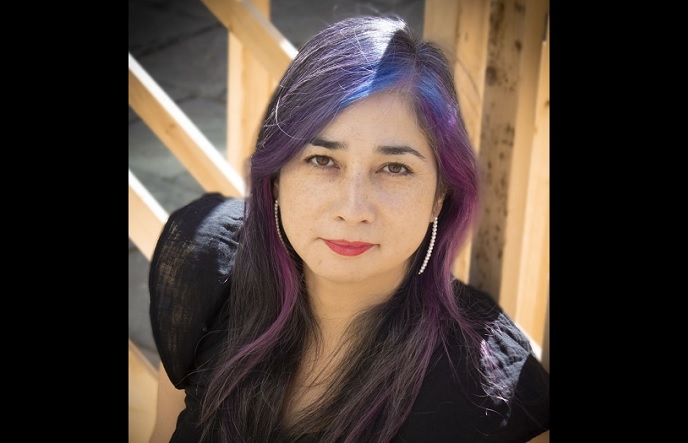
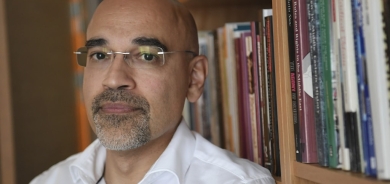
Angela Misri is a Toronto journalist and novelist who worked at the CBC for 14 years before becoming the Digital Director for The Walrus. She is currently an Assistant Professor at Toronto Metropolitan University and a co-director for the Local News Research project, with a focus on research related to AI and news practice. Misri also runs the newsroom for the student masthead in the School of Journalism at TMU -- teaching the next generation how to report on their communities. She writes for many different media groups including the Globe and Mail, CBC, The Walrus, Global TV, and is the author of seven fiction novels. In a written interview Sher answered our question like the following:
Gulan: What are the biggest ethical challenges facing AI development today?
Dr. Angela Misri: That depends on what angle you are coming from. As individual humans in the world, we are witnesses to AI tools that demonstrate bias, discrimination, a lack of information privacy, and of course, the copyright/ownership of the training data.
From the perspective of the climate, the biggest ethical challenge has to be the significant energy consumption and the resulting greenhouse gas emissions from the vast amounts of energy required to train and operate these AI models.
Gulan: Do current AI systems adequately reflect human values and diversity? If not, how can we improve this?
Dr. Angela Misri: I think AI systems reflect certain human values but certainly not the diversity of human perspectives. This is the age-old issue of the internet in that there is an over-representation of certain biases and points of view. Think of it this way - any minority is badly represented by the internet because the definition of a minority means they are not in the majority. Add to that the fact that AI slop is being generated based on other AI-generated content and we're not only overwhelmed with non-diverse content, but the AI tools are replicating more of it every day.
Gulan: Do you think AI will endanger journalism careers or will it be a tool to improve narrative and productivity?
Dr. Angela Misri: I'm of the generation that watched people freak out about the internet, calling it the end of Radio and TV as journalistic mediums. That didn't happen because journalism adapted; radio still exists, and birthed podcasting, TV still exists and birthed YouTube and Netflix. As long as journalism continues to adapt and treats AI as another technology tool, we will continue to be needed and exist. Yes, it will endanger certain roles, just like we don't need telephone operators or transcribers anymore, but new roles will fill that vaccum.
Gulan: What abilities should aspiring journalists acquire in order to collaborate with AI technologies?
Dr. Angela Misri: I think the main ability or skill everyone should acquire is to experiment in an ethical and transparent way with the tools out there. If Otter.ai helps you transcribe your interviews faster and get your content to air quicker, then declare your usage of it and use it! I also think we need to talk more about how we can see AI tools helping us do the work of creating journalism out loud in newsrooms rather than quietly on the side of our desks out of fear. Develop an AI policy that includes a sandbox where people can experiment freely and openly and see what brilliant ideas come out of that!
Gulan: Can we rely on AI tools to respect journalistic values like independence, accountability, and fairness?
Dr. Angela Misri: No, we can't. That's what the humans bring to the work. We can't program a machine to respect anything.
Gulan: What are the primary advantages and difficulties of incorporating AI into storytelling and fiction writing?
Dr. Angela Misri: For myself in my fiction writing, the primary advantage I see is in the "grunt work" of catching errors in my writing or helping flesh out ideas and character names and research for historical content. The disadvantage is that the more content you feed the AI models to train on, the more you will see AI-generated content that looks/reads a lot like your original work. Human writers only have so much time to dedicate to writing - an AI has infinite time.
Gulan: Is AI more of a cooperative tool or may it eventually replace human fiction writers?
Dr. Angela Misri: I honestly don't think so because the humans are what make all storytelling compelling. Think about your favourite stories (whether they be oral, visual, or textual) - I'm betting it was the human aspects of the characters that made you a fan. Would you watch Breaking Bad if Walter White weren't such a complex human character? Or read Lord of the Rings if Samwise Gamgee didn't evolve over three books? Or listen to a true-crime podcast where the characters weren't well fleshed out? We have valued human stories over encyclopedic content for a very long time. I don't think that is going anywhere, and the AI can't do that.