James F. Hollifield to Gulan: I am not sure that the Trump wishes to be involved in prolonged conflict in the Middle East
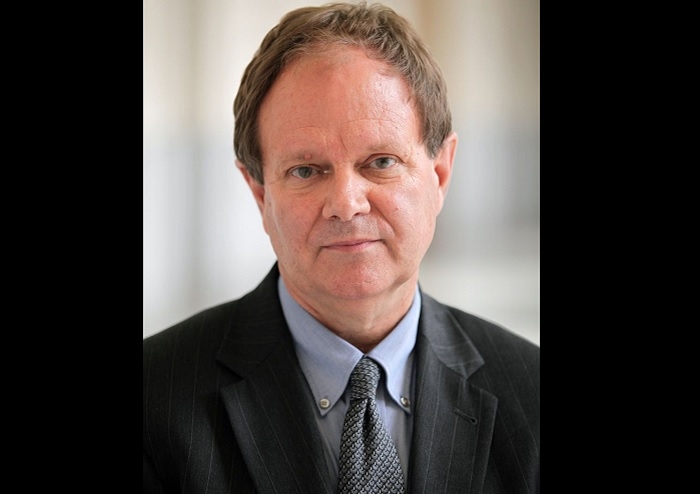
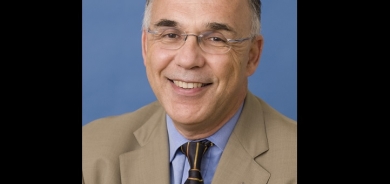
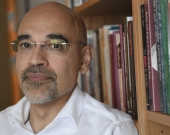
James F. Hollifield is the Ora Nixon Arnold Fellow in International Political Economy, Professor in the Department of Political Science, and Director of the Tower Center at SMU in Dallas, Texas, as well as a member of the New York Council on Foreign Relations and a Global Fellow at the Woodrow Wilson International Center in Washington, DC.
Hollifield has served as an Advisor to various governments in North and South America, Europe, East Asia and the Middle East and Africa, as well as the United Nations, the World Bank, the Inter-American Development Bank (IDB), the OECD, the ILO, the IOM, the EU, and other international organizations. He currently chairs working groups at the World Bank and the IDB and serves on the International Advisory Board of the National Center for Competence in Research (NCCR for Migration and Mobility) of the Swiss National Science Foundation. He has been the recipient of grants from private corporations and foundations as well as government agencies, including the German Marshall Fund of the United States, the Social Science Research Council, the Sloan Foundation, the Owens Foundation, the Raytheon Company, and the National Science Foundation. In a written interview he answered our questions like the following:
Gulan: What is your main take away of the Israel’s strikes against Iran?
James F. Hollifield: The strikes obviously have been long planned, and I assume the Israeli government was waiting for a green light from the US government to initiate the operation.
Gulan: What has been the main cause of Israel's strikes? Why did Israel feel the need to take this extreme action?
James F. Hollifield: Clearly the Israeli government decided that from a political and strategic standpoint, now was the time to strike an already weakened Iranian regime and with the tacit support of the new Trump administration.
Gulan: Do you believe Israel will be able to firmly establish dominance, or do you expect a protracted period of strikes and counterattacks?
James F. Hollifield: I expect a protracted conflict with each side maneuvering to gain tactical and strategic advantage, unless the US intervenes to restrain Israel and bring the parties back to the negotiating table. However, it is unclear how much leverage the US has to bring the parties back to the table in the short term.
Gulan: How likely is it that the situation will worsen and turn into a full-fledged regional conflict?
James F. Hollifield: Much depends on the Iranian response, how restrained it is, and whether the Iranians want to draw other regional powers, like the Saudis, the UAE, and the Americans, into the conflict. My assumption is that the Iranians will be cautious, unless they feel that the regime of the mullahs itself is threatened.
Gulan: Do you think the United States will be directly involved in this conflict? If so, what would the repercussions be?
James F. Hollifield: The U.S. already is directly involved in providing logistical and tactical support for the Israeli operation. Whether US forces become more directly engaged in combat again will depend on the Iranian counterattacks, whether Iranian forces strike American bases, naval ships, shipping, and bases and oil facilities in the other Gulf states. In such a volatile situation, the conflict easily could spiral out of control.
Gulan: Is it reasonable to conclude that the Middle East's security environment has undergone a significant transformation? If yes, what will this new security structure's key characteristics be?
James F. Hollifield: The security environment in the Middle East was utterly transformed by the Hamas attack of 7 October, which led to widespread conflict between Israel, Iran and its proxies. The regional balance of power shifted dramatically in Israel’s favor, especially with the collapse of the Assad regime in Syria; but whether Israel will be able to maintain its strategic advantage is an open question. The Israelis are perilously close to overplaying their hand and the balance of power could shift against them, which would draw the U.S. deeper into the conflict/region. I am not sure that the Trump administration wishes to be involved in open and prolonged conflict in the Middle East, but they may be unable to avoid this scenario.