Kurdistan Must Stay Vigilant: Bruce Hoffman on ISIS Resilience and the Peshmerga’s Critical Role
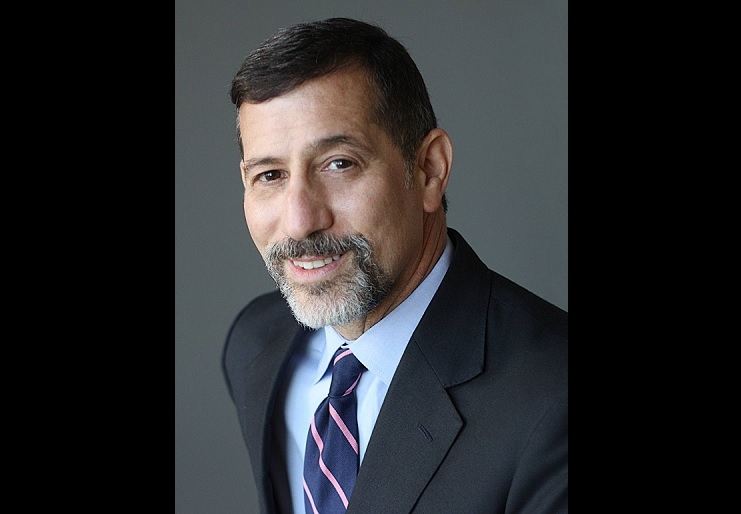
Questions for Professor Bruce Hoffman – For Gulan Weekly Magazine
1. How would you characterize the evolving threat of terrorism in the Middle East today, particularly in the aftermath of ISIS’s territorial defeat?
Fluid and highly uncertain. Hamas and Hezbollah, for instance, have been seriously weakened—their respective leadership cadre, as they existed a year ago today—has been eliminated; their material resources to continue fighting have been severely reduced; both groups have seen their own self-defined constituencies suffer grievously. Yet, both refuse to disappear into the “dust bin of history,” as Trotsky famously said of the Mensheviks in 1917, much less surrender. This underscores the challenges both in defeating terrorist groups and deterring them in future. The Houthis in Yemen finally met some serious military responses to their attempts to close the Red Sea to international shipping, but nonetheless remain as formidable as they unbowed. The Iranian-backed militias in Iraq still exert a profound influence over that country and ISIS remains active in western Iraq and parts of Syria. Only a few years ago, ISIS-K had no capacity to project force beyond certain regions of Afghanistan but now poses a bona fide international terrorist threat with direct command-and-control or inspired lone-actor attacks having occurred in Iran, Turkey, Russia, and the United States, among other countries, over the past 18 months. And, finally, there is the uncertain rule of Mohammad al-Jolani and Hayat Tahrir al-Sham in Syria. The recent assaults on that country’s Druze community and prior targeting of Christians and Kurdish forces continue to give rise to doubts about the Syrian regime’s commitment to pluralism, minority rights, and democracy. Nonetheless, President Trump’s agreement to lift sanctions on Syria will now challenge al-Jolani to make good on his assurances of moderation and plurality.
2. Given your experience, what specific security challenges do regions like Iraqi Kurdistan face in preventing the re-emergence of extremist groups?
First and foremost, ISIS’ stubborn resilience and eternal enmity towards the brave Kurdish people. Then there are ancillary threats of both various degrees and uncertainties emanating from the new regime governing Syria, and the Kurdish peoples’ traditional opponents in Turkey, Iran, and Iraq. As the great American patriot and founding-father, Thomas Jefferson, famously remarked: ”The condition upon which God hath given liberty to man is eternal vigilance.” Iraqi Kurdistan must similarly remain eternally vigilant to preserve its freedom and regional autonomy and protect and defend the region’s citizens.
3. How has the global shift in U.S. strategic focus — from counterterrorism to great power competition — influenced counterterrorism dynamics in the Middle East?
Think back to the 2020 presidential campaign in the United States. There basically was only one issue on which candidates Trump and Biden agreed on—and that was “ending the endless wars,” which means pivoting away from a global focus on counterterrorism to great power competition. The results are now coming into focus. ISIS-K was once a local threat. It is today a global one. The October 7, 2023 attacks against Israel and Israel’s attempts to eliminate Hamas since have challenged concepts of whether terrorists can be deterred in the 21st Century. The threat of terrorism is not only not going away but is rising. Yet, the United States and other countries have, in essence, declared victory in the war on terrorism and do not realize the perennial and serious threat that terrorism continues to pose both to the Middle East and the rest of the globe.
4. In your assessment, how do local forces, such as the Kurdish Peshmerga, compare to national militaries in terms of counterterrorism effectiveness?
The Peshmerga are a global inspiration given their unrivalled fighting capabilities, determination, the prominent role that women combatants play, and their dedication to defending and protecting the Kurdish people. The Pesmerga are invaluable allies of the United States and all other countries who abhor terrorism.
5. What emerging technologies — such as drones, artificial intelligence, or cyber warfare — are most likely to be exploited by terrorist organizations in the near future?
Swarming attacks such as occurred on October 7, 2023 that utilize emerging technologies like drones, now paired with AI for target selection, surveillance , and evading defenses, that enable terrorists to operate on all three geo-spatial dimensions—air, sea, and ground—and that give terrorists the ability to attack over long distances (the 1,200 mile reach of various Iranian-manufactured drones that the Houthis used to attack Dubai’s International Airport in January 2022) illustrated the force projection capabilities that terrorists now using stand-off weapons like drones.
6. How do political instability, economic hardship, and governance gaps contribute to the resurgence of terrorist movements across the region?
Those three elements combine to create the oxygen that terrorists breathe and grow from.
7. What long-term strategies should Kurdish, Iraqi, and regional leaders prioritize to sustainably counter terrorism and insurgency threats?
I refer to the above quote from Thomas Jefferson. Remain vigilant and resilient by entrusting their security and defense to no one but themselves and truly reliable allies.
8. Based on your research, what are the most common mistakes governments make when trying to combat terrorism, and how can they be avoided in fragile environments like the Middle East?
Precipitously declaring victor over terrorists and not understanding that terrorists—especially those who are religiously, indeed divinely, inspired and motivated—have no intention of laying down their arms, no matter how weakened or even defeated militarily they may be. As long as their ideology and narrative continue to resonate, as long as they are able to attract new recruits and rely on variegated sources of finance, these terrorists will persevere and, even during periods of perceived quiescence, are in fact marshalling their resources and re-dedicating themselves to carry on their respective struggles. Hezbollah, for instance, was founded over four decades ago. Hamas almost as long ago and Al-Qaeda nearly four decades ago. None are surrendering much less abandoning the battlefield despite the serious blows inflicted on them. For these terrorists, their struggles are divinely-ordained and not the provenance of mere mortals to decide to cease fighting. So, the answer is to treat terrorism and the threat of terrorism in the region as an ongoing, permanent threat that has to be continually effectively managed and countered.