DR. ATUL KOHLI TO GULAN: Dependence on natural resources does not have to be a curse
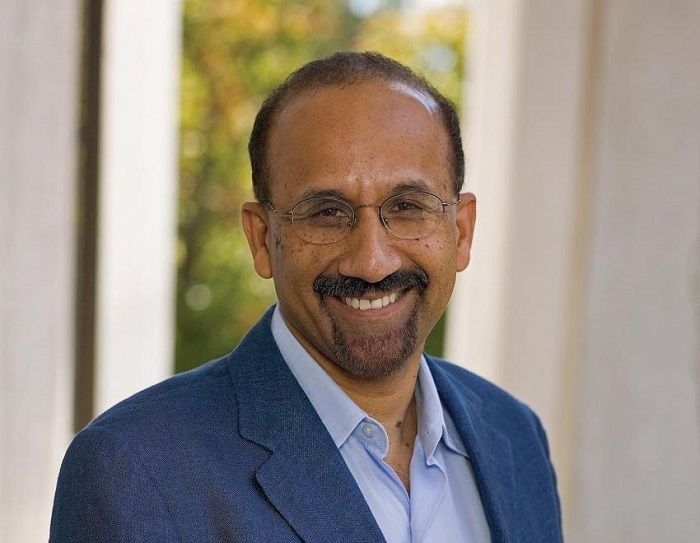
ATUL KOHLI is the David K.E. Bruce Professor of International Affairs at Princeton University. His principal research interests are in the area of political economy of developing countries. He is the author of Imperialism and the Developing World: How Britain and the U.S. Shaped the Global Periphery (forthcoming, 2019); Poverty amid Plenty in the New India (2012) (a Foreign Affairs Best Book of 2012 on Asia and the Pacific); State-Directed Development: Political Power and Industrialization in the Global Periphery (2004) (winner of the Charles Levine Award (2005) of the International Political Science Association); Democracy and Discontent: India's Growing Crisis of Governability (1991); and The State and Poverty in India (1987). He has also edited or co-edited ten volumes (most recently, States in the Developing World, 2017; and Business and Politics in India, forthcoming) and published some sixty articles. Through much of his scholarship he has emphasized the role of sovereign and effective states in the promotion of inclusive development. In an interview he answered our questions like the following:
Gulan: In what ways did the establishment of colonial borders by imperial powers play a role in the persistence of ethnic or political conflicts in the developing world?
Professor Dr. ATUL KOHLI: Colonialism dragged much of the developing world into the modern era of nation-states. This historical transformation was at best incomplete. It has left behind numerous political conflicts, both as a result of the haphazard manner in which colonial borders were drawn, and as a result of how colonizers departed, leaving behind messy boundaries and contested identities. The Scramble for Africa is the most pertinent example of how artificial boundaries were imposed by Europeans on diverse African people, who then had to live together as a “nation.” The roots of many fragile and failed states in Africa today – anywhere from Nigeria to DRC -- can be traced back to the poor quality of states that the colonizers constructed, both in terms of central state institutions, and as a result of imposition of borders on people without a shared historical identity. The legacies of messy decolonization are also still evident in such diverse places as in Ireland, India-Pakistan and Israel-Palestine conflicts, and in the aspirations of a people who have been denied a state, such as the Kurds.
Gulan: How did imperialism influence the economic frameworks of colonized nations, and in what ways has that legacy impacted their development after gaining independence?
Professor Dr. ATUL KOHLI: This is a long and complicated subject. My books Imperialism and the Developing World (2020) and Greed and Guns (2022) cover the issues in detail. A brief answer, however, is this:
More often than not, imperialism was motivated by the need of industrializing economies to secure raw materials from the global periphery and to sell them manufactured goods in return. Imperialists often used superior gun-power to impose political arrangements on weaker states or people – and thus created formal or informal empire – to enable such economic arrangements. The result was economic exploitation of peripheral people. These beginnings have had long term legacies. They have proven hard to reverse. Some Asian countries – such as South Korea, China and to an extent India – have successfully reversed these historical legacies by using state power to modernize their respective economies. However, effective state power is rare and so are cases of successful industrial growth in the contemporary developing world. Much of Latin America continues to depend on commodity exports for limited and unequal economic growth. The same holds for Africa but with a vengeance; with poor quality states inherited from its colonial past, even limited growth is a struggle. And for the Middle East, oil is both a blessing and a curse. There is far too much foreign intervention in the region to ascertain what the region’s “natural” economic evolution would look like.
Gulan: In what way has the legacy of resource extraction from the time of imperial rule affected present-day economic disparities in developing countries?
Professor Dr. ATUL KOHLI: I think I have already answered this question above. The only thing I would add is that dependence on natural resources does not have to be a curse. Compare, for example, Indonesia and Nigeria, both oil-exporters. With a poor-quality state, Nigeria often squanders its oil resources, contributing neither to growth, nor to the well-being of its people. By contrast, Indonesian governments have used oil resources better to support economic diversification. Much depends on the quality of state intervention.
Gulan: What were the psychological impacts of imperialism on colonized populations, especially regarding their identity and self-image?
Professor Dr. ATUL KOHLI:I have not studied this subject so I will not comment on it. From Franz Fanon to a host of other social psychologists study this subject. This question should be addressed to them. As to the more limited issue of identity politics, I have already addressed that issue above.
Gulan: How do international institutions and global trade mirror the power dynamics of the imperial era?
Professor Dr. ATUL KOHLI:There is a fair amount of continuity, except in Asia. China, India, South Korea, and ASEAN countries were all colonies (or near colonies, as in China), but they now mainly export manufactured goods to the world. They have broken the colonial legacy. China is even launching its own international institutions. By contrast, mush of the Middle East, Africa and Latin America continue to be exporters of commodities and takers of manufactured goods. What is truly ironical is that this pattern is now being perpetuated by China. So Latin America may now deindustrialize because of cheap manufactured imports coming, not from the US or Europe, but from China. How the world turns!
Gulan: In what ways do neo-imperialism and globalization sustain historical disparities between former imperial powers and developing countries?
Professor Dr. ATUL KOHLI:The world is changing very rapidly. With Trump in power, it is not even obvious that the US supports globalization any more. The US indeed pushed for globalization from the 1980s onwards, hoping to outsell others and thus maintaining its hegemonic position. Unfortunately for the US, things have not worked out this way. First the economic recovery of Germany and Japan (from 1960 onwards), and then the Chinese success in producing cheap manufactured goods (1990s onwards), have profoundly hurt manufacturing in the US. The real winner of globalization has been China. So, yes, globalization reinforced the old colonial pattern of exchange of raw materials for manufactured goods for some parts of the world, but that pattern has been sharply disrupted by Asian successes. Now the US even wants to keep manufactured goods made in Vietnam out of its borders. So, yes, for oil exporters the world still looks like the old imperial world. The same holds for many countries in Africa and Latin America who export mainly commodities. But for many others in Asia, the real danger now is not globalization but its reversal. In sum, it is increasingly hard to generalize over the entire developing world. Their economies are evolving along different paths. Those who have regained their sovereignty and created effective (even if unsavory) states – such as China and India – are moving in a more dynamic direction. By contrast, ineffective states that depend on outside powers continue to remain embroiled in neo-imperial patterns, both economic and political.