Iraq’s New Customs Regulations Paralyze Trade in Kurdistan, Leaving Thousands Jobless
A sweeping customs regulation imposed by Iraq’s federal government has brought commercial activity in Zakho and Duhok to a near halt, leaving thousands of workers in the Kurdistan Region without income and businesses struggling to survive.
For Hakar Mohammed, a warehouse laborer in Zakho, the past month has been marked by endless waiting. Sitting idle near a shuttered warehouse, he stares at his phone, hoping for news that might revive his livelihood.
“We used to unload three to four trucks a day,” he told Kurdistan 24. “But for over a month, everything has stopped. Now, we just wait. I can’t even afford my rent.”
Mohammed’s plight is shared by hundreds of daily wage workers who once formed the backbone of logistics operations in the region. With no social safety net, their survival hinges on the return of cross-border trade.
The crisis began in October 2024 when Baghdad introduced new customs requirements, mandating federal clearance codes for all goods entering through Kurdistan’s border crossings. The move has effectively blocked hundreds of trucks from passing through the Ibrahim Khalil border crossing, a vital trade artery for the region.
Abdullah Ibrahim, another laborer, described the grim reality: “Some days, we earn no more than 10,000 Iraqi dinars ($7.50). Many have already given up coming to work.”
Mohammed Khalil, a father of three, saw his household income vanish overnight. “We used to make 50,000 to 100,000 dinars (38to38to76) daily. Now, some days, we can’t even afford the taxi fare to the warehouse.”
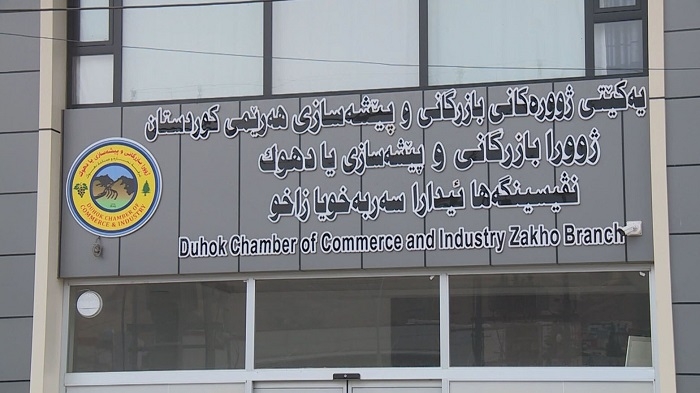
The economic shock extends beyond laborers. According to Latif Othman, head of the Zakho Chamber of Commerce, more than 1,000 registered companies in Zakho have been affected, with around 500 active members of the chamber either suspending operations or shutting down entirely.
“This decision has devastated businesses in Duhok and across the Kurdistan Region,” Othman said. “Companies relying on imports through Ibrahim Khalil are hit the hardest.”
Before the regulations, over 10,000 workers were employed in Zakho and Duhok’s logistics sector—most of them low-wage earners living in rented homes. Now, with no income, many face eviction and destitution.
As desperation grows, workers and business owners are pleading with Baghdad to reconsider the policy. Many demand a compromise that upholds federal trade regulations without crushing Kurdistan’s economy.
With livelihoods at stake and families pushed to the brink, the message from Zakho is clear: Revise the decision before despair turns into irreversible collapse.