Kirkuk Farmers Welcome Wheat Subsidy but Demand Protection from Military Harassment
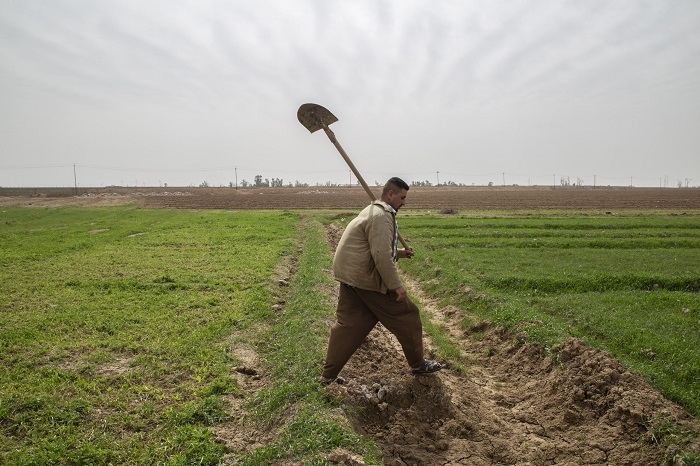
While the Iraqi government has expanded its wheat subsidy program to include Kurdish and Turkmen farmers outside Kirkuk’s official agricultural plan, many say the move fails to address ongoing military interference and land access violations.
Governor Rebwar Taha recently announced that all farmers in Kirkuk—regardless of whether their land is included in the official agricultural plan—can now sell wheat to the government at a subsidized rate of 850,000 Iraqi dinars (approximately $580) per ton. Though the decision provides economic relief, Kurdish farmers report continued obstacles in accessing their fields due to Iraqi military restrictions.
"For us, this decision means little if we cannot reach our fields," said Satih Naseeh, a Kurdish farmer in Kirkuk. "We have no authority. They have power in this city, and they have military forces."
Local farmers say military units regularly block them from working their land, particularly in areas with unresolved ownership disputes. Kurdish residents allege threats, harassment, and forced displacement by resettled Arab families, backed by military presence. Several farmers claim they have been barred from sowing or harvesting crops, even after the subsidy extension.
Human rights groups have long documented such tensions in Kirkuk and other disputed territories, where control over land and governance has been contested since the fall of Saddam Hussein in 2003. Farmers and local leaders are urging the Iraqi government to fully implement Article 140 of the Iraqi Constitution, which outlines a process for resolving territorial disputes through normalization, a census, and a referendum.
"The wheat subsidy is welcome," one farmer said, "but what we need more urgently is protection from military interference and the right to farm our own land in peace."
As harvest season continues, Kirkuk’s Kurdish farmers remain in limbo. While government policies appear to be moving toward greater inclusion, enforcement on the ground reflects persistent political and security tensions, leaving many uncertain about their future.