Dr. Melinda Negron-Gonzales to Gulan: Transitional governments in post-conflict settings are inherently precarious
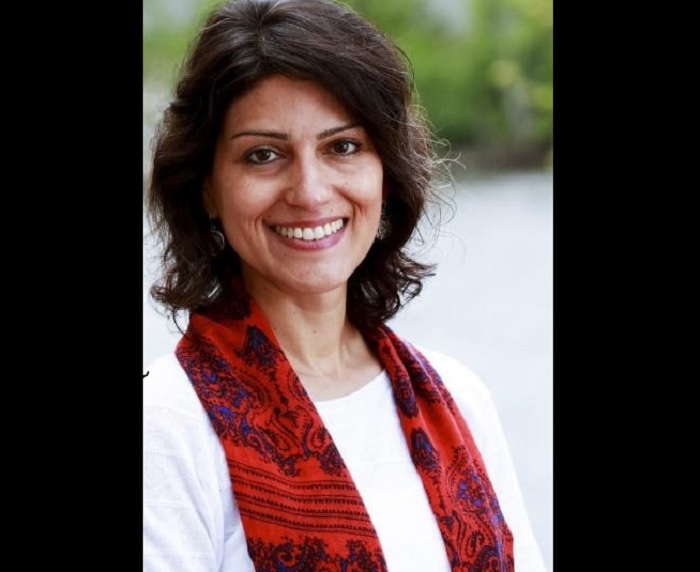
Dr. Negrón-Gonzales has taught at UNH since fall 2008 and teaches courses on global studies and comparative politics. She is the Chair of the Department of Security Studies and the Founding Program Director of the Global Conflict and Human Security master's program.Her research covers social movements and civil society, counter-terrorism and human rights, international norms that promote human security (especially the responsibility to protect/R2P), and Turkish and Middle East politics. Her latest research explores the tension between counter-terrorism and human rights and analyzes the ways civil society organizations in Turkey have attempted to promote human rights and hold state officials accountable for gross human rights violations during armed conflict. Dr. Negrón-Gonzales was a Fulbright Scholar (Turkey, 2006-7). She received UNHM's Faculty Excellence in Teaching award in 2013 and a Silver UNH Sustainability Award in 2021. She serves on the Board of Directors of the World Affairs Council of New Hampshire. In a written interview she answered our questions like the following:
Gulan: Although Syria has gotten rid of a dictatorial regime, this does not mean that this country's path is not fraught with dangers. From your point of view, what are the most important and difficult challenges facing this country?
Dr. Melinda Negron-Gonzales: Reconstructing critical infrastructure and revitalizing the economy are absolutely essential for improving the lives of Syrians after years of devastation. Long-term sustainable development depends on the absence of war—no peace, no sustainable development.
Politically, Syrians face two broad interrelated and urgent challenges: reconciling competing visions for the country's future and preventing a relapse into civil war. Two key initiatives by the new government stand out: the adoption of a transitional framework through an interim constitution and outreach efforts, including high-profile negotiations and the agreement with the Kurdish-led Syrian Democratic Forces.
Preventing clashes from escalating into a renewed civil war is one of the new government’s most urgent priorities. The country remains fragmented, with numerous armed groups, including ISIS, still active. This is not uncommon in post-conflict states. But the stakes are high, as we saw with the wave of violence in coastal cities. There must be continued work on disarmament, demobilization, and reintegration (DDR) to dissolve or integrate armed groups into a unified national military. And the government must clearly demonstrate accountability when state security forces violate basic human rights, as they did in Alawite communities.
DDR is tied to political integration. During the war, alternative governance structures emerged, most notably the US-backed, Kurdish-led Autonomous Administration. These entities pose a complex challenge. Building a cohesive state requires negotiations to dissolve or integrate existing political bodies, a process that depends on confidence- building measures—particularly between state officials and minority communities. At the same time, President al-Sharaa must also maintain support from his core Islamist base. This balancing act is very tricky.
The process and content of the constitutional declaration quickly drew fire for lack of inclusivity and over-centralization of power. These were fair criticisms. But it is notable that people were able to freely express these criticisms. Creating space for criticism, demonstrating that officials are listening, and clearly communicating the concrete steps being taken to build an inclusive, accountable system that addresses people’s basic needs could go a long way toward reconciling competing visions and avoiding a relapse into civil war.
Gulan: As an expert on good governance, how this country be characterized, failed, or failing, or extremely fragile, or it is to soon to judge?
Dr. Melinda Negron-Gonzales: Transitional governments in post-conflict settings are inherently precarious, politically and institutionally. Regardless of whether we call Syria a failed state or not, its institutions are extremely fragile and will remain so for a while. Capacity-building takes years.
Gulan: The new authority in Syria has taken several steps, such as the constitutional declaration and meetings with Kurdish parties. How do you evaluate the seriousness and effectiveness of these measures, and do you think they will lead to building trust and strengthening societal ties?
Dr. Melinda Negron-Gonzales: The agreement signed by SDF Commander Mazloum Abdi and President al-Sharaa laid the groundwork for integration. The agreement outlines the formation of committees to oversee its execution, aiming for full implementation by the end of 2025. This is a good start, but that timeline seems a bit too optimistic. Unfortunately, mistrust on both sides will likely delay implementation. Delays are okay if there are good-faith efforts on both sides to keep the momentum. What is each side willing to give up? The degree of the SDF’s military integration will be a sticking point.
One of the points in the agreement acknowledges the Kurdish community as an integral part of Syria, with guarantees of citizenship and constitutional rights. That’s important but will not be enough to satisfy Kurdish parties. Ultimately, if al-Sharaa is serious about long- term stability, he should consider facilitating national discussion on some form of decentralized governance. Because decentralization means different things to different people, it is rather unclear how everyday Syrians as well as officials in the interim government feel about decentralization. So, there must be substantive debate throughout Syria to define what decentralization could look like in the Syrian context, and these discussions must be inclusive.
For Syrian Kurds, decentralization could involve local self-rule in key areas such as education, security, and judicial administration. A workable model could include the following elements in Rojava: administrative decentralization (e.g., fiscal autonomy over certain areas); recognition of Kurdish as co-official language alongside Arabic, with guarantees for Kurdish media, education, and cultural institutions; local security sector reform to ensure equitable representation of marginalized groups (including women) in the local security sector. Of course, the details matter. While the Kurds may not secure an arrangement akin to Iraq’s Kurdistan Regional Government (and Abdi has publicly stated that isn’t his objective), their demand for meaningful local authority is both legitimate and necessary.
But Turkey’s influence over Syria’s new government will likely stymie efforts toward decentralization, especially toward autonomy for Kurds. This is a major dilemma for al- Sharaa, as Turkey has positioned itself as Syria’s key regional partner. Optimists are hoping that Turkey’s renewed peace talks with the PKK may alter its approach to Syria’s Kurds, but President Erdoğan’s consolidation of power through the increased centralization of the Turkish state offers little reason for optimism.
Gulan: What do you think an ideal framework for reconciliation, and healing the deep societal wounds and fissures would entail?
Dr. Melinda Negron-Gonzales: Community leaders throughout the country must facilitate grassroots dialogues. President al-Sharaa must keep his promise to hold perpetrators of the massacres of minorities in coastal cities accountable to demonstrate the interim government’s seriousness about equal protection. More broadly, Syria’s transitional justice efforts should aim to address past atrocities through a comprehensive approach that includes truth-seeking, compensation and memorialization for victims of abuse and atrocities, and criminal accountability.
Gulan: In what ways can outside parties, particularly the United States, leverage their influence to create positive pressure that guides the emerging situation toward security and stability?
Dr. Melinda Negron-Gonzales: As noted, meeting people’s basic needs is a top priority, and the international community has a major role to play in reconstruction. Hospitals and schools must be built. But US sanctions are a major obstacle to foreign investment in Syria. For instance, the Caesar Act sanctions in place since 2019 have limited Syria's reconstruction efforts. The US and other states should lift sanctions in key sectors now. Foreign governments must continue to provide life-saving humanitarian assistance to communities in need but should condition development aid and the lifting of more sanctions on meaningful reforms to achieve pluralism, justice and accountability. Al-Sharaa’s recent trip to France is a welcome sign.
Gulan: What actions can and should be taken to prevent former terrorist groups from solidifying their presence and to stop the creation of conditions conducive to the strengthening of these extremist groups?
Dr. Melinda Negron-Gonzales: The continued integration of armed groups will strengthen Syria’s armed forces, which is necessary to counter extremism. As stated earlier, there must be continued work on dissolving or integrating armed groups into a unified national military and efforts to reintegrate combatants into civilian life.