India-Pakistan Tensions Escalate: At Least 43 Dead in Cross-Border Strikes and Clashes
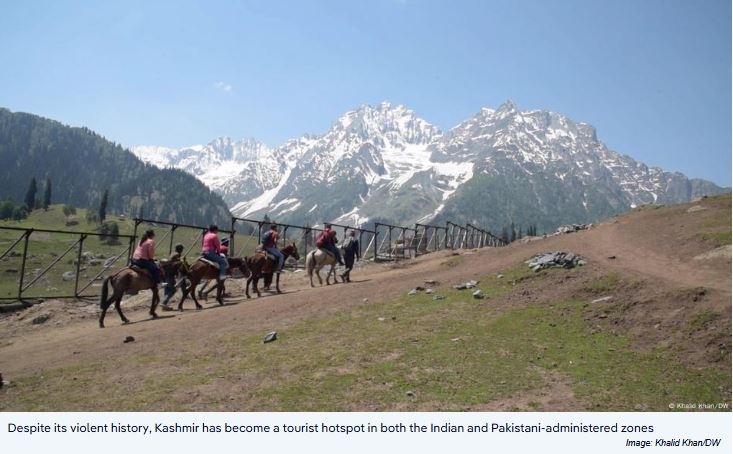
Tensions between India and Pakistan reached a critical point on Thursday, May 8, with the death toll rising to at least 43 following a wave of cross-border violence and military escalation sparked by last month's deadly attack on tourists in Kashmir.
Pakistan reported that 31 civilians were killed following Indian missile strikes across various locations, including near the city of Lahore. According to military spokesperson Major General Ahmed Sharif Chaudhry, India launched at least 25 drones overnight, one of which caused civilian fatalities and wounded several soldiers. In retaliation, Pakistan said it had shot down all the drones.
Meanwhile, India confirmed that 13 people, including both military personnel and civilians, were killed due to Pakistani shelling across the Line of Control (LoC) in the contested Kashmir region.
In response to the April 22 attack in Pahalgam—where gunmen killed 26 tourists—India initiated “Operation Sindoor,” a series of airstrikes on what it described as “terrorist infrastructure” in Pakistan and Pakistan-administered Kashmir. Pakistan has denied the existence of such infrastructure and accused India of targeting civilians.
The Indian army stated that troops exchanged small arms and artillery fire with Pakistani forces throughout the night, marking the worst violence between the two nuclear-armed neighbors in over two decades.
In a nationally televised address, Pakistani Prime Minister Shehbaz Sharif condemned India’s strikes as “cowardly” and vowed retaliation, stating that India “will now have to pay the price.” Pakistan’s Defence Minister Khawaja Muhammad Asif reiterated that any military response would avoid civilian targets and focus solely on Indian military infrastructure.
As tensions rose, aviation authorities in both countries implemented emergency measures. Pakistan closed airports in Islamabad, Karachi, and Lahore until 18:00 local time. Several Indian airports were also shut. International airlines including United Airlines and Korean Air rerouted flights to avoid the airspace over the region. Flight tracking websites showed commercial aircraft diverting over Oman, the UAE, and Kuwait.
Pakistan reported that 57 international flights were in its airspace during the missile exchanges, prompting concerns about civilian aviation safety. Prime Minister Sharif’s office accused India of endangering commercial airline traffic.
Amid the military conflict, digital censorship also surfaced. Meta blocked the popular Instagram account @Muslim in India, citing compliance with a legal request from Indian authorities. The account, which has over 6.7 million followers, is known for promoting Muslim identity and issues. Founder Ameer Al-Khatahtbeh criticized the move as “censorship.” Several accounts of Pakistani public figures have reportedly also been restricted in India.
The current escalation traces back to the long-standing dispute over Kashmir, a region claimed in full by both India and Pakistan but divided into separate administrations. The region's contested status has led to multiple wars and frequent skirmishes since the partition of British India in 1947.
The latest crisis, triggered by the April 22 attack on tourists near Pahalgam, has unraveled years of diplomatic progress and sparked fears of a broader military conflict. India has since suspended a key water-sharing treaty with Pakistan and downgraded diplomatic ties.
As both nations continue to trade blame and escalate militarily, the international community watches with growing concern over the possibility of further destabilization in South Asia.