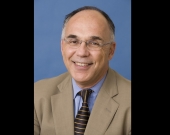
Professor Christopher J. Fettweis to Gulan: It would be a near-miracle of the United States and Iran could agree on a JCPOA-like deal
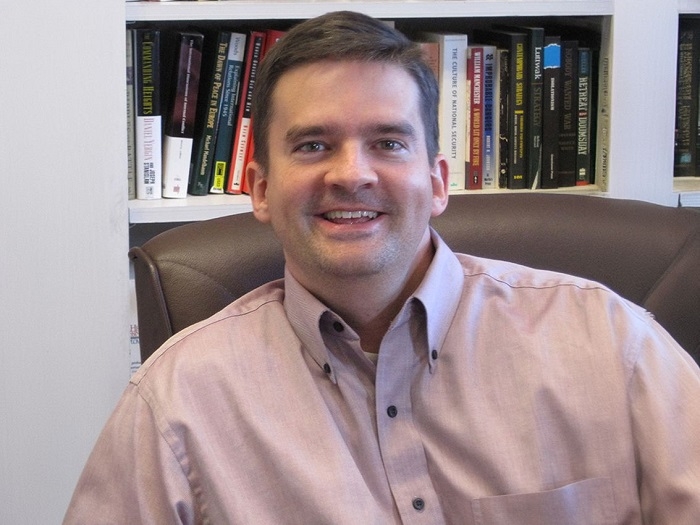
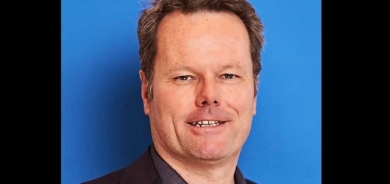
Christopher J. Fettweis is an American political scientist and Professor of Political Science at Tulane University. He is known for his expertise on American foreign relations. He has written several books, The Pursuit of Dominance: 2000 Years of Superpower Grand Strategy, Oxford University Press, 2022. Making Foreign Policy Decisions: A Presidential Briefing Book, Transactions Press, 2015. The Pathologies of Power: Fear, Honor, Glory and Hubris in U.S. Foreign Policy, Cambridge University Press, 2013. Dangerous Times? The International Politics of Great Power Peace, Georgetown University Press, 2010. Losing Hurts Twice as Bad: The Four Stages to Moving Beyond Iraq, W.W. Norton, 2008. In a written interview he answered our questions like the following:
Gulan: In your opinion what is the overarching philosophy underpinning Mr. Trump’s administration approach with regard to the Middle East?
Professor Christopher J. Fettweis: Trump sees the world in terms of black-and-white, good vs. evil, rather than in shades of gray. And it is always personal to him - the good guys are those who like Trump, and the bad ones are anyone who does not.
Gulan: You are aware that the situation in the Gaza Strip is extremely challenging and deteriorating. What do you think could have been done differently to at least alleviate the situation? And is there a viable way to be pursued by US to break the vicious cycle of the Gaza Strip situation, or is everything hopeless?
Professor Christopher J. Fettweis: The United States should have exercised its powerful influence over the Israelis to pressure them to proceed with more caution in Gaza, and to pay more attention to the fate of the innocent. Instead, Biden essentially give his approval for any tactics the Netanyahu government wanted to employ. As a result, the bad situation just got progressively worse.
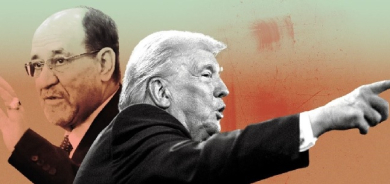
Gulan: It is evident that Mr. Trump is ramping up pressure on Iran, given the prevailing view that Iran has never been more susceptible to influence. Do you think this pressure will yield the desired results for the USA?
Professor Christopher J. Fettweis: It would be a near-miracle of the United States and Iran could agree on a JCPOA-like deal. I have very little confidence in this administration being able to keep out of another unnecessary war the Gulf.
Gulan: A high-ranking Iranian official suggested that Iran might have to resort to building nuclear weapons. What do you think about that?
Professor Christopher J. Fettweis: Anyone in Iran would be thinking the same thing. The Obama administration had essentially solved this problem, but anything associated with Obama was anathema to Trump. He never showed any understanding of the JCPOA - and canceled it largely because it was Obama's deal.
Gulan: Iraq also is facing pressure by US to decouple -so to speak- its linkage with Iran, what choices Iraq has in this regard, and what would be the best course of action for this country to pursue, given its disadvantageous position vis-à-vis USA?
Professor Christopher J. Fettweis: The Trump administration will try to pressure other actors to help in its negotiations. But since it has spent the last few months insulting and aggravating its allies everywhere, I doubt there will be much eagerness to help.
Gulan: Clearly, the Middle East is experiencing a deep and momentous transformation. Is this an opportunity to guide the region toward lasting stability, or has a perfect storm formed that will lead to further disintegration and distress?
Professor Christopher J. Fettweis: Optimists might say that perhaps the region will be able to find a path toward a new future after the recent upheavals. Perhaps these tragedies will shake up a pathological status quo, and progress toward stability can finally be made. People with experience in the region, however, know that the Middle East tends to go from tragedy to tragedy - and that things can always, always get worse.