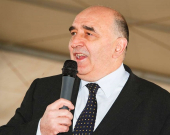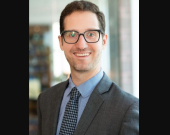
Professor Muhammad Sahimi to Gulan: Iran will not develop a nuclear arsenal, unless it is attacked by the USA and/or Israel

Muhammad Sahimi (Persian:born 22 January 1954) is a Professor of Chemical Engineering and Materials Science and holds the NIOC (National Iranian Oil Company) Chair in petroleum engineering at the University of Southern California (USC) in Los Angeles. He is also active in journalism, frequently writing on Iranian politics.
Sahimi received his B.S. in Chemical Engineering from the University of Tehran in 1977. After briefly working for the National Iranian Oil Company (NIOC), he received a scholarship from the Atomic Energy Organization of Iran. He traveled to the US in 1978. (Where he has since remained), completing his Ph.D. at the University of Minnesota in 1984. He then moved to the University of Southern California, becoming Chairman of his department from 1999 to 2005. Since then, he has held the NIOC Chair. He has also been a visiting professor in Australia and a consultant to many industrial corporations
He was named a Fellow of the American Physical Society in 2023, "for fundamental contributions to the development of percolation theory and statistical physics, specifically in the characterization of heterogeneous porous materials and media, as well as the study of flow and transport processes occurring therein". In a written interview he answered our questions like the following:
Gulan: With the first round of negotiations between Iran and the USA being described as “constructive” and “friendly,” do you anticipate a genuine breakthrough in this matter?
Professor Muhammad Sahimi: The negotiations will be complex and difficult, and if there is going to be any agreement, it will be in multiple stages. But I believe an agreement on an urgent issue, namely, Iran's 65 kg of uranium, enriched at 60 percent, will be reached soon in order to return Iran's breakthrough time for making a nuclear bomb to one year.
Gulan: What do you think an ideal agreement regarding Iran’s nuclear program would entail?
Professor Muhammad Sahimi: Something similar to JCPOA, but presumably for a much longer period of time, and under tighter inspections by the IAEA.
Gulan: It’s clear that Israel would not be pleased with any accord between Iran and the USA. Do you anticipate that Israel will act as a spoiler to undermine any such agreement?
Professor Muhammad Sahimi: Israel's lobby and allies are already trying to discredit Steve Wittkoff, the President's special envoy and nuclear negotiator, as well as Qatar and Oman, the two nations that brought Iran and the USA to the negotiation table. Israel will try its utmost to prevent any agreement, but once it is reached, there will be little that it will be able to do against it.
Gulan: What do you think the domestic response would be concerning any possibility of reaching a nuclear agreement with Trump’s administration, given that he withdrew from this agreement during his first term?
Professor Muhammad Sahimi: The President has already been reminded that it was him who pulled the USA out of JCPOA, an agreement that was working. But I believe if there is an agreement, the American people will support it because they are tired of 25 years of war in the Middle East.
Gulan: Should the negotiation process fail; will it result in military conflict? Do you believe that Iran would seek to develop a nuclear bomb if attacked by the USA?
Professor Muhammad Sahimi: Iran will not develop a nuclear arsenal, unless it is attacked by the USA and/or Israel. If the negotiations fail, the likelihood of war will increase significantly, although that would not mean that it will happen with certainty.