China Warns of Retaliation as Nations Move to Strike Trade Deals with US
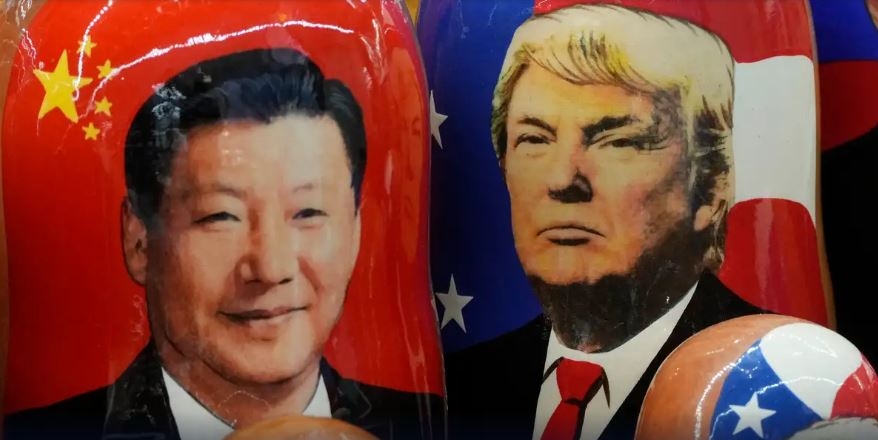
China issued a sharp warning on Monday against countries that seek to improve trade ties with the United States at Beijing’s expense, threatening retaliatory action in response to what it described as appeasement of Washington.
The warning comes in the wake of a Bloomberg report revealing US plans to pressure countries into reducing trade with China if they want to avoid sweeping new tariffs announced by President Donald Trump earlier this month. The tariffs, aimed at correcting what the US calls "chronic trade imbalances," have been temporarily suspended for 90 days for most nations—except China, which faces duties of up to 145%.
In response, Beijing raised its own tariffs on US imports to as high as 125%, escalating tensions in an already fragile global trade landscape.
China’s Commerce Ministry released a strongly worded statement on Monday, criticizing countries that would prioritize short-term gains by cutting deals with the United States.
“Appeasement will not bring peace and compromise will not be respected,” the ministry said. It warned against putting "temporary selfish interests at the expense of others," calling such moves a “lose-lose” strategy.
"China firmly opposes any party reaching a deal [with the US] at the expense of China's interests," the statement continued, adding that Beijing would "resolutely take reciprocal countermeasures" against any country that cooperates with Washington to China’s detriment.
US Trade Representative Jamieson Greer recently disclosed that nearly 50 countries have initiated negotiations to avoid the new US tariffs. Several bilateral discussions have already occurred.
Japan is reportedly considering expanding US imports of rice and soybeans. South Korea has presented a proposal that includes increased US liquified natural gas (LNG) purchases and collaborative projects in shipbuilding and pipelines.
Taiwan’s President Lai Ching-te has offered to eliminate tariffs entirely as a starting point for negotiations. Taiwanese companies are also planning increased investments in the US to strengthen ties.
Indonesia has announced plans to ramp up food and commodity imports from the US while scaling back purchases from other countries.
Meanwhile, US Vice President JD Vance began a four-day visit to India on Monday to advance a potential trade agreement. The European Union, for its part, has paused $23 billion in retaliatory tariffs on American goods to allow room for further dialogue.
Despite Beijing's harsh rhetoric, President Trump confirmed last week that trade talks with China are ongoing.
"Yeah, we're talking to China," Trump said during an Oval Office briefing. "I think we're going to make a very good deal with China."
Beijing, however, has not confirmed the negotiations and maintains that it is ready to “fight to the end” in the trade war.
The growing global divide is putting pressure on many nations to navigate a complex economic tightrope. While the new US tariffs create opportunities for China’s rivals in Southeast Asia to gain market share in the US, those same countries remain deeply connected to Chinese trade and investment.
In 2024, ASEAN nations conducted $975 billion in trade with China—more than double their $398 billion in trade with the United States.
“The fact is, nobody wants to pick a side,” said Bo Zhengyuan, a partner at China-based consultancy Plenum. “If countries have high reliance on China in terms of investment, industrial infrastructure, technology know-how, and consumption, I don’t think they’ll be buying into US demands.”
As the world’s two largest economies continue their high-stakes standoff, other nations may be forced to choose between loyalty, leverage, and long-term strategy.