Trump Seeks Diplomatic Path with Iran Amid Rising Tensions, Envoy Reveals
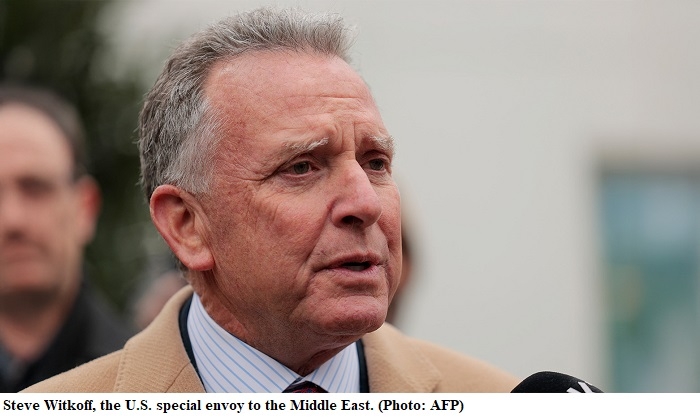
Amid escalating tensions in the Middle East, U.S. President Donald Trump is signaling a renewed push to avoid military confrontation with Iran, instead focusing on diplomacy and trust-building, according to Steve Witkoff, the president’s Middle East envoy. This approach stands in stark contrast to the rhetoric of Iran’s Supreme Leader Ayatollah Ali Khamenei, who recently warned of severe retaliation against any Western aggression.
In a wide-ranging interview with American news anchor Tucker Carlson, broadcast Friday on X (formerly Twitter), Witkoff revealed that Trump had sent a letter to Iran’s leadership, framing it as an appeal for dialogue and peace rather than a threat of force. Witkoff emphasized that Trump’s priority remains a diplomatic resolution to the ongoing tensions, even as pressure for military action mounts both domestically and internationally.
“There's enormous pressure on the U.S., on the Trump administration from within and from outside to have a military conflict with Iran,” Carlson noted during the interview. “The president doesn't seem, that's not his first, this is my read, if he wanted that, we'd already have it. He seems to want a diplomatic solution first. He wants to try that first.”
Witkoff confirmed this assessment, stating, “Yes, that’s fair.” He elaborated on the contents of Trump’s letter, which reportedly conveyed a message of peace and a desire to avoid military conflict. “It roughly said: ‘I'm a president of peace, that's what I want. There’s no reason for us to do this militarily. We should talk. We should clear up the misconceptions. We should create a verification program so that nobody worries about weaponization of your nuclear material.’”
Witkoff stressed that the letter was not a sign of weakness but a strategic overture. “He's not reaching out because he’s weak,” he said. “He is a strong man, maybe the strongest man I’ve ever met in my life.”
The letter reportedly offered Iran a path forward, including the possibility of rejoining the international community, lifting sanctions, and rebuilding its economy. “Their economy was once a wonderful economy. They're being strangled and suffocated today,” Witkoff said. “They can join the League of Nations and we can have a better relationship and grow that relationship, and that's what he's [President Trump] presenting. That's the alternative he's presenting.”
However, Trump’s diplomatic overture comes amid a seemingly uncompromising stance from Iran. In a fiery speech delivered at the Imam Khomeini Hussainiya in Tehran during Nowruz celebrations, Ayatollah Khamenei declared that American threats and sanctions would never succeed. He warned that any act of aggression against Iran would provoke a “severe slap.”
Khamenei also rejected the West’s characterization of Iran-backed groups in the region as proxies, particularly Yemen’s Houthis, arguing that these are independent actors rooted in local resistance. He reiterated Iran’s support for Palestinian and Lebanese factions resisting Israeli military operations and condemned Western nations for ignoring widespread protests against Israel’s actions in Gaza.
Despite Iran’s hostile rhetoric, Witkoff revealed that Tehran has responded to Trump’s message through backchannels involving multiple countries. While he did not disclose the nature of Iran’s response, he expressed cautious optimism about the potential for diplomacy. “I think that it has a real possibility of being solved diplomatically,” he said. “Not because I’ve talked to anybody in Iran, but because logically, it makes sense.”
The interview comes as U.S.-Iran tensions remain high following a series of regional escalations, including Israel’s recent military strikes that reportedly weakened Iran’s air defense systems. Witkoff acknowledged Iran’s vulnerability, noting that “They are open to attack today,” but insisted that the goal is to avoid further conflict.
While Witkoff acknowledged the technical complexities of any agreement, particularly regarding Iran’s nuclear program, he emphasized that Trump’s directive is clear: prioritize diplomacy, avoid war, and repair relationships through trust and mutual respect.
“The President is a President who doesn't want to go to war,” Witkoff concluded. “He’ll use military action to stop a war, not to start one. That's when he actually wants to use military action. In this particular case, hopefully it won't be necessary. Hopefully, we can do it at the negotiating table.”
As Iran ushers in its new year with a combative tone and the U.S. signals diplomatic overtures, the coming months will likely determine whether the longstanding adversaries can chart a path toward reconciliation or slide further into confrontation.