Shifting Priorities in U.S. Diplomacy: Professor Richard Caplan on Trump's 'America First' Policy and Its Global Implications
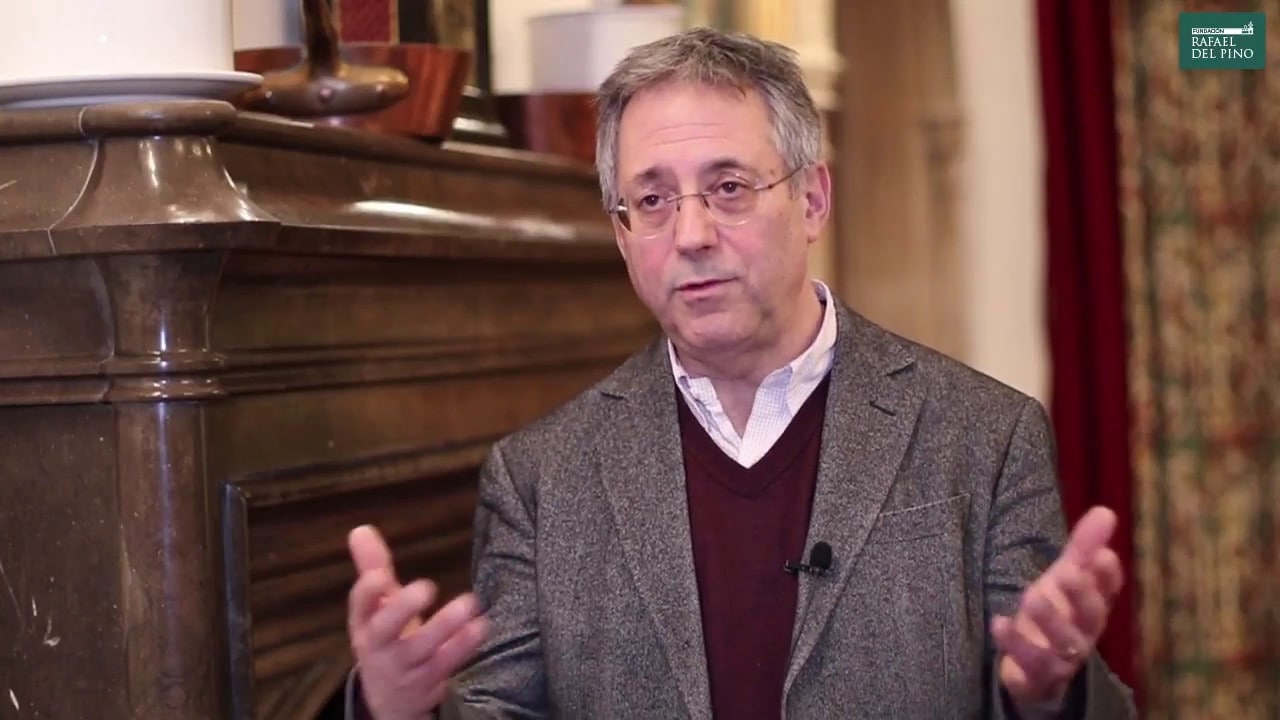
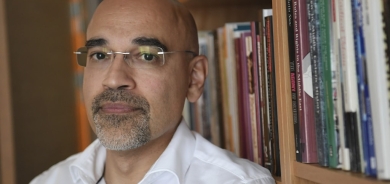
Richard Caplan is Professor of International Relations and an Official Fellow of Linacre College. His principal research interests are concerned with international organisations and conflict management, with a particular focus on peacekeeping and 'post-conflict' peace- and state-building. He is the author and editor of several books, among them Europe's New Nationalism: States and Minorities in Conflict (Oxford University Press, 1996); A New Trusteeship? The International Administration of War-torn Territories (IISS/Routledge, 2002); Europe and the Recognition of New States in Yugoslavia (Cambridge University Press, 2005); International Governance of War-torn Territories: Rule and Reconstruction (Oxford University Press, 2005); and Exit Strategies and State Building (Oxford University Press, 2012). His most recent book is Measuring Peace: Principles, Practices and Politics (Oxford University Press, 2019). In a written interview he answered our questions as the following:
Gulan: What are the new priorities in U.S. diplomacy under the Trump administration, and how do they reflect the changing global order?
Professor Dr. Richard Caplan: With regard to the global economy, Trump is pursuing an economic nationalist strategy, prioritizing U.S. domestic industries through protectionist policies – most notably with the imposition of tariffs on imports, the revenue from which he proposes to use to offset anticipated tax cuts. Economic nationalism represents a retreat from free-market liberalism which, however imperfectly practiced in the past, was predicated on principles of free trade and open markets with minimal tariffs and restrictions. With regard to international security, Trump is seeking to untether the United States from what he views as costly alliances and other security commitments, even if these commitments historically have helped in many cases to maintain stability and democracy from which the United States has also benefitted. Trump’s world order is one of major powers competing against each other in which the United States exercises freedom to act unrestrained in pursuit of its interests, even at the expense of well-established norms and principles of international relations.
Gulan: In what ways has the Trump administration shifted U.S. policy toward China, especially regarding trade and security concerns?
Professor Dr. Richard Caplan: In many respects the Trump administration’s policy toward China is consistent with both the Biden administration’s and the first Trump administration’s policies toward China. All three administrations imposed or maintained tariffs on Chinese goods imported into the United States. Trump views China as a strategic competitor but also as an unfair competitor that employs unfair trade practices, currency manipulation, and intellectual property theft. With regard to Taiwan, the Trump administration continues to support the longstanding U.S. policy of ‘strategic ambiguity’ – leaving uncertain whether the United States would come to the defence of Taiwan if China were to invade. In keeping with Trump’s preoccupation with trade deficits, his administration has also threatened Taiwan with tariffs on its sales of semiconductors to the United States, hoping that Taiwanese firms will invest more in U.S.-based production as a way of reducing its hefty trade surplus.
Gulan: What changes in the U.S.-Russia relationship have occurred under the new Trump administration, and how are they impacting global security dynamics, especially with regard to Russia-Ukraine war?
Professor Dr. Richard Caplan: Trump has sought to improve U.S. relations with Russia in part by seeking to bring an end to the Russia-Ukraine war on terms that are very favourable to Russia. In a 180 degree turn from the previous U.S. position, Trump has overtly rejected criticism of Russian aggression against Ukraine, for instance twice siding with Russia – against Britain and France – in votes in the UN Security Council that ignored Russian culpability for violating Ukraine’s territorial integrity. Moreover, Trump has intimated that Ukraine may have to sacrifice some if not all the territory which Russia occupies illegally as the basis of a peaceful settlement of the conflict, in violation of the fundamental norms of non-aggression and respect for the territorial integrity of states. Among liberal democratic states, the United States under Trump is seen increasingly as a rogue elephant.
Gulan: How has the Trump administration's "America First" policy influenced its international trade agreements and partnerships?
Professor Dr. Richard Caplan: As explained above, the Trump administration’s “America First” policy seeks to maximize the benefits for the United States from trade agreements and partnerships. While it is natural for countries to pursue their national interests in economic relations, since the end of World War 2, the United States has promoted greater trade liberalization and the lowering of tariffs and non-tariffs barriers to trade. By imposing punitive tariffs on its trading partners, the Trump administration is pursuing a beggar-thy-neighbour policy reminiscent of policies that worsened the global economic crisis in the period between the two world wars.
Gulan: What role does the Trump administration see for the U.S. in the Middle East, and will it lead to sustainable peace and stability in this region?
Professor Dr. Richard Caplan: The Trump administration sees itself as a peace broker in the Middle East. However, it is not seen as an honest broker. Its uncritical support of Israel is viewed widely as unbalanced in relation to the demands for self-determination on the part of the Palestinian nation. The Trump administration has failed to reaffirm the longstanding U.S. position of support for the establishment of a Palestinian state alongside the Israeli state, although admittedly no U.S. administration has pursued this commitment with any vigour. To the contrary, under the current Trump administration, the United States is proposing to displace hundreds of thousands of Palestinians from Gaza as part of any reconstruction of the war-devastated territory.
Gulan: What has been the Trump administration’s strategy regarding nuclear proliferation, especially with North Korea and Iran?
Professor Dr. Richard Caplan: The first Trump administration undermined the nuclear non-proliferation regime by withdrawing from the Intermediate-Range Nuclear Forces (INF) Treaty (prompted by Russian violations) and by failing to take measures to prolong the New START treaty – the last existing nuclear weapons limitation treaty between the US and Russia, which expires in February 2026. Meanwhile the current Trump administration is continuing the U.S. nuclear modernisation programme under way which is estimated to cost $1.7 trillion over 30 years. Furthermore, Trump is committed to investing in ‘space-based missile defence’, which may well encourage a further expansion of Russia’s and China’s nuclear arsenals. With regard to Iran, the Trump administration has restored its policy from the first term of ‘maximum pressure’ in an effort to prevent Iran from developing a nuclear weapon. As for North Korea, it remains to be seen whether Trump will renew efforts to curb its nuclear weapons expansion after failing to make any headway in his previous administration.