Egypt Proposes $53 Billion Reconstruction Plan for Gaza at Emergency Summit in Cairo
In a bid to address the devastation in the war-torn Gaza Strip, Egypt has unveiled a comprehensive five-year reconstruction plan at an emergency Arab summit in Cairo. The proposal, estimated to cost $53 billion (€50.5 billion), aims to rebuild Gaza and ensure Palestinians can "remain on their land," according to Egyptian President Abdel Fattah al-Sissi.
Details of the Reconstruction Plan
The 112-page draft document, reviewed by DPA and Reuters, outlines a multi-phase approach to rebuilding Gaza. The initial six-month recovery phase will focus on clearing rubble and providing temporary housing at a cost of approximately $3 billion. The first phase will involve constructing 200,000 housing units within two years, followed by an additional 200,000 units in the second phase. By 2030, the plan envisions hundreds of thousands of new homes to accommodate up to 3 million people, alongside the development of an airport, industrial zones, hotels, and parks.
President Sissi emphasized that an "independent" Palestinian body would oversee the reconstruction efforts. Palestinian President Mahmoud Abbas expressed readiness for the Palestinian Authority to play a central role in the process.
International Support for the Plan
The Egyptian proposal has garnered significant international backing. United Nations Secretary-General Antonio Guterres, speaking at the summit, "strongly endorsed" the Arab-led initiative, affirming the UN's commitment to full cooperation. European Union Council President Antonio Costa also welcomed the plan, stating it offers hope to millions of Palestinians and could end the "terrible suffering" witnessed over the past year and a half.
Bahrain's King Hamad bin Isa Al-Khalifa praised Egypt's efforts, urging support for the plan to strengthen regional ties and protect national interests. Syria's interim President Ahmed al-Sharaa, attending his first such summit since assuming office, also voiced support, condemning alternative proposals as "a very huge crime."
Hamas' Response and Challenges Ahead
While Hamas, the Islamist group governing Gaza, welcomed the Egyptian proposal, it remains at odds with Israel over key issues. Israel has demanded Hamas' disarmament as a condition for a lasting ceasefire, a move Hamas has rejected as a "red line." Despite this, Hamas expressed hope for an effective Arab role in ending the humanitarian crisis and thwarting Israeli plans to displace Palestinians.
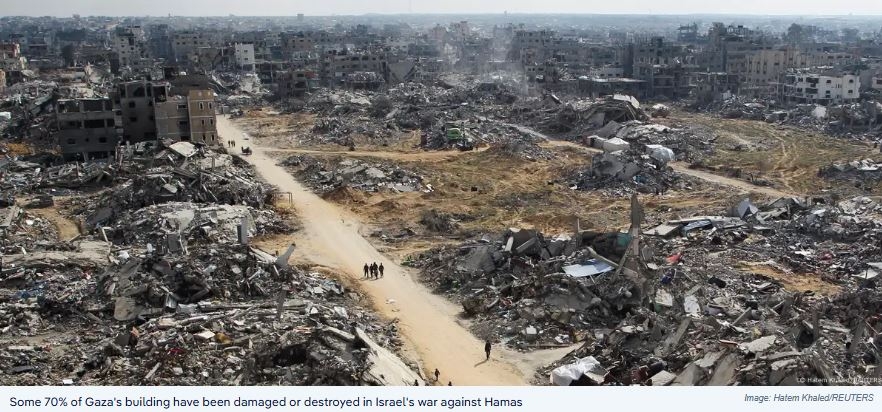
The scale of destruction in Gaza is staggering. UN estimates, based on satellite data, indicate that nearly 70% of all structures in Gaza have been damaged or destroyed, including over 245,000 homes. The war has also left behind more than 50 million tons of rubble, roughly 12 times the volume of the Great Pyramid of Giza.
Funding and Regional Dynamics
The success of the reconstruction plan hinges on substantial financial contributions from oil-rich Gulf states, such as the United Arab Emirates (UAE) and Saudi Arabia. Neither country supports Hamas, but their involvement is critical to the plan's implementation.
Countering Trump's Controversial Proposal
The emergency summit was partly convened in response to former US President Donald Trump's controversial proposal to "resettle" Palestinians from Gaza to other Arab countries and redevelop the territory. Trump's AI-generated video, depicting a transformed Gaza as the "Riviera of the Middle East," was praised by Israeli Prime Minister Benjamin Netanyahu but sparked widespread outrage across the Arab world.
President Sissi, however, expressed confidence in Trump's ability to contribute to peace efforts, stating, "I am sure Trump is able to carry that out amid our true desire to put an end to the tensions and hostilities in our region."
Egypt's ambitious reconstruction plan for Gaza represents a significant step toward addressing the humanitarian crisis and rebuilding the war-ravaged territory. While international support is strong, the plan's success will depend on overcoming political hurdles, securing funding, and ensuring cooperation among all stakeholders. As the region grapples with the aftermath of conflict, the Cairo summit marks a pivotal moment in the quest for lasting peace and stability in Gaza.