Pompeo, Cavusoglu clash at NATO foreign ministers conference
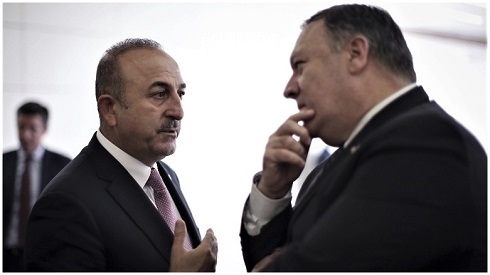
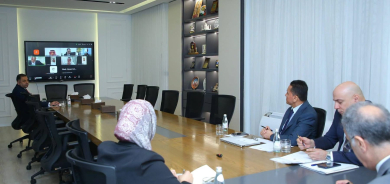
Reports of the clash at Tuesday’s meeting first appeared in European media, suggesting that European officials were the first to publicly reveal details of the verbal confrontation.
“Pompeo slammed Turkey during a virtual meeting of NATO foreign ministers,” Politico Europe reported, “accusing Ankara of stoking tensions with fellow allies in the Mediterranean and of giving a gift to the Kremlin by purchasing a Russian-made anti-aircraft system.”
The NATO conference was Pompeo’s last such event as Donald Trump’s Secretary of State, and those were his harshest remarks about Turkey in a multinational forum.
“Before joining the Trump administration, Pompeo was known for his harsh critiques of the Erdogan government and its Islamist policies,” Dr. Aykan Erdemir, Senior Director of the Turkey Program at Washington’s Foundation for Defense of Democracies and a former Turkish parliamentarian, told Kurdistan 24.
“Since Trump enjoyed a good rapport” with Turkish President Recep Tayyip Erdogan “and treated him leniently, Pompeo chose to use a more diplomatic tone during his time as secretary of state, although he has also taken various steps to contain the Turkish president’s rogue policies,” he continued.
But “as the Trump era is coming to an end, Pompeo appears to be less restrained in expressing his true feelings about Erdogan’s foreign and security policy,” Erdemir concluded.
Pompeo’s critique of Turkish policy involved not only its purchase of Russia’s advanced S-400 missile defense system and its dispute with Greece in the eastern Mediterranean over access to underwater energy sources, but Ankara’s use of mercenaries forces in regional conflicts, as well.
Turkey has exploited the protracted civil war in Syria to create its own version of a foreign legion—the Faylaq al-Sham (Syrian Legion.)
The Faylaq al-Sham are trained in camps in northwestern Syria in areas under Turkish control. They might be compared to the Shi’ites, including from Afghanistan, Pakistan, and Iraq, whom Iran uses to fight in Syria on behalf of its close ally, the Assad regime.
Starting last December, Turkey began sending Syrian forces to Libya to bolster the Government of National Accord, according to the Syrian Observatory for Human Rights.
Most recently, Turkey dispatched some 1,500 Syrians to Azerbaijan, helping that country to prevail in its conflict with Armenia.
Pompeo’s criticism of Turkey included its deployment of Syrian mercenaries to both Libya and Azerbaijan, and it drew support from “France, Greece and even tiny Luxembourg,” Reuters reported.
Indeed, Le Drian backed Pompeo, affirming that NATO’s cohesion “was not possible, if an ally copied Russian actions,” referring to Moscow’s use of mercenary forces, above all, the Wagner Group, including in Ukraine, Syria, and Libya.
Turkish Foreign Minister Mevlut Cavusoglu responded with complaints of his own, including that the US supported a Kurdish “terrorist organizations” in Syria, where the Kurdish-led Syrian Democratic Forces (SDF) have been America’s main partner in the fight against ISIS there.
Cavusoglu also charged that Pompeo had encouraged European countries to “gang up on Turkey” and side “blindly” with Greece, Politico-Europe reported.
“By the end of the meeting,” however, “it was clear that Turkey was virtually isolated” within the 30 member NATO alliance, it said.
It is unclear how Ankara plans to deal with its relative isolation within NATO, which is only likely to grow worse.
US President-elect Joe Biden will, almost certainly, be less indulgent of Ankara than Trump has been. In a video interview with The New York Times, released in August, Biden described Erdogan as an “autocrat,” advising that the US should be “taking a very different approach” to the Turkish president, “making it clear that we support opposition leadership.”