ad leaders discuss continued threat of ISIS
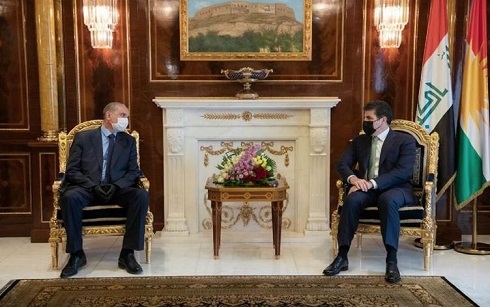
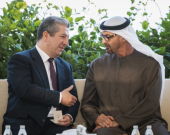
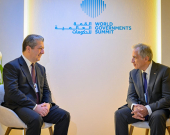
Nechirvan Barzani, the Kurdistan Region’s president, received Iraqi interior minister Othman al-Ghanimi on Wednesday during which the officials talked through several security developments in Iraq.
“The dangers of the ISIS resurgence and movements along the Iraqi-Syrian border and the importance of securing these border areas [were discussed],” reads a statement released by the office of the Kurdistan Region’s presidency on Wednesday following the meeting.
The statement also reads that the officials conferred about the “conditions” of areas affected by the war against the Islamic State (ISIS) group.
“At the meeting…both sides also highlighted the significance of continued cooperation and coordination between the interior ministries of Iraq and the Region and their relevant institutions in all fields,” the statement added.
Ghanimi also met with Kurdistan Regional Government’s (KRG) Prime Minister Masrour Barzani on Wednesday in Erbil to discuss security coordination between Erbil and Baghdad in the disputed areas, as well as the general relations between the KRG and federal government.
During the meeting, Ghanimi informed Barzani of Prime Minister Mustafa al-Kadhimi’s “readiness” to resolve the disputes between the two governments, the statement added.
Wednesday's meeting comes after security officials agreed earlier this month to establish three joint coordination rooms between the Iraqi Security Forces (ISF) and the Peshmerga to eliminate ISIS cells active in the disputed areas, which stretch across Kirkuk, Diyala, Salahaddin and Nineveh provinces.
At the height of its power between 2014 and 2016, ISIS controlled an area roughly the size of Great Britain, spread across both Iraq and Syria. Although Baghdad announced the territorial defeat of ISIS in Iraq in December 2017, remnants of the group have returned to their earlier insurgency tactics, ambushing security forces, kidnapping and executing suspected informants, and extorting money from vulnerable rural populations, particularly in the disputed territories.
The joint coordination rooms will be located in Kirkuk, Diyala, and Nineveh, according to Brigadier General Yehia Rasool, spokesperson for the Iraqi Commander-in-chief.
Last week, ISIS claimed in its weekly propaganda newspaper al-Naba that its militants had carried out 28 attacks in Iraq between July 16 and 22 alone – mainly in Diyala.
In a visit to Erbil last week, US-led counter-ISIS coalition spokesman Col. Myles Caggins III said coordination between Kurdish and Iraqi armed forces is central to the elimination of the terror group.
“ISIS remains a threat, but they are not able to conduct large-scale attacks,” the coalition spokesman told Rudaw last week.
"Three years ago ISIS was defeated in Mosul, and it was due to a joint and strong coordination between Peshmerga, Iraqi security forces, Popular Mobilization Forces, and counter terrorism forces,” Caggins said.
Rudaw