Kurds concerned by marginalization of their language in Germany’s COVID-19 app
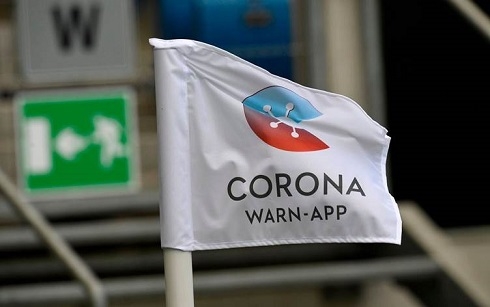
Germany launched Corona-Warn-App in mid June to respond to the increasing number of the virus cases in the country. The app helps the government and people to trace coronavirus patients and provides information on the virus in some 20 languages.
The government has spent upwards of 20 million euro ($23 million) on the app. However, out of nine main topics on the app, only one is available in Kurdish.
Kurds and organizations supporting minority groups have increased efforts to pressure the government to translate the app content into Kurdish.
Among them is the Ethno-Medical Center which was established in 1989. It has prepared, translated and distributed health information in foreign languages, including Kurdish, across Germany. It provides information about several diseases such as diabetes and COVID-19 in 30 languages.
The center, which received the European Health Award in 2015, publishes most of its material in 16 key languages, including Kurdish.
Ramazan Salman, head of the center, told Rudaw that Kurdish is among their top 10 demanded languages.
“Kurdish is definitely among these 16 languages. It's seventh among the top 10 languages However, this varies from one year to another as demand for each language may change. Kurdish occupied the fourth or fifth spot in previous years."
Legal expert Christian Maier told Rudaw via Skype that lack of Kurdish in the application is “discrimination,” wondering why the application has translated topics into Chinese and Vietnamese “while the number of their speakers is clearly less than Kurdish.”
“It is true that the number of English and German speakers is higher than the Kurdish ones but this does not mean that all Kurds can speak German well, especially those who came recently.”
A German government spokesperson told Rudaw via email on July 23 that they currently have the app in German, English and Turkish, and are in the process of adding more languages.
"The Federal Government's goal is to make it easier for as many people as possible to use the Corona-Warn-app. For this reason, translations have been developed as a priority those many users inquired about in Germany. The app is therefore currently available - in addition to German - in English and Turkish. Other languages are in the works.”
One of the most prominent Kurdish figures in the country has also demanded the app’s content be translated to Kurdish. Mehmet Tanriverdi is a member of the Kurdish Community in Germany (KGD) and has been invited to most of the government meetings about ethnic groups, as the representative of Kurds.
Speaking on Hemen Abdulla’s Diaspora program in Germany on Friday, he was asked why they want Kurdish to be added to the app while most Kurds speak Turkish, Arabic and Persian, which are already found in these publications.
“Kurdish is an independent language and not all Kurds can speak in these three languages. It is true that some Kurds have learnt Turkish, Persian and Arabic because Kurdish was banned in these countries,” he replied.
“However, many Kurds still do not speak these languages. Language is part of one’s identity, and an identity does not exist in the absence of language. Therefore, we call on Germany to identify Kurds as an independent ethnic group who have their own language, folklore and culture. It is very important that the information is provided in Kurdish,” added Tanriverdi.
There are no official statistics about the number of Kurds in the country but Tanriverdi said that there are an estimated 1.5 million Kurds in the country, said to be the third largest foreign ethnic group in the country after Turks and Russians.
He added that some 300,000 Kurds migrated to Germany after 2014, mostly from northeast Syria.
“Most of them do not speak Arabic because Kurds study in Kurdish in this region,” he said, adding that he will take legal action if the German integration commission does not act to add Kurdish resources to the app.
Rudaw