Inclusive negotiations: the solution to Syria's endless crisis?
An online conference on the future of Syria was held by the United Nations and the European Union over last month. By its end, the international community had pledged nearly six billion euros in financial aid for the country.
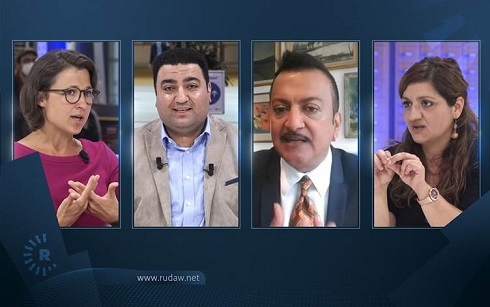
Rudaw’s Hemen Abdulla interviewed members of European parliament Hannah Neumann and Özlem Demirel and Dharmendra Kanani, Director of Strategy at Friends of Europe on July 9, to discuss Syria's prospects.
“All the different groups that live inside Syria should also be represented at every negotiation table where we are discussing about the situation in Syria and trying to find solutions," Neumann said, "including young people and women.”
Demirel reiterated the need for an inclusive, democratic solution, one including all of Syria's ethnic and religious groups. She condemned failure to include the Kurdish-led administration in the northeast of the country in negotiations.
“We have a situation in which Turkey sits on the table, where Assad is on the table, with different countries also siting on the table including the UN, but we don’t have the autonomous administration of Rojava on the table. This is for me not acceptable,” she said.
Kannani expressed doubt that all-inclusive negotiations can take place.
"The reality of having every one around the table is not necessarily the case. It would be great if we have every one at the table but I don’t think so. There are too many vested interests north, south, east and west of Syria. It is a geopolitical issue," Kannani said.
"We know that until we sort out what Turkey is up to, what Russia is up to and what America wants to do or not to do, we are not getting to a place where the talk of including all parties internally can actually come true."
Rudaw