Iraqi PM warns against further attacks as Pentagon plans to 'destroy' militias
Abdul-Mahdi lead a cabinet meeting on Sunday night discussing coronavirus and other issues in the country, despite his resignation on November 29, 2019 after pressures from Iraqi protesters and an official request from Grand Ayatollah Ali al-Sistani, Iraq’s highest Shiite authority.
His office released a statement on Monday, in which the president warned all sides in Iraq that “carrying out unauthorised attacks or acts of war is a threat to the security of citizens and a violation of sovereignty and the higher interests of the country.”
“We condemn all the acts of war some groups are conducting inside Iraq,” Abdul-Mahdi said.
“Any party or side conducting attacks or military action within Iraq, without the approval of the Iraqi government, will be held responsible,” he added.
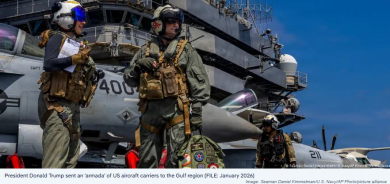
The statement follows a Friday report from the New York Times which revealed that US military commanders have been ordered by the Pentagon to prepare to “destroy” Iran-backed militia Kataib Hezbollah.
Following months of heightened tensions between the US and Iran, rocket attacks on US infrastructure and personnel in Baghdad’s fortified Green Zone and elsewhere in Iraq have become increasingly frequent.
On December 27 of last year, a rocket attack on the K-1 military base in Kirkuk, widely blamed on Kataib Hezbollah, killed a US civilian contractor and injured other personnel.
The US responded with airstrikes on Kataib Hezbollah targets on December 29, killing 25 of the militia’s fighters. A few days later, supporters of Kataib Hezbollah stormed the US embassy compound in Baghdad.
This was followed on January 3 by a US drone strike on Baghdad airport, killing Iranian General Qasem Soleimani and PMF deputy chief Abu Mahdi al-Muhandis.
In January, a barrage of rockets was fired at the sprawling US diplomatic mission in Baghdad, hitting an embassy cafeteria and injuring a staffer.
The deadliest rocket attack was conducted on March 11, in which more than a dozen of Katyusha rockets targeted Taji military camp, around 27 km north of Baghdad, killing two US personnel (one contractor and one soldier) and another British personnel inside the camp.
Most recently on March 14, Kataib Hezbollah targeted Taji military camp in a rare daytime attack with more than 30 Katyusha rockets, wounding three coalition troops and two Iraqis.
Abdul-Mahdi confirmed in the statement that Iraqi government is working on “detaining and capturing” all groups who are responsible for the attacks inside Iraq in order to prevent further incidents.
The PM asked all sides to “respect and halt all the individual planned attacks” inside Iraq, and rather focus on fighting the Islamic State (ISIS) remnants and confronting the coronavirus.
In the past month, the US-led coalition has withdrawn from three strategic and important military bases in Iraq, including K-1 airbase, al-Qaim on the Syrian border and Qayyarah airbase in Nineveh province.
Al-Qaim in Iraq’s Anbar province, west of Baghdad, has been used by US-led coalition troops since 2017 to train and advise Iraqi forces to combat ISIS remnants and sleeper cells.
It was also used to conduct air operations against the jihadists in their last territorial holdout of Baghouz, eastern Syria, in early 2019.
The coalition released a statement on March 20, in which they confirmed that it is adjusting its positions in Iraq in response to the coronavirus pandemic and to reflect its “success” in the campaign to defeat ISIS.
“We anticipate the coalition supporting the Iraqi Security Forces from fewer bases with fewer people,” the coalition said.
Several French, British, and Czech troops have already departed Iraq in the past week in after the coalition’s training mission was suspended.
Although the group lost all of its urban strongholds in Iraq in late 2017 and in Syria in early 2019, ISIS remnants and sleeper cells continue to launch attacks against military and civilian targets in the disputed territories between federal Iraq and the Kurdistan Region.
The coalition believes ISIS has been degraded to such a point that foreign troops are able to reduce their commitments in Iraq and hand over to local forces. This is despite the death of two US soldiers in a recent anti-ISIS operation in Makhmour.
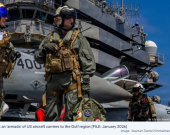
There are roughly 5,000 US troops stationed in Iraq advising and assisting Iraqi and Kurdish forces as part of the coalition.
The presence of US troops in Iraq has always been contentious for Shiite parties and Iran-backed Shiite paramilitias, who have repeatedly demanded a full US withdrawal.
The demands of the Shiite parties top expel US troops from Iraq intensified after the killing of Sulaimani and al-Muhandis in Baghdad, in which they pushed the parliament to pass a non-binding resolution to expel US troops in Iraq on January 5.
Rudaw