WHO chief says coronavirus outbreak has turned into pandemic
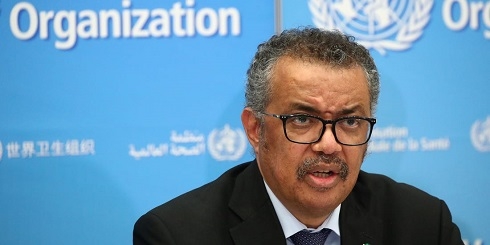
"WHO has been assessing this outbreak around the clock and we are deeply concerned both by the alarming levels of spread and severity, and by the alarming levels of inaction," the UN health chief told a press briefing in Geneva.
In the past two weeks, the number of Covid-19 cases outside of China has increased 13-fold and the number of affected countries has tripled, Tedros said.
Since the previously unknown respiratory disease started spreading in China in December, the global total of cases has reached 118,000 cases in 114 countries, with 4,291 people dead, according to the WHO.
The UN health agency already declared the outbreak an international health emergency in late January, the highest formal alarm level that is meant to rally international action.
While the WHO does not have a legal or scientific definition for pandemic, its officials use the term to describe hard-to-control outbreaks that spreads internationally.
However, Tedros stressed that his use of the term does not mean that the world should give up on detecting each and every new case, and finding and isolating patients' social contacts in order to stem the upward infection curve.
"It would be a mistake to abandon the containment strategy," he said.
"We should double down and we should be more aggressive," Tedros added.
"All countries can still change the course of this pandemic," he said, pointing to successful efforts in China and other countries to bring new infection numbers down.
WHO's health emergency operations chief Mike Ryan criticized that some countries have given up on finding people who had contact with infected patients, which he argued is more effective and far less costly than closing down public life.
"I would much rather stick to contact tracing and case isolation than shutting down society," he said.
Ryan said that that various countries had a range of shortcomings in their response to the virus.
Some still limit testing to elderly patients or people with links to China, others are not doing enough to stop infections in hospitals, and some governments are communicating poorly with their peoples, he said.
"We need to work on these things right now," Ryan said.
Professor Giovanni Rezza, an epidemiologist from Italy's National Health Institute, said: "The containment done in China has shown that strict measures can slow down, or even contain large outbreaks."
He described the WHO's pandemic declaration as "an alert, an invitation for [EU] member states to intervene in a far, far more restrictive manner ... compared to what they are doing. I don't think it concerns us, I think it concerns others."