
China coronavirus: Lunar New Year subdued as outbreak spreads
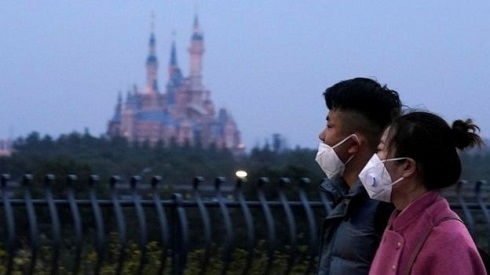
As millions go home for the holidays, travel restrictions have been expanded to 13 cities - home to more than 36 million people - in Hubei province, the centre of the outbreak.
There are currently 830 confirmed cases in China, 26 of whom have died.
Wuhan, where the outbreak began, is rapidly building a new hospital.
The city - home to around 11 million people - is struggling to cope with the increasing number of patients.
State-owned news outlet Changjiang Daily said the 1,000-bed hospital could be ready by 3 February. A total of 35 diggers and 10 bulldozers are currently working on the site.
The project will "solve the shortage of existing medical resources" and would be "built fast [and] not cost much... because it will be prefabricated buildings", the outlet said.
Videos have been circulating on social media, reportedly taken by Wuhan residents, showing long queues at local hospitals.
What restrictions are in place in Hubei?
Travel restrictions vary from city to city.
Wuhan is effectively on lockdown: all bus, metro and ferry services have been suspended, and all outbound planes and trains cancelled.
Residents have been advised not to leave, and roadblocks have been reported.
Ezhou, a smaller city in Hubei, shut its railway station. The city of Enshi has suspended all bus services.
We have a crucial new piece of information - people with no symptoms of infection may be able to spread the virus.
Scientists in China have published detailed information, in the Lancet medical journal, on the first cases in the country.
It includes information on a child with no outward symptoms, but a clear coronavirus infection in their lungs.
Prof Kwok-Yung Yuen from the University of Hong Kong-Shenzhen Hospital said "asymptomatic infection appears possible".
How often or easily this happens is far from clear, but it could make the virus far harder to contain.
Prof Yuen said if this was the case, then controlling the epidemic would rely on isolating patients and quarantining anyone they came into contact with "as early as possible".
Researchers also said the new virus was closely related to one found in Chinese horseshoe bats.
bbc