UK All-Party Parliamentary Group on Kurdistan prepares for busy year of advocacy efforts
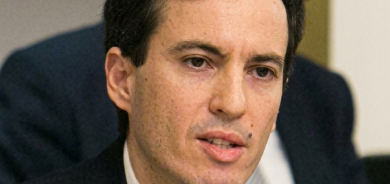
Halfon, who has already visited Kurdistan five times, is a senior Conservative MP who is highly respected across parliament as a former minister and Chair of the Education Select Committee. His eagle-eyed and persistent campaigning led former Prime Minister David Cameron to dub him the most expensive backbench MP – a tribute to his success in winning fiscal and other reforms to benefit working people.
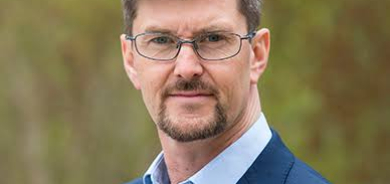
Halfon is joined on the four person executive committee by other senior parliamentarians and a newly elected MP who is seen as a rising star on foreign policy issues. Other committee members include Labour MP Steve Reed, who currently handles the Children and Families brief for the Labour shadow team and who visited Kurdistan last year, and veteran Liberal Democrat Peer Tim Clement-Jones, who has also visited Kurdistan with the APPG.
The new officer is Conservative MP Alicia Kearns, who was elected last month. Before her election, she ran the government's communication campaigns in Syria and Iraq for the FCO and later worked for the strategic communications consultancy Global Influence, where she focused on counter-terrorism, counter violent extremism, stabilisation and political campaigning.
On her website MP Kearns states, “My career has been dedicated to our national security and defeating terror groups to keep our country safe. I want to bring to Parliament my understanding of the threats we face and how to overcome them.”
Last year she wrote a passionate column for the Conservative Home website regarding the anger about the Turkish offensive in Syria, pointing out that there was very little discussion about what the UK could and should do to support the Kurds against what she called, “an attempt to eradicate the Kurdish people, who are trapped by the ambitions of two countries that are ruthless in their desire to gain territory, and will crush anyone who opposes them.” She further stated, “This action will benefit Daesh and undermine efforts to stabilise Iraq and Syria.”
She concluded that “we should deploy our diplomatic network to advocate for the Kurds,” stating:
“For too long, we have avoided having a meaningful foreign policy about the Kurdish people. We should commit to a supportive position and be open about it. We have long been friends to them. If you go to Kurdistan in Iraq you will hear many Kurds speaking perfect English with South London accents, from their time living in the UK as refugees from the longstanding persecution they have faced and the Anfal genocide.”
She added, “We must stand by our allies and friends: words are not enough. As Conservatives we believe in self-determination, fairness, loyalty, and decency. If we desert the Kurds now, we cease to be that of which we are so proud.” Such values are shared more widely, as evidenced by the many parliamentarians in the Kurdistan Region APPG membership.
The officers are joined by a long list of Vice-Chairs and ordinary members from the main parties with a great deal of experience between them. They include Conservative parliamentarians Jack Lopresti, Stephen Metcalfe, Henry Smith, Philip Hollobone, Jason McCartney (a former Chair who served in the RAF in the no-fly zone campaign in Zakho) and Lady Hodgson.
These Conservative MPs are joined by Labour parliamentarians Mary Glindon, Toby Perkins, Baroness Ramsay,Turkish/Kurdish born Feryal Clark, former Scotland First Minister, Lord Jack McConnell, and former Labour General Secretary Iain McNicol.
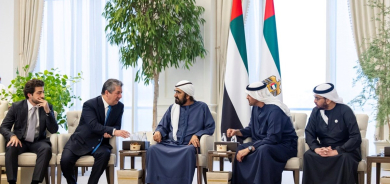
Karwan Jamal Tahir, the KRG High Representative in the UK, briefed the parliamentarians on the current fraught situation in Iraq. He explained:
“Iraq has become a battlefield for the major powers to settle their differences. That has changed the equation in Iraq and the Middle East, and it has affected the relationships between all the stakeholders. For the Kurdistan Region this situation is very sensitive and we have stayed neutral and have asked all parties to de-escalate the situation.”
I outlined the history of the APPG and listed some of its achievements since 2007. They include persuading popular television series Top Gear to film a programme there and other efforts to literally put Kurdistan on the map, as so many people lacked fundamental knowledge about the region’s very existence. The APPG also secured the formal recognition of the Anfal genocide, which is now formally marked each year by the British government. We helped save the Consulate-General from closure and secured the first official trade mission in 2010, and have persistently pushed measures to facilitate bilateral trade and investment, as well as supporting reform in Kurdistan.
It’s a new parliament, and parliamentarians are keen to send a delegation to Kurdistan – the 17th since 2007 –to assess the latest position at first hand and to devise responses that they can urge the UK government to take. Of particular importance is the forthcoming major review of security and foreign policy for post-Brexit Britain. The annual meeting was a good start to an active year in further advancing bilateral relations between the UK and Kurdistan.
Gary Kent is the Secretary of the All Party Parliamentary Group (APPG) and a Fellow of Soran University. He writes this column for Rudaw in a personal capacity. The address for the all-party group is appgkurdistan@gmail.com.
Rudaw