US-led Coalition remains critical in fight against ISIS
Abdulkhaliq al-Azzawi, a member of the parliamentary committee of defense and security, told Rudaw on Friday that the Iraqi security forces’ preoccupation with popular protests over the past four months has led to “ISIS exploiting the security vacuum.”
ISIS has been regrouping itself across a swath of disputed territories stretching from the Iran-Iraq border to the Iraq-Syria border. The territories in question are claimed by both Baghdad and Erbil, and are not patrolled by either government’s security forces.
“Political disputes played a big role in giving Daesh the opportunity to regroup again,” al-Azzawi added, using the Arabic acronym for ISIS. Attacks perpetrated by the group have increased in Anbar, Kirkuk and Nineveh, revealed the MP.
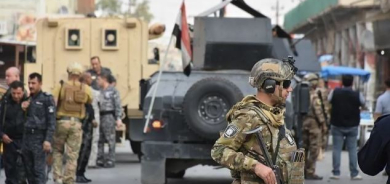
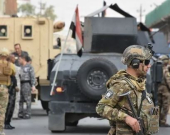
ISIS attacks against Iraqi troops occur on a near-daily basis. On Thursday, Staff Colonel Mazin Aboud Jawad al-Saadi, commander of the Iraqi army’s 45th Brigade, was killed due to injuries he sustained from operations against ISIS on December 8 in Kirkuk.
Al-Azzawi went on to praise the Coalition’s efforts to fight ISIS in Iraq, and added, “The recent events, and American-Iranian rivalry, negatively impacted the presence of American troops and the Parliament making the decision to expel them from Iraq.”
Al-Azzawi was referring to a January 5 Iraqi parliamentary session, boycotted by Kurds and Sunnis, that resulted in the Parliament’s Shiite blocs passing a non-binding resolution which calls for the Iraqi government to expel all foreign troops from Iraq.
Parliament’s decision came following a spike in US-Iran tensions, which had been on the rise since US President Donald Trump unilaterally withdrew from the Iran nuclear deal in May 2018.
On December 27, missile attacks attributed to the Iran-backed Kataib Hezbollah (KH) militia struck an Iraqi military base hosting Coalition troops in Kirkuk province, killing a US civilian contractor and injuring several US service members.
The US responded on December 29 with airstrikes against KH in Iraq and Syria, killing 25 militia members. Supporters of the militia stormed the US Embassy in Baghdad two days later, setting parts of the compound on fire.
On Friday, January 3, the US conducted a drone strike outside the Baghdad Airport, assassinating Iranian General Qassem Soleimani, commander of Iran’s elite Quds force, and Abu Mahdi al-Muhandis, deputy head of the Iran-backed Popular Mobilization Forces (PMF, known within Iraq as the Hashd al-Shaabi).
Shiite parties with ties to Iran were furious over unilateral US military actions in Iraq, and responded with the parliamentary resolution demanding the expulsion of foreign troops.
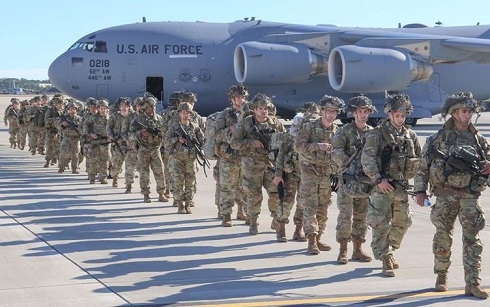
While the US-led International Coalition to Defeat ISIS did temporarily suspend its counter-terror and training operations, Washington has already rejected a call by Iraqi caretaker PM Adel Abdul-Mahdi to implement a withdrawal mechanism.
On Thursday, the US military announced that it would be resuming its anti-ISIS operations and training of Iraqi forces.
However, this announcement was disputed by Staff General Abdulkareem Khalaf, military spokesperson for PM Abdul-Mahdi, who claimed that US forces were not given permission to resume operations.
“The Commander in chief of armed forces [Adil Abdul-Mahdi] has not given permission for the American army to resume its operations in Iraq,” Khalaf told state media al-Iraqiya.
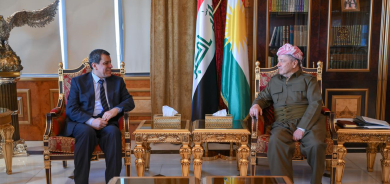
On January 11, PM Abdul -Mahdi traveled to Erbil to meet with senior Kurdish leadership. According to Abdul-Mahdi, the Kurdish leadership told him the KRG would follow whatever decision the federal government makes. https://www.rudaw.net/english/kurdistan/11012020
However, Kurdish leaders have openly voiced their support for a continued US and Coalition presence in Iraq.
“We strongly believe the presence of US and Coalition forces is a must for all of Iraq,” President Nechirvan Barzani of the Kurdistan Region told al-Monitor on Thursday.
“All the intelligence indicates that the Islamic State has regrouped itself and that they are carrying out attacks against Iraqi targets on a daily basis. Hence, it's as much in the interest of Iraqi Kurdistan as it is for the whole of Iraq that US forces remain for the time being,” Barzani argued.
“Moreover, [Parliament’s decision] set a bad precedent. The decision was taken by the Shia bloc without consulting either of the key components of this country, the Kurds or the Sunni [Arabs]. It was a very critical step that was taken without seeking consensus and as such violates the spirit of the Iraqi Constitution. This is not good for Iraq, either now or for the future,” Barzani asserted.
Rudaw