Iraqiya bloc to end parliament boycott, easing political crisis
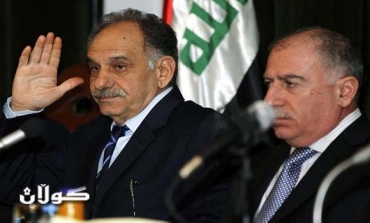
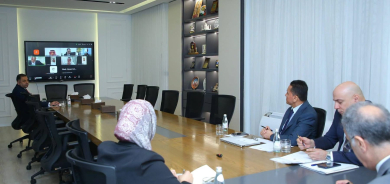
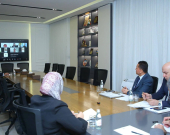
“Iraqiya decided its deputies would return for parliament meetings,” Maysoon al-Damluji told a news conference after a gathering of Iraqiya leaders and MPs.
Among those attending were former premier Iyad Allawi, deputy prime minister Saleh al-Mutlaq, parliament speaker Osama al-Nujaifi, and the finance minister, Rafa al-Essawi.
“The deputies of the Iraqiya list will return back to participate in the meetings of parliament next Tuesday. That’s what we decided today,” MP Aytab al-Duri told reporters.
The decision has not, however, been taken to end a boycott of cabinet sessions by Iraqiya ministers, according to Duri, who said “that will be the next step.”
Iraqiya had won the most seats in Iraq’s March 2010 vote and its decision to end the boycott clears the way for talks among fractious Shi’ite, Kurdish and Sunni blocs, but deep disputes over power-sharing remain unresolved, keeping alive the risk that Iraq could fall back into widespread sectarian violence.
A row erupted over a month ago between the Shiite-led government and the Iraqiya bloc as authorities charged Vice President Tariq al-Hashemi, a Sunni and Iraqiya member, with running a death squad.
Iraqiya began a boycott of parliament and cabinet to protest what it charged was Prime Minister Nuri al-Maliki’s centralization of power, and it has since called for Maliki to respect a power-sharing deal or quit.
Baghdad officially requested the semi-autonomous government of Kurdistan to hand over al-Hashemi earlier this month.
The country’s interior minister said al-Hashemi must come back to Baghdad to face charges that include running a death squad and being the mastermind behind a November 2011 parliament blast.
In addition to Hashemi, the official called on Kurdistan to hand over the vice president’s security guards and in accordance to article 4 in the Iraqi constitution which relates to terrorism issues.
Late December, Hashemi said that he would not go to Baghdad to stand trial. He said Baghdad’s judicial system is not independent and that he can stand for trial only in Kurdistan.
In an Al Arabiya report, he said that the charges being levied against him are of a “sectarian nature” and are meant only to get rid of him
Meanwhile, Iraq’s president, Jalal Talabani, said he would head to Baghdad before the end of this week to hold meetings with different Iraqi factions in an attempt solve the political crisis.
But the political crisis has deepened, as a schism inside the secular, sunni-backed Iraqiya list that Hashemi belongs to has developed.
Six Iraqiya MPs were excluded for not committing to Iraqiya’s political decision to block the parliament’s session.
Iraqiya vowed to block the parliament in reaction to what they described as the prime minister’s increasing “dictatorship.”
Ahmed al-Alwan, an Iraqiya MP, said that the decision to suspend the MPs who are committed to the decision should continue even if it means that the number of Iraqiya members would shrink.
The six excluded MPs charged the Islamic Party – one of the parties that makes up Iraqiya – as being behind their exclusion, and decided to form an independent bloc inside the parliament.
Authorities have issued an arrest warrant for Hashemi while Maliki, a Shiite, has said his Sunni deputy Saleh al-Mutlaq should be sacked after the latter said the premier was “worse than Saddam Hussein.”
Hashemi, who denies the charges, has been holed up in the autonomous Kurdish region of northern Iraq and Kurdish officials have so far declined to hand him over to Baghdad.
“Iraqiya decided to return back to the parliament to prepare the success of the national conference proposed by President (Jalal) Talabani, Damluji said, referring to a proposed conference of parties aimed at resolving the crisis.
The bloc’s MPs will participate in a vote on the budget and a vote on an amnesty for people involved in violence, Damluji said.
They will also try to find a solution to the issue of Hashemi, and oppose Maliki’s request to dismiss Mutlak, she said.
The White House said on Saturday that US Vice President Joe Biden had urged Iraqi leaders to resolve their differences ahead of the possible national conference.
Biden called Allawi on Friday and Nujaifi on Saturday, and discussed “the importance of resolving outstanding issues through the political process.”
The two Iraqi leaders, meanwhile, briefed Biden on the deliberations under way “among all Iraqi political factions and parties in the run-up to a proposed national conference led by President Jalal Talabani,” the White House said.
Other international attention to the row has been less well-received, with Turkey and Iraq trading accusations since Turkish Prime Minister Recep Tayyip Erdogan telephoned Maliki on Jan. 10 to discuss the political crisis.
Erdogan said on January 24th that “Maliki should know that: if you start a conflict in Iraq in the form of sectarian clashes, it will be impossible for us to remain silent.”
Maliki responded with a statement saying that “all Iraqis are proud of belonging to their country and no other. Erdogan has provoked all Iraqis with his comments, particularly those he believes he is defending.”
(Reuters)