Yemeni president arrives in the United States for his medical treatment
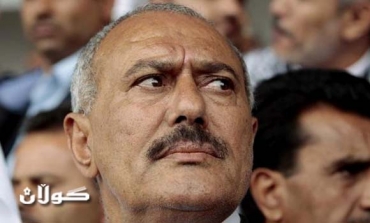
The embattled leader flew from Oman to the United States with a brief refueling stop at Stansted Airport outside London, ending days of speculation about whether or when he would make the trip.
U.S. State Department spokesman Noel Clay confirmed his arrival.
“We expect he will stay here for the time that corresponds to his treatment,” Clay said. He declined to give any further details.
“President Saleh arrived this evening in the USA for a short-term private medical visit,” Mohammed Albasha, a spokesman for the Yemeni embassy in Washington, said in a statement.
Yemen’s state news agency said he had left the Omani capital Muscat, his home for the past week, to receive medical treatment.
Saleh has transferred some powers to his deputy and enjoys immunity from prosecution under a deal meant to end increasing instability in Yemen.
The deal also established a transitional government including the opposition and envisions restructuring Yemen’s armed forces, important units of which are led by Saleh’s relatives.
Reports of medical treatment true?
In keeping with days of secrecy over his movements, there was no immediate confirmation of where Saleh went upon arrival. A British source told AFP that Saleh was en route to New York when he made the refueling stop near London.
However, despite media reports that Saleh would be treated at New York Presbyterian Hospital, a spokeswoman for the hospital, Kathy Robinson, told AFP: “The president is not currently a patient.”
In addition to providing Saleh an opportunity to seek medical help, his departure is seen as helping to ease the transition in his country from three decades of his rule.
After months of bloody protests in Yemen, Saleh finally signed a power transfer deal in November that effectively ended his reign.
In London, a Foreign Office spokesman welcomed the Yemeni leader’s exit.
“At a time of continuing unrest in Yemen and the threat of escalating violence, we see it as helpful for President Saleh to be out of the country in the run up to interim presidential elections in February,” the British spokesman said.
Saleh was seriously wounded in a bombing at the presidential palace in the capital Sanaa last June, after which he was treated in Saudi Arabia.
He had been in Oman since last Sunday, with his wife and five of his children. Earlier this week, he was mistakenly reported to have left Oman.
Human Rights Watch condemned the decision to allow Saleh onto U.S. soil.
“It’s appalling that President Saleh arrives in the U.S. for first-rate medical treatment, while hundreds of Yemeni victims are left devastated with next to no medical care, and certainly no justice for the crimes they've suffered,” Balkees Jarrah, international justice counsel at Human Rights Watch, told AFP.
President Barack Obama’s administration “should insist those responsible for atrocities in Yemen be brought to the dock.”
The U.S. ambassador to Yemen, Gerald Feierstein, said on Tuesday that Saleh had been granted a visa for purely medical reasons.
But the envoy added: “We think that him not being here will help the transition; we think it will improve the atmosphere.”
Saleh had been expected to travel to New York for treatment late last year, but aides said he canceled the trip at the request of his General People’s Congress party.
On January 21, parliament approved a controversial bill granting Saleh blanket immunity from prosecution. He has been in power in Sanaa since 1978.
Feierstein said the decision to offer him immunity was key to ending the political crisis and avoiding civil war.
(Reuters)