US Launches Heavy Wave of Strikes on Iran as Regional Conflict Intensifies
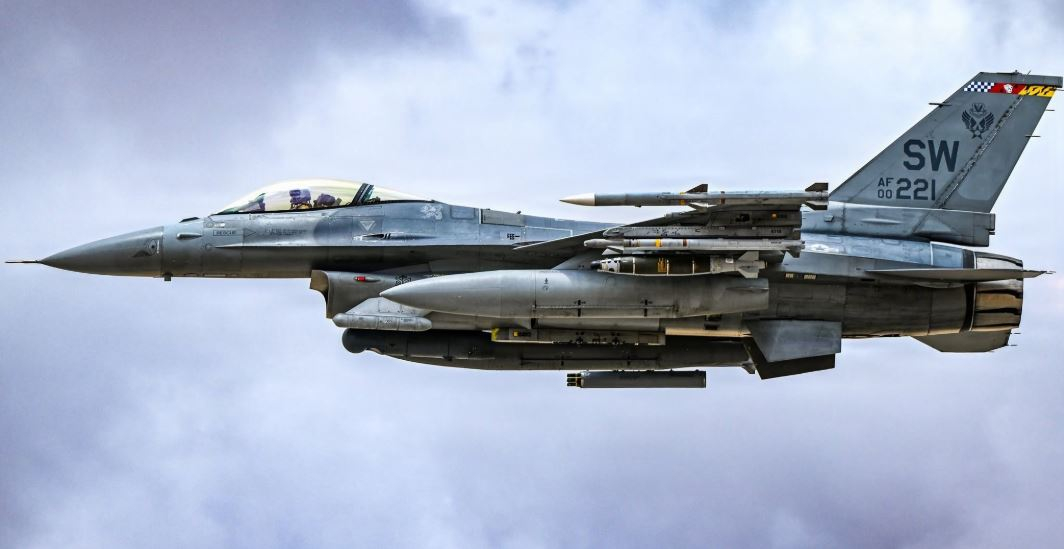
The United States military says it has completed a "heavy wave" of airstrikes against Iran in retaliation for Tuesday's attempted ballistic missile attacks on American forces stationed in the Middle East, marking another significant escalation in the ongoing US-Iran conflict.
According to the US Central Command (CENTCOM), American forces struck dozens of targets linked to Iran's Islamic Revolutionary Guard Corps (IRGC). The operation reportedly targeted military command centers, missile and drone facilities, coastal surveillance and defense sites, and maritime capabilities. CENTCOM described the strikes as a "powerful response" to Iran's attempted attacks, adding that all Iranian missiles launched at US forces were successfully intercepted.
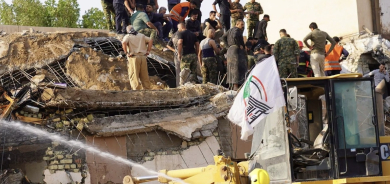
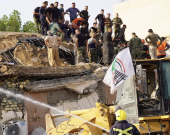
Iranian state media reported that the strikes hit several locations in the country's south and west, including the strategic islands of Qeshm and Abadan. Officials said three civilians—a father, mother, and their two-year-old child—were killed after a residential home in the Chah Tangu neighborhood of Qeshm was struck.
The latest exchange follows an Iranian missile attack on a US military base in Jordan on Tuesday. The IRGC claimed responsibility for targeting the base and a US command center in Jordan, describing the operation as retaliation for what it called "acts of aggression by the American child-killing army."
Jordan's armed forces announced that their air defense systems successfully intercepted five Iranian missiles that crossed into the kingdom's airspace.
In addition to the missile attacks, Iran said its naval forces targeted three oil tankers in the Strait of Hormuz after accusing them of sailing through what it described as an "unsafe and illegal route." The Strait of Hormuz remains one of the world's most strategically important maritime passages for global oil shipments.
The renewed fighting comes just one week after the conflict expanded further, with the United States and Saudi Arabia publicly acknowledging a joint military operation against Iranian-backed proxy groups in Iraq. On Tuesday, CENTCOM said joint US-Saudi strikes destroyed multiple logistics and weapons sites linked to Iran-backed militias in eastern Iraq following more than 30 drone attacks allegedly directed by the IRGC over the previous 72 hours.
The Iraq-based Popular Mobilisation Forces (PMF), a coalition of Iran-backed Shia militias, claimed that at least 20 of its members were killed in the strikes. Iraq's presidency condemned the attacks as "an unacceptable assault and a blatant violation of Iraq's sovereignty."
However, US President Donald Trump stated in an interview with Fox News that the operations had been coordinated with the Iraqi government.
The current escalation follows a brief period of relative calm during which both Washington and Tehran appeared to explore diplomatic options. President Trump previously described the contacts as "very friendly negotiations," although Iranian officials denied that formal discussions were taking place.
Following Tuesday's Iranian missile attack, Trump vowed a strong military response, telling reporters at the White House: "We will hit them very hard because it's our turn to hit them. They don't know what's coming. They asked us not to do it."
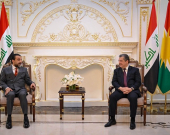
According to US officials cited by Axios, Trump also met Saudi Defense Minister Prince Khalid bin Salman on Wednesday, during which Saudi Arabia reportedly expressed its desire to de-escalate regional tensions. The White House has not commented publicly on the meeting.
Meanwhile, Egypt confirmed that a fire at one of its ports was caused by a drone attack on Wednesday. Although Egypt is a key US ally, it has not been directly involved in the conflict.
The war has now entered its sixth month. When the United States and Israel launched military operations against Iran in February, President Trump predicted the conflict would last only a few weeks. Instead, the confrontation has evolved into a prolonged regional conflict with no clear end in sight, raising growing concerns about wider instability across the Middle East.