Shipping Continues Through the Strait of Hormuz Despite Escalating Iran–US Conflict
Despite ongoing attacks by Iran on commercial vessels in the Strait of Hormuz, shipping traffic through one of the world's most critical maritime chokepoints has continued, albeit at significantly reduced levels. The attacks, which began in March as part of Iran's strategy to gain leverage in its conflict and ceasefire negotiations with the United States, have transformed the strategic waterway into one of the world's most dangerous shipping routes.
According to the Joint Maritime Information Center (JMIC), the security threat to commercial shipping in the Strait of Hormuz remains at a "severe" level, the organization's second-highest warning category. In addition to repeated attacks and vessel interceptions, reports indicate that naval mines have been placed in former shipping lanes, further increasing risks for international maritime traffic.
Nevertheless, public vessel-tracking data analyzed from the open-source platform Global Fishing Watch indicate that commercial shipping has not completely ceased. Although many vessels have switched off their Automatic Identification System (AIS) transponders while transiting the strait, satellite data show that at least 84 ships crossed the waterway during two major periods of the conflict—from the outbreak of hostilities on February 28 until the April 7 ceasefire announcement, and again after attacks resumed in early July. By comparison, more than 900 vessels used the strait during the same period in 2025.
The analysis also reveals that ships from numerous countries continue to operate through the waterway. The United Arab Emirates (UAE) recorded the highest number of registered vessels transiting the strait, including cargo ships, liquefied petroleum gas (LPG) tankers, and support vessels. Some UAE-managed ships have attracted international attention due to alleged links with sanctioned Iranian oil interests. Meanwhile, Indian shipping companies, including one accused by US authorities of facilitating Iranian petroleum exports, were also among those continuing operations.
Other countries with vessels transiting the strait include China, Pakistan, Vietnam, and Greece. Greek-owned vessels were primarily bulk freighters transporting commodities such as grain, coal, and iron ore, highlighting that commercial trade beyond oil continues despite heightened security concerns.
Industry experts attribute the continued movement of ships through the Strait of Hormuz primarily to economic necessity. Matt Smith, Director of Commodity Research at Kpler, noted that the financial rewards of maintaining exports outweigh the operational risks. Similarly, energy analyst David Wech explained that producers face a difficult choice: suspend production and incur heavy financial losses or continue exporting through the dangerous passage while accepting elevated security risks. With Brent crude oil trading above $80 per barrel, maintaining exports represents billions of dollars in potential revenue.
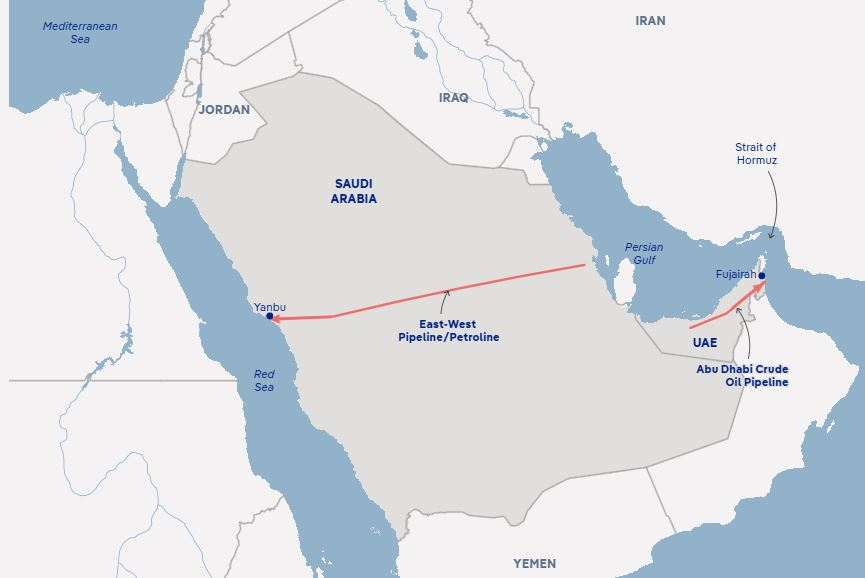
The Strait of Hormuz remains indispensable to global energy markets. Before the conflict, approximately 25 percent of the world's seaborne oil trade passed through the narrow waterway. Although the UAE's Abu Dhabi Crude Oil Pipeline (ADCOP) and Saudi Arabia's East-West Petroline provide alternative export routes, together they can reroute only about 4 million barrels of oil per day, far below the approximately 15 million barrels that normally transit the strait daily.
Meanwhile, alternative maritime routes also face growing threats. Shipping through the Bab el-Mandeb Strait has increasingly come under attack from Yemen's Iran-backed Houthi forces, raising concerns that another critical global shipping corridor could become severely disrupted.