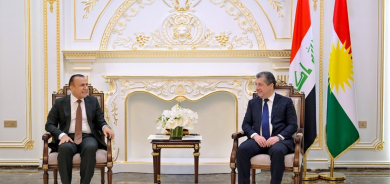
Professor Riccardo Redaelli to Gulan: The Kurdistan Region Is a Relative Island of Stability and a Reliable Partner for the International Community
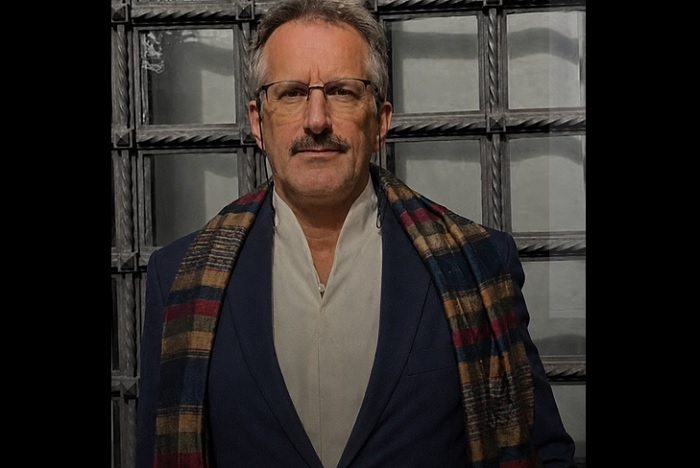
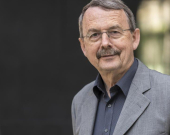
Professor Riccardo Redaelli is Professor of Geopolitics and History of Asia at the Università Cattolica del Sacro Cuore in Milan. One of Italy's leading experts on the Middle East, his research focuses on regional security, international relations, and the geopolitics of Iraq, Iran, and the Gulf. He has published extensively on Middle Eastern affairs and has contributed to international dialogue and policy initiatives on conflict resolution and regional security.
GULAN: Earlier this month, President Nechirvan Barzani was awarded the rank of Knight Grand Cross of the Order of the Star of Italy, the Order’s highest rank, on behalf of Italian President Sergio Mattarella. As a specialist in geopolitics, how do you assess the political and symbolic significance of this recognition at this particular moment in relations between Rome and Erbil?
Professor Riccardo Redaelli: When the President of the Italian Republic grants such an important honor, it carries both symbolic and political significance. Symbolically, it demonstrates the friendship between Rome and Erbil and recognizes the role played by the President of the Kurdistan Region. Politically, it acknowledges the role of the Kurdistan Region at a time when the wider region is in turmoil. This is probably one of the most difficult periods the region has faced, and the Kurdistan Region is also directly affected. The recognition therefore highlights the Kurdistan Region’s role as a relative island of stability and as a reliable partner for the international community.
GULAN: Italy has consistently sought to maintain balanced relations with both the Federal Government in Baghdad and the Kurdistan Regional Government in Erbil. In your view, what place does the Kurdistan Region currently occupy within Italy’s broader strategy toward Iraq and the Middle East? How does Italy manage its relationship with Erbil without creating tension in its relationship with Baghdad?
Professor Riccardo Redaelli: Italy has always tried to maintain a balanced position. We appreciate the broad autonomy that the Kurdistan Region has enjoyed since 2003, particularly under the 2005 Iraqi Constitution, while consistently supporting the territorial integrity of Iraq as a federal state. Italy has not sought to take sides when disagreements arise. Instead, it has supported reconciliation initiatives intended to ease tensions between Erbil and Baghdad, some of which I personally coordinated.
The Kurdistan Region plays an important role because it is stable and comparatively accessible for European and Western actors. It is significant politically, economically and in terms of energy, while also exercising soft power as a partner on which others can rely. At the same time, Italy has never supported more radical positions, such as formal Kurdish independence, because of the tensions and instability this could trigger across the region.
Baghdad also remains extremely important to Italy. Iraq faces major political and security challenges, including the role of militias and interference by other states. Italy and Europe want to support positive political development in Baghdad. Erbil should therefore contribute constructively to the evolution of Iraq’s political landscape rather than become a source of further tension.
GULAN: Several major Italian companies operate in the Kurdistan Region and Iraq in sectors such as energy, infrastructure and agriculture. To what extent has the Kurdistan Region’s relative stability helped attract Italian companies, and in which areas could economic cooperation be expanded in the future?
Professor Riccardo Redaelli: The reasons Italian companies operate in the Kurdistan Region are almost self-evident. Compared with many other parts of Iraq and the wider region, it is easier to work there. The Kurdistan Region offers better infrastructure, relative stability and a comparatively secure environment. English is also widely used as a common language of communication, which makes engagement easier for Western companies. In addition, the Region has a growing education sector, including American and British-style universities, which is an important asset.
To expand cooperation, the Kurdistan Region needs to reduce the gray areas that create uncertainty for investors. Legislation can be complex, and its interpretation may depend on factors outside the law. Corruption, patronage and clientelist relationships can also create difficulties. Greater cooperation among the Kurdistan Region’s different political and economic centers would further improve the investment environment.
GULAN: Based on your field experience in Iraq and across the region, what are the greatest obstacles facing foreign companies, particularly Italian companies, seeking to make long-term investments in the Kurdistan Region? What reforms would be necessary to attract investment beyond the energy sector?
Professor Riccardo Redaelli: As said, tThe principal obstacles include legal and administrative gray areas, corruption, patronage and clientelist relationships. Long-term investments, particularly major infrastructure projects, also require regional and geopolitical stability, which is presently lacking across much of the Middle East. At the same time, periods of crisis can create opportunities. Changes affecting established energy routes may enhance the Kurdistan Region’s potential role in exporting hydrocarbons or serving as a regional hub. However, realizing that potential requires resolving tensions between Erbil and Baghdad and improving the wider geopolitical outlook.
Investment beyond the energy sector is certainly possible, but investors need predictability. This requires clearer regional laws, a transparent investment framework and a settlement of disagreements between Erbil and Baghdad over revenue sharing and other outstanding matters. Investors need both political stability and unambiguous legal rules, particularly in the oil and gas sector.
GULAN: In recent years, the Kurdistan Region has provided refuge to Christians and members of other religious communities who faced serious threats elsewhere in Iraq. The late Pope Francis’s visit to Erbil also carried a powerful message of solidarity and coexistence. To what extent does the Vatican’s support carry moral and political significance for the Kurdistan Region’s international standing, and how can the Region use its experience of coexistence as a form of soft power?
Professor Riccardo Redaelli: The Vatican pays close attention not only to Christian communities in Iraq, which have suffered tremendously since 2003, but also to the country’s many religious and cultural minorities. Pope Francis’s decision to visit had particular significance in light of the terrible period of the so-called jihadist caliphate, when communities were massacred, displaced and enslaved. The Kurdistan Region played an important role in hosting and protecting those who fled, and the visit represented recognition of that contribution.
At the same time, religious minorities should not be treated as political assets by competing actors. Supporting or claiming to defend a minority can be used to gain political visibility and international backing. From the Vatican’s perspective, what these communities need is not only protection inside the Kurdistan Region, but also political support that enables them to reestablish themselves in their original territories. The Kurdistan Region’s role in defending and hosting these communities is important, but their safe and dignified return remains a sensitive and essential issue.
GULAN: Italian military advisers have contributed to the international coalition’s efforts to train and support the Peshmerga forces. From your assessment, to what extent has this cooperation improved the capacity and professionalism of local forces in confronting terrorism and the continuing threat posed by ISIS?
Professor Riccardo Redaelli: Even before the campaign against ISIS, the Peshmerga had a strong reputation as a capable and well-trained military force. They played an important role in fighting ISIS and later assumed another, less widely recognized responsibility. Following the collapse of the jihadist caliphate, European and Western governments relied on the Kurdistan Region to help manage and detain large numbers of people associated with ISIS, including foreign fighters. This was politically and legally difficult for many European countries, and the Kurdistan Region played a significant role. International cooperation further improved the Peshmerga’s capacity to operate.
However, it is extremely important that the Kurdistan Region and the Peshmerga avoid being perceived as proxies for outside powers. The Kurdistan Region can maintain strong relationships with Western countries, but it should make clear that it is pursuing its own interests and is not operating on behalf of one state against another. This is particularly important amid the current regional tensions.
GULAN: Given the changing security environment and the evolving mandate of coalition forces in Iraq, do you expect Italy to maintain its military and security cooperation with the Kurdistan Region? To what extent could tensions between the United States and its NATO partners affect security in Iraq and the wider region?
Professor Riccardo Redaelli: Italy generally operates within broader European Union and NATO frameworks. It has a strong tradition of peacekeeping, mentoring and training, including support for police forces, and Italian personnel are widely respected in these areas. Italy can continue providing this kind of assistance, but usually within a wider European or NATO framework. Maintaining strong relations with the Kurdistan Region remains a priority.
The difficulty is that tensions within the Western alliance are affecting the wider security architecture. Diverging positions between Washington and European capitals create uncertainty and weaken the possibility of a coordinated policy. This is particularly dangerous in the Middle East, where military, political, social, cultural and religious conflicts exist both between and within states. Even close American allies in the Gulf increasingly fear that their interests may be overlooked or sacrificed. For Europe, tensions with Washington heighten insecurity because they weaken the perception of solidarity among allies. From a strategic perspective, the loss of trust between allies is extremely dangerous.
GULAN: Considering the continuing disputes between Erbil and Baghdad over the budget, oil, revenue sharing and disputed territories, how can academic engagement and Track Two diplomacy help narrow the differences between the two sides? Are these disputes primarily legal and constitutional, or are they fundamentally rooted in political mistrust?
Professor Riccardo Redaelli: Track Two diplomacy, academic engagement and unofficial dialogue can help the parties understand their different perspectives. More than twenty years after these disputes emerged, many of the same issues remain unresolved. When visions differ so profoundly, reaching a comprehensive compromise is extremely difficult. Dialogue should therefore focus on how each side perceives its own insecurity and on identifying the real red lines, which are not always the same as the positions declared publicly.
Attempts to solve every issue through a single grand bargain have repeatedly failed. A more effective approach is to set aside the broad political declarations and concentrate on practical problem solving. Confidence-building measures can begin through technical cooperation on less sensitive issues, such as water management, joint patrols in disputed areas and committees dealing with everyday administration. In a diverse area such as Kirkuk, it is important to reassure Kurdish, Arab and minority communities rather than beginning with maximalist claims about the territory’s identity or status. Track Two and technical initiatives can help create a better environment from the bottom up.
The 2005 Iraqi Constitution was prepared very quickly and contains provisions open to competing interpretations. Returning only to the letter of the Constitution will not resolve the disputes in practice. Political mistrust, public rhetoric and fears of being accused of betraying national causes make compromise difficult. This is why special arrangements and cooperation on practical issues may be more productive. Relations between Erbil and Baghdad are also influenced by the wider regional environment, particularly the external pressures affecting Baghdad.
GULAN: As the geopolitical landscape of the Middle East continues to evolve amid considerable instability, what do you see as the greatest opportunity available to the Kurdistan Region in the coming years?
Professor Riccardo Redaelli: The Kurdistan Region’s greatest opportunity comes from its role as an island of relative stability. International organizations and companies can remain there and use it as a base for cooperation. In some respects, it can play a role similar to Jordan’s in the Levant: a stable place from which international actors can operate.
Nevertheless, the Kurdistan Region is deeply affected by developments around it and has limited ability to shield itself from a major regional war. If the current conflicts subside and the region moves in a more positive direction, the Kurdistan Region could become an important asset for the entire Middle East. Developments in Syria may allow it to serve as a model or point of reference, while changes in regional trade and energy routes may strengthen its position as a hub. Resolving outstanding issues with Baghdad is essential because those disputes currently limit this potential.
The Kurdistan Region must also avoid being drawn into the agendas of external powers. It should make clear that, although it is a friend of the West, it is not a proxy for the West or for any particular faction within the United States. The Kurdistan Region must pursue its own agenda rather than appear to work for someone else’s. This clarity is essential to protect it from retaliation and preserve its role as a stable and constructive regional partner.
By Kobin Ferhad