Professor Morten Bøås to Gulan: Inclusive National Identity Must Be Built on Shared Civic Values, Not Ethnicity
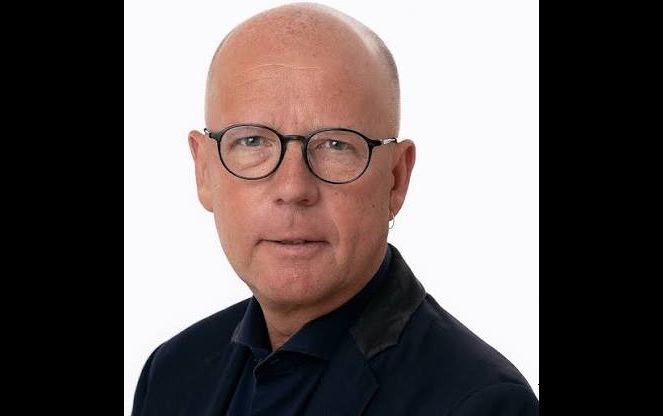
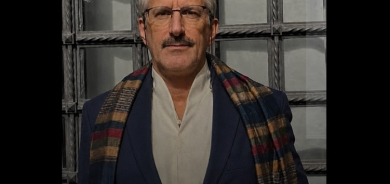
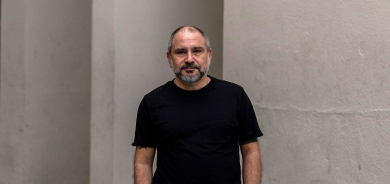
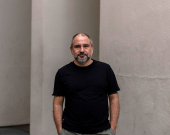
Professor Morten Bøås, PhD, is a Research Professor at the Norwegian Institute of International Affairs (NUPI). He is a leading scholar on peace and conflict, specializing in civil wars, fragile states, insurgencies, terrorism, land rights, citizenship, migration, and political violence, with a particular focus on Africa. He has conducted extensive field research across the continent and has authored and edited numerous books and scholarly articles. Professor Bøås previously served as Head of Research at Fafo's Institute for Applied International Studies and holds a PhD in Political Science from the University of Oslo.
Gulan Media: Professor Bøås, much of your research examines how civil wars transform states and societies. To begin, how do civil wars reshape state identity, particularly in societies that are ethnically diverse and composed of multiple communities?
Professor Morten Bøås: There is no straightforward or easy answer to that question. Identity, whether it is group identity or state identity, is never fixed once and for all. It is always evolving, always in motion. This evolution can occur peacefully through civic processes, but it can also happen during periods of war.
What we often observe during civil wars is that identities which were once relatively flexible and fluid become much more rigid and clearly defined. The reason is that political entrepreneurs deliberately mobilize these identity markers. They promote narratives about who truly belongs to the state and, equally importantly, who does not. The argument becomes that the state belongs to one particular group, implying that others have no legitimate place within it.
Naturally, those who are excluded respond in similar ways. As a result, identity politics becomes a self-reinforcing process. Groups that may previously have lived together with relatively flexible boundaries increasingly define themselves in opposition to one another, and those identity markers become much stronger as the conflict develops.
Gulan Media: Your research frequently explores issues of land, territory, and citizenship. During the Kurdish Genocide (Anfal), the former Iraqi regime forcibly displaced Kurdish communities and altered the demographic makeup of many areas. In your view, what role do land and citizenship play in campaigns of ethnic cleansing and genocide, and why are they so often targeted together?
Professor Morten Bøås: They are targeted together because there is an intimate relationship between land, citizenship, and the idea of belonging. If one group claims that it belongs to a particular territory, the implication is often that another group does not belong there.
At its core, the modern state is about territory. State borders define territory, and territory is ultimately about land. During ethnic conflicts and campaigns of violence, the objective frequently becomes the remaking of a territory's demographic composition, ensuring that one group controls a particular area while another does not.
One of the primary methods used to achieve this is forced displacement. Citizenship, land, and territory are deeply interconnected.
Throughout history, political actors have repeatedly relied on narratives claiming, "We belong here because we were here first." In reality, such historical claims are often impossible to prove conclusively because human history is fundamentally a history of migration. People have always moved from one place to another.
Nevertheless, the belief that a nation should belong exclusively to those considered its "true" people can become an extremely powerful political narrative, particularly during periods of crisis, economic hardship, or insecurity. Political entrepreneurs frequently exploit these narratives to consolidate support. In some cases, opposition movements do so; in others, as during Saddam Hussein's rule, the state itself uses such narratives to preserve its own power and legitimacy.
These ideas remain among the most powerful political tools available for justifying exclusion, displacement, and ultimately violence.
Gulan Media: Authoritarian regimes frequently conceal acts of genocide under the guise of counterinsurgency operations or internal armed conflict, much like the justifications used by the Ba'ath regime during the Anfal Campaign. From both an academic and legal perspective, how can we clearly distinguish between internal military conflict and the systematic crime of genocide?
Professor Morten Bøås: This is an extremely difficult question. In many respects, it is often easier to determine what constitutes a crime against humanity than to establish whether an event legally qualifies as genocide. These debates continue among political scientists, historians, and international legal scholars alike.
One contemporary example is Gaza. There remains significant disagreement within the international legal community over whether what is taking place should legally be classified as genocide. No definitive legal conclusion has yet been reached, which illustrates just how complex these questions are.
From my perspective as a political scientist, genocide is not simply the large-scale killing of civilians. Rather, it involves a deliberate attempt to use force, violence, and state power to eliminate a particular group of people from a specific territory. It is the intentional destruction or removal of a targeted community because of who they are.
That is how I would define genocide, although I fully recognize that there are ongoing academic and legal debates surrounding the concept. In my own view, there are several historical and contemporary cases that meet the criteria for genocide but have never been officially recognized as such.
The reason is that these decisions are never purely legal; they are also deeply political. Recognition is influenced by international politics, geopolitical interests, and the balance of power. What scholars conclude, and even what international lawyers conclude, does not necessarily determine whether governments or international institutions will formally recognize an atrocity as genocide.
Gulan Media: From a geopolitical perspective, why does the international community so often fail to prevent genocide while it is taking place? Furthermore, how do geopolitical interests shape the pursuit of justice and accountability in the aftermath of genocide?
Professor Morten Bøås: We live in a world that is, unfortunately, full of hypocrisy. It is much easier for states to condemn genocide or crimes against humanity when doing so aligns with their existing political interests or when it targets an adversary. Upholding humanitarian principles becomes far more difficult when doing so carries significant political or strategic costs.
We can see this in several contemporary conflicts. Consider what is happening in Sudan. The international community has largely avoided taking responsibility because everyone recognizes how complex the situation is. Once a country assumes responsibility, it also assumes the burden of dealing with the consequences. As a result, many governments prefer to remain on the sidelines.
Ukraine presents a different case. There, I believe the international response has been justified. Russia clearly initiated the aggression, and that aggression deserves condemnation and sanctions.
Gaza illustrates a far more complicated geopolitical reality. While the Hamas attacks cannot be ignored, I believe Israel's military response has been entirely disproportionate and contrary to international humanitarian law. In my view, it approaches what could be considered an attempt at genocide. Yet because of Israel's strategic relationship with the United States, many Western governments, including my own country of Norway, have been unwilling to fundamentally challenge Israeli policy. European countries continue to depend heavily on the United States for their own security, particularly in light of the perceived threat from Russia. These broader geopolitical calculations often override humanitarian concerns.
The reality is that governments tend to defend principles only when doing so is politically inexpensive. Once those principles begin to conflict with strategic interests, many leaders simply look the other way. Public opinion also plays an important role. Some crises receive enormous attention in the media and on social media, while others are largely forgotten, allowing violence to continue with little international pressure.
Another major challenge is the current state of the United Nations system. The Security Council was established after the Second World War to prevent precisely these kinds of atrocities. Today, however, it has become increasingly paralyzed by geopolitical competition among the United States, Russia, China, and other major powers.
I do not believe abandoning the UN system would improve the situation, as that would likely produce even greater instability. Nevertheless, the mechanisms that were originally designed to uphold international peace and prevent mass atrocities have become increasingly dysfunctional because geopolitical rivalries now frequently outweigh humanitarian principles.
Gulan Media: Can a state with a history of genocide achieve genuine and lasting stability without fundamentally reforming the constitutional and political structures that enabled those crimes to occur?
Professor Morten Bøås: It is certainly difficult because victims and perpetrators often continue living within the same society after violence ends. Throughout history, this has been the norm rather than the exception. The question is whether societies can gradually rebuild trust despite that shared past.
There are cases where this has happened without sweeping constitutional reforms. Instead, progress has often depended on political leadership that has been capable of achieving several essential objectives.
The first is establishing a legitimate monopoly on the use of force. Most citizens must come to view the state's authority as broadly legitimate, while excessive state violence must decline significantly.
The second is strengthening the judicial system. When courts function fairly and consistently, people begin to regain confidence that disputes can be resolved through legal institutions rather than violence.
The third, and perhaps most important, is restoring economic opportunity. When people have employment, food security, and realistic prospects for the future, they gradually shift their attention away from the past and toward rebuilding their lives.
None of this is easy. Societies that have experienced genocide or prolonged civil war carry deep wounds, and the process often fails. Nevertheless, capable political leadership can create a path toward a less violent future.
Even in today's highly globalized and digital world, geography still matters. We cannot escape it. Iraqi Kurdistan will always exist within Iraq, and Baghdad will always remain part of that political reality. The real challenge is whether leaders can envision and pursue a peaceful future that benefits both Erbil and Baghdad rather than continuing cycles of conflict.
Gulan Media: Following civil war and genocide, how can states rebuild an inclusive national identity that both acknowledges the trauma experienced by victims and helps prevent such atrocities from recurring?
Professor Morten Bøås: National identity does not have to be based exclusively on ethnicity. It can instead be built around broader civic values, democratic principles, liberal institutions, or a shared commitment to peaceful coexistence. Such an identity can transcend ethnic divisions while still respecting cultural diversity.
The more violence a society has experienced, the more difficult this process becomes. However, there are examples where countries have succeeded. In West Africa, particularly in Sierra Leone and Liberia, societies that experienced devastating civil wars have largely avoided returning to widespread violence. While challenges certainly remain, there are few indications that large-scale conflict is likely to recur.
Many people eventually came to recognize that, in different ways, almost everyone had been touched by violence. Some had been victims, others perpetrators, and many were both at different stages of the conflict. Over time, societies were able to focus less on assigning permanent identities based on the past and more on building a shared future.
Recognizing past atrocities is essential. Victims deserve acknowledgment, and history should never be denied. At the same time, societies cannot remain permanently trapped in narratives of victimhood and blame. If the objective is to build a common national identity, there must also be a future-oriented perspective.
Iraq illustrates this challenge well. I have visited Iraqi Kurdistan several times, and I fully recognize what happened to the Kurdish people during the Anfal Campaign. At the same time, many other Iraqis also suffered under Saddam Hussein's regime, as well as during later conflicts, including the rise of the Islamic State.
Perhaps that shared experience of suffering can provide a foundation for building a future together. The atrocities of the past must be recognized, but they should also serve as lessons that encourage societies to move toward a peaceful and inclusive future rather than remaining permanently focused on the divisions of the past.
Gulan Media: Your research also highlights the importance of young people in post-conflict societies. How do younger generations growing up in societies affected by genocide and mass violence continue to experience the legacy of collective trauma, and what impact does this have on long-term peacebuilding and social stability?
Professor Morten Bøås: This is both an important and a very difficult question. One of the reasons certain countries become trapped in prolonged cycles of violence is that violence gradually becomes normalized. In places such as eastern Congo and other conflict zones where I have conducted research, entire generations have grown up knowing little other than war.
When violence is all people have experienced, it begins to seem like a normal part of life, even though it should never be normal. That is one of the greatest challenges facing post-conflict societies.
The encouraging aspect is that younger generations are also more adaptable. They are generally better educated than previous generations, more connected to the outside world, and more aware of different ways of living. They are exposed to opportunities and ideas beyond the conflicts they have inherited.
However, those opportunities must actually exist. If young people are denied education, employment, and hope for the future, violence can become self-sustaining. Young men and women who see no alternative may continue to view violence as the only available path.
Although this challenge is significant, there are reasons for optimism. Looking again at countries such as Liberia and Sierra Leone, many young people who participated in or were deeply affected by civil war eventually rebuilt peaceful and productive lives. Fifteen or twenty years later, the overwhelming majority had reintegrated into society. This demonstrates that even after severe conflict, recovery is possible when societies invest in creating genuine opportunities for younger generations.
Gulan Media: Drawing on your extensive research on African conflicts, what similarities do you see between cases such as the Rwandan Genocide, the Darfur Genocide, and the Kurdish Genocide, particularly in terms of how state identity is weaponized against minority communities?
Professor Morten Bøås: There are certainly important similarities, although there are also major contextual differences between Rwanda, Darfur, and the Kurdish Genocide. Every genocide has its own historical and political circumstances.
One common feature, however, is that genocide requires the machinery of the state. To carry out mass violence on such a scale, perpetrators need functioning institutions, an administrative apparatus, and a system capable of spreading narratives that justify violence.
We see similar patterns across many genocides, including the Holocaust. Before violence begins, targeted groups are systematically dehumanized. In Nazi Germany, Jews were portrayed using degrading and dehumanizing language. In Rwanda, Tutsis were repeatedly referred to as "cockroaches." In Darfur, Black African communities were similarly stereotyped and dehumanized. Comparable language was also employed by Saddam Hussein's regime in its rhetoric toward the Kurdish population.
These similarities are striking. The process begins by portraying a particular community as fundamentally different, dangerous, or less than human. Once that narrative becomes widely accepted, the state can mobilize its institutions to organize and legitimize mass violence. Without that combination of political power, administrative capacity, and propaganda, genocide becomes far more difficult to carry out.
Gulan Media: As one of the academic editors responsible for Third World Quarterly's special issues, what role do academic journals and scholarly publications play in raising global awareness of under-recognized genocides and mass atrocities that have received limited international political attention?
Professor Morten Bøås: I believe scholars have an important responsibility. One of the central purposes of academic research is to give a voice to people and conflicts that are often overlooked and to increase public awareness of situations that receive little international attention.
At the same time, we must recognize the limitations of academic publishing. Journals such as Third World Quarterly are widely read within academia, but they do not typically reach the broader public. For that reason, scholars cannot limit themselves to publishing research alone.
We have a moral obligation to produce rigorous academic evidence while also communicating our findings through other platforms. That means writing opinion articles, speaking to the media, participating in public discussions, and making our research accessible beyond universities.
Most scholars I work with genuinely try to do this. However, professors are not as influential in shaping public debate as they may once have been. There is only so much we can accomplish, although we could probably all do more.
As editors of Third World Quarterly, we also believe it is our responsibility to provide space for research on conflicts that are often neglected internationally. When we organize special issues, we make a conscious effort to include scholars who actually live and work in the regions being discussed. It is extremely important that researchers based in Iraqi Kurdistan, Baghdad, Tehran, and elsewhere have opportunities to reach an international audience.
Ultimately, everyone has a role to play. Whether in academia, journalism, or other forms of public engagement, we all share a responsibility to draw attention to people who are suffering and to help explain the political and social conditions that have produced that suffering.
Gulan Media: Finally, what responsibility do international scholars working on conflict and political violence have in documenting the long-term social and political consequences of genocide for stateless peoples, particularly those whose experiences have historically received limited international attention?
Professor Morten Bøås: International scholars have a responsibility that extends beyond producing academic knowledge. We have an obligation to document the experiences of communities whose suffering has often been overlooked and to ensure that those experiences become part of the broader international conversation.
This requires more than simply publishing research. Scholars should engage with policymakers, journalists, civil society, and the public whenever possible. Research should not remain confined to academic journals if it has the potential to inform public understanding and contribute to better policy.
Equally important is ensuring that scholars from the affected societies themselves are heard. Academic research should not speak for local communities but should instead create opportunities for researchers from those communities to share their own knowledge and perspectives internationally.
Ultimately, scholarship alone cannot change global politics. Academic work has limited influence over the decisions of powerful states. Nevertheless, documenting atrocities, preserving historical memory, producing credible evidence, and helping marginalized voices reach wider audiences remain essential responsibilities. These efforts may not immediately transform international policy, but they are indispensable for preserving truth, advancing justice, and ensuring that the experiences of affected communities are neither ignored nor forgotten.
By Kobin Ferhad