Professor Sean Yom To Gulan: Authoritarianism Comes in Many 'Flavors'
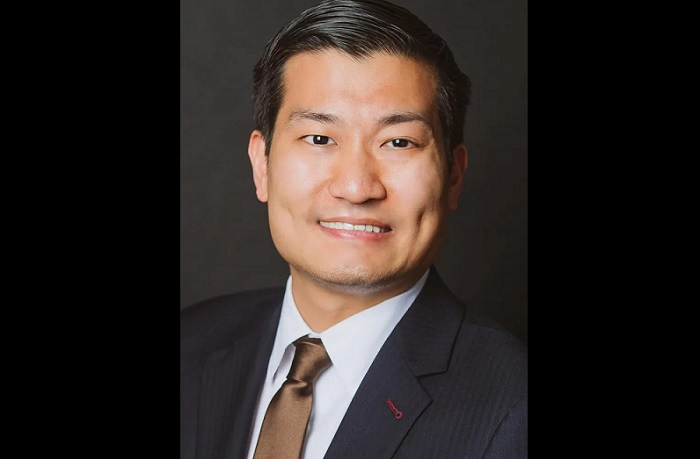
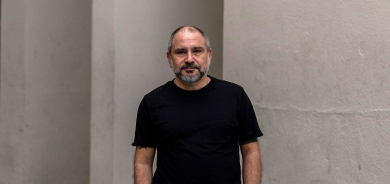
Sean Yom is Associate Professor of Political Science at Temple University. He is a specialist on regimes and governance in the Middle East, especially in Arab monarchies like Jordan, Kuwait, and Morocco. His research explores the dynamics of authoritarian politics, democratic reforms, and economic development in these countries, as well as their implications for US foreign policy.
Gulan: Based on your research on authoritarianism in the Middle East, do you believe the failure of democratization across the Arab world is primarily rooted in weak political culture and civil society, or does it stem more fundamentally from the entrenched power of state security and military institutions that have consistently resisted political change?
Professor Sean Yom: It is the latter. I do not believe that Arab states suffer some essential deficit in their culture that makes people incapable of embracing democratic practices. Moreover, while civil society may seem weak in deeply autocratic countries, it is hardly independent of the state. When we see the absence of independent NGOs or labor unions, or heavily constrained grassroots protest movements, the prime cause lies with the government restrictions and political repression that prevents open mobilization. People everywhere want change.
So, that points to the overall structure of authoritarianism. It comes in many “flavors” in the region, from monarchical autocracies like Morocco, Jordan, and the Gulf kingdoms to republican states like Algeria and Egypt. Those states wracked by conflict, like Libya, Yemen, and Palestine, face their own problems. Excluding these, all types of authoritarianism tend to heavily concentrate power within the ruler and a narrow supportive elite. In such systems, the imperatives of state security and often the armed forces retain predominant authority. Their interests are “hardwired” into political routines, sowing an institutional allergy to the idea that ordinary people deserve the right to vote for leaders freely, create parliamentary bodies that write laws without constraint, hold political figures accountable, and express opposition without fear of punishment. This is the beating heart of authoritarianism, whether in the Arab world or other regions.
Gulan: Your work has extensively examined Jordan, Morocco, and the Gulf monarchies. What institutional and structural characteristics have enabled these monarchies to absorb popular discontent and manage political crises more effectively than many Arab republics, allowing them to withstand successive waves of democratization?
Professor Sean Yom: It’s a confluence of several factors. First, most of the Arab monarchies have constructed very durable social coalitions to buttress their legitimacy. They do not rule from bunkers, and have found ways to co-opt and secure loyalty from substantial parts of the populace. Second, they also enjoy exogenous sources of rents, meaning non-productive income from static resources—such as oil and gas exports in the Gulf, or foreign aid for Morocco and Jordan. Third, they also therefore have substantial Western support. Of all the MENA states that have been cast as enemies of the West over the past half-century (e.g., Iran, Syria, Libya, Iraq), notice that none have been monarchies.
Above all, these monarchies have distinctive “repertoire” of managing opposition and public pressures. They understand how to deal with mass protest, religious dissent, elite demands, and so forth before revolutions explode. This is not because they are monarchies: far from it, plenty of kingships have collapsed in modern MENA history, as in Egypt (1952), Iraq (1958), Libya (1969), and Iran (1979). Rather, this is entirely an artefact of historical time. The monarchies of today are simply the survivors of history; they have a good grasp of how to sustain a dying species of authoritarianism, because they vividly remember the mistakes that past Middle East dynasties made that triggered their overthrow through insurrection or coup.
Gulan: Turning to Iraq, to what extent has the constitutional and institutional framework established after 2003, particularly the muhasasa (sectarian power-sharing) system, contributed to weak governance and the country's continuing crisis of political legitimacy?
Professor Sean Yom: It’s had an enormous role. The muhasasah ta’ifiyyah system created during the US occupation has been, I think, the central cause of the Iraqi government’s legitimacy crises and governance failures. The problem is that the system transformed government ministries into sectarian fiefdoms that communal elites and their personalistic parties used to carve out influence, extract clientelistic tributes, and expand their own patronage networks. Because this has been built into the Iraqi state structure, insofar that everything from bureaucratic appointments to party alignments reflect the jockeying of sectarian factions, it is unlikely to end soon absent a major institutional shock—despite the clear public disgust with such a system.
Gulan: How has Iraq's oil-dependent rentier economy contributed to corruption, institutional weakness, and ineffective governance? More broadly, to what extent does reliance on resource revenues undermine democratic accountability between governments and their citizens?
Professor Sean Yom: This rentierism has amplified the anti-democratic effects of the muhasasah system described above. The influx of hydrocarbon revenues essentially creates a larger pool of patronage that communal forces and sectarian elites seek to capture. At the same time, the profundity of external resources means the Iraqi state faces less pressure—except during rare moments of energy market collapse—to develop the fiscal capacity to extract taxation and develop financial competence. In essence, the rentierism engenders a destructive pathology that deepens the institutional and political syndromes that paralyzed the Iraqi state over the past two decades.
Gulan: Many Arab states are characterized by relatively weak civilian bureaucracies and public service institutions while maintaining highly capable security and intelligence apparatuses. How has this structural imbalance hindered the development of modern, service-oriented states?
Professor Sean Yom: It’s had a very destructive impact. The reason why autocracies everywhere tend to prioritize militarized security institutions and intelligence apparatuses over security sector reform and civilian accountability is that such structuring allows hardline interests—such as mistrust of public mobilization, and the tendency to see all kinds of opposition as threats to national stability—to dominate the state. Rulers need these interests to support them, and in turn they harness their mukhabarat and security forces to muzzle society. This is the fundamental problem we see in many Arab states, and arguably in Iran and even increasingly in Türkiye. As the state becomes proficient in violence, repression, control, and manipulation, it becomes less competent in fulfilling the core function that most citizens want: providing public services, responding to grievances, and maintaining routine administrative functions.
Gulan: Drawing on the arguments in your recent book The Accidental Crucible, to what extent can the concept of historically contingent state formation help explain governance weaknesses elsewhere in the Middle East, particularly in Iraq, where questions of national identity continue to challenge state-building?
Professor Sean Yom: The book you’re referring to is fully called Jordan: Politics in an Accidental Crucible (Oxford University Press, 2025). Readers can purchase a copy here on the OUP website! It is a systematic overview of the Hashemite Kingdom of Jordan, which as an authoritarian state elegantly exemplifies all these pathologies and problems discussed so far. One takeaway point, though, is that Jordan is as artificial as Iraq. Both are creations of British imperialism. The difference—and a major reason why Jordan has remained so stable over the years—is not because the Jordanian state was luckier or stronger, but because of exogenous factors that neither country could control. It is not necessarily the wisdom of leaders but the context of their choices that matters.
Here is a good example. Iraq’s 1958 revolution, which exterminated its Hashemite monarchy, was partly the product of regional geopolitics and Nasserism, but also the partly the product of unresolved class tensions and structural inequality stemming from its feudal agrarian system and preindustrial political economy. Key to the rise of Communist and leftist forces during this period was the stark distinction between landed elites and rural leaders, who drew their living from fertile agrarian estates, and the disconnected but growing urban middle-class. The military was a vehicle of mobility for this new urban middle-class, and class conflict was inevitable.
By contrast, consider Jordan. Jordan did not have class tensions and structural inequality to this extreme degree in the 1950s, because it had no rural aristocracy or landed gentry. It had none of these key forces because it had virtually no fertile land. It was far more barren and water-poor than Iraq. There was nothing to anchor feudalism within. Most people were relatively equal—that is, equally poor. There were certainly pro-Nasser protests and leftist opposition forces active in Jordanian politics during the 1950s, infused by the Palestinian influx from the 1948 Arab-Israeli War. But it lacked the class-oriented “edge” that flavored Iraq’s revolution. And so Jordan survived the 1950s. Iraq did not.
Gulan: How have the policies of external actors, including the United States, Iran, and the Gulf states, interacted with Iraq's fragmented political institutions? Have these interventions reinforced state weakness and political fragmentation, thereby limiting prospects for democratic consolidation?
Professor Sean Yom: External actors have almost wholly undermined Iraqi stability. This includes Iranian meddling, US interventionism, and Gulf involvement. None of these sides, including even Washington, have truly pushed for democratic centralization or stability. They merely pick a favorite side with every election or political conflict. In this sense, Iraq has been drawn into bigger regional conflicts. Iran, as we well know, has helped fracture Iraqi politics with its patronage of various militia movements and paramilitary organizations there. Those groups made Iraq the paradoxical battlesite during the March 2026 exchanges of the Iran War for both sides. The US and Israel struck pro-Iranian forces inside Iraq, while simultaneously Iran struck US forces inside Iraq. None of this bodes well for Iraqi stability, not least because these various sectarian sides and elite factions—for the most part—compete for outside attention as much as they try to compete for public support. And this is quite dangerous in a fragile, imbalanced political system like the one in Iraq.
Gulan: A defining characteristic of the modern state is its monopoly over the legitimate use of force. How has the continued presence of powerful non-state armed groups in Iraq challenged this principle, and what consequences has this had for governance and political decision-making?
Professor Sean Yom: This is a canonical problem in Iraq. Think about the hashd al-sha‘abi (PMF) and its various militia blocs. They are incorporated into the Iraqi federal state’s fiscal structure and even have command authority. But, they are not children of the state. They have their own loyalties, parochial leaders, and economic demands. So, in some instances, we see the PMF acting as an arm of the federal state in enforcing order. But in other instances, they operate independently of the state. We can replicate this dynamic for other sectarian and communal factions. These armed actors effectively serve at the pleasure of their patrons and sometimes support the state, but they exist in a hybrid space outside that very state.
Gulan: Why have major anti-authoritarian protest movements across the Arab world, including the Arab Spring and Iraq's October (Tishreen) Movement, struggled to develop organized political parties or institutional alternatives capable of replacing existing political systems?
Professor Sean Yom: I’ve long struggled with this question. I think the answer is this: for various moral, social, and technological reasons, the activists of today favor grassroots action and non-ideological resistance to signal their disgust with corruption, elites, repression, Israel, and other threats. But they do not see ideologies, which require party-building and mobilizing durable movements, as reliable answers or visions to solve these problems. They are disillusioned with liberalism, socialism, Islamism, and other ideological platforms.
So, when they engage digital content, speak with peers, and organize protests, they are not entering politics with a goal to transform the state according to a masterful blueprint of liberation or revolutionary breakthrough. Instead, they want to voice their dissent and change policy—but not the entire system. This means most such activists lack the commitment to build coherent parties and large-scale social movements that have internal discipline and external structure.
This is not an Arab problem. It is a problem everywhere in the world. We see this with pro-Palestinian protests in the West, for instance, as well as protests against immigration, housing costs, and other quotidian factors in other countries. These protests often have high intensity and they are impressive. But they do not leave strong organized movements int heir wake.
A cynic, of course, might retort and argue that these activists cannot create movements due to repression. But repression is not a convincing explanation. After all, during the 1970s and 1980s, plenty of Communist party movements and Islamist groups in the Middle East were able to survive, and even grow, despite their governments viciously driving them underground and suppressing them. In Tunisia, Ennahda thrived despite being banned. Socialist parties endured in Jordan despite the complete absence of competitive elections and presence of martial law from the late 1950s through late 1980s.
Gulan: Given today's shifting geopolitical landscape, do you believe addressing governance failures in countries such as Iraq requires reform within the existing political system, or do the state's constitutional and institutional foundations themselves require fundamental redesign?
Professor Sean Yom: Both. In countries like Iraq, and to a lesser extent post-conflict scenarios like perhaps Syria and Libya, institutional arrangements will function exactly as their architects desire. They will pick winners and losers. And so, in that sense, internal reform is not enough. The entire “rules of the game” must be redrawn.
However, framing change in such existential terms will guarantee failure. Insiders, such as sectarian elites and political patrons, have no interest in reform, and will treat calls to overhaul the system as threats to quash. So, smart reforms will need to work both angles. They will need to overhaul rules from the outside, leveraging the support of external institutions and actors, while working with moderates, liberals, technocrats, and others within the system to incrementally reduce corruption and streamline the state.
This is a long process. But I am hopeful. There are many states today where, just a few decades ago, the idea of reform and institutional overhaul was laughable given the expanse of violence and sectarian fractures. But now, the system is much better. Rwanda is a powerful example of this, moving from a post-genocidal collapse in the mid-1990s to a complete overhaul combined with internal reform, such that now, it has a surprisingly effective bureaucracy and state apparatus. The problem, of course, is that this has also come at the expense of democracy. Colombia is a better example, having moved from a “semi-failed” state in the 1990s to its current situation of featuring a robust state (albeit still with corruption and control issues) with regular democratic elections.