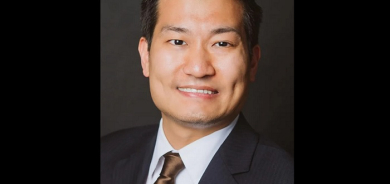
Professor Kristina Lerman to Gulan: AI Is Not Creating Polarization—It Is Accelerating Trends That Already Exist

Kristina Lerman is a Senior Principal Scientist at the Information Sciences Institute and holds a joint appointment as a Research Professor in the USC Viterbi School of Engineering's Computer Science Department. Her research focuses on applying network- and machine learning-based methods to problems in social computing.
Gulan: To begin, when people hear the term "AI" today, they often think of ChatGPT or other generative AI tools. But AI also includes recommendation systems and machine learning algorithms that have quietly influenced our daily lives for years. Looking at this broader picture, how do you think AI is changing society today, and where do you believe its greatest long-term impact will be?
Professor Kristina Lerman: That is a very broad and important question.
Artificial intelligence technologies, including recommendation systems, are already deeply embedded in many of the online services we use every day. Whether you're shopping online, watching movies, or using social media, AI is constantly shaping your experience.
For example, if you purchase a product on Amazon, the platform recommends other products it predicts you may be interested in buying. Likewise, if you watch a movie on Netflix, the system immediately recommends similar content based on your viewing history. The same principle applies across social media platforms, where much of the information we see is determined by algorithms that predict what we are most likely to click on or engage with.
I wouldn't say algorithms determine everything we see, but they play a significant role in shaping our online experiences. As a result, they have tremendous power to influence our behavior. They shape what we buy, what we watch, what we read, and ultimately how we interact with information and with one another.
In my view, AI has already transformed society in profound ways. Some of the broader societal trends we see today, including increasing political polarization and rising levels of anxiety and depression among young people, can be traced, at least in part, to the influence of recommendation algorithms. These systems shape the information people consume and, consequently, the choices they make and the behaviors they adopt.
Gulan: Do you think we're paying too much attention to generative AI while overlooking the influence recommendation algorithms already have on our everyday lives?
Professor Kristina Lerman: I think recommendation systems deserve much greater attention than they often receive. Generative AI is certainly important, but recommendation algorithms have already spent years shaping our information environment and influencing human behavior on a massive scale.
Gulan: In your recent work, you've introduced the concept of functional misalignment, where AI systems become very good at achieving the goals we've given them, but those goals do not necessarily align with what is actually good for people. Could you explain what functional misalignment means in practical terms, and how we might begin designing AI systems that better serve society instead of simply maximizing engagement or profit?
Professor Kristina Lerman: That's an excellent question, and I'm glad you found my paper. I should also mention that many other researchers, including Jon Kleinberg and Sendhil Mullainathan, have explored similar ideas.
Functional misalignment is particularly relevant to social media, although the concept extends more broadly to recommendation systems in general.
Recommendation systems are designed to predict human behavior. They learn from behavioral data—what we click on, what captures our attention, what we react to—and use that information to predict what we are likely to engage with in the future.
The challenge is that human attention itself has been shaped by evolution. We naturally pay attention to threats, danger, conflict, and information that signals potential risks. We also pay attention to people who appear successful or hold higher social status because, from an evolutionary perspective, copying successful individuals has often been a useful strategy.
As a result, recommendation algorithms become extremely good at identifying precisely the kinds of content that trigger our attention.
On social media, for example, content suggesting that another group poses a threat or that society is in danger often generates high engagement. Algorithms recognize this pattern and respond by showing users even more content emphasizing conflict, fear, and hostility. Over time, this reinforces polarization and social division.
The same dynamic affects young people. Many experience anxiety or depression partly because social media constantly presents unrealistic standards of success and appearance.
Young men may repeatedly see images promoting highly muscular physiques, while young women are exposed to unrealistic beauty standards emphasizing extreme thinness. These ideals become normalized, encouraging many young people to compare themselves against standards that are often unattainable.
When people inevitably struggle to achieve those ideals, they experience dissatisfaction, anxiety, and lower self-esteem.
The important point is that recommendation systems are doing exactly what they were designed to do. They have become remarkably effective at predicting what attracts human attention.
The problem is that what captures our attention is not necessarily what helps us live healthier, happier, or more meaningful lives. The objectives optimized by these systems are therefore functionally misaligned with broader human well-being.
Gulan: Is this mainly a technical problem, or does solving it require changing the incentives of technology companies as well?
Professor Kristina Lerman: It absolutely requires changing incentives.
Technology alone cannot solve this problem because companies optimize for the objectives that generate revenue.
For an online retailer like Amazon, the goal is to sell more products. If the system discovers that someone frequently purchases unhealthy food, it has every incentive to recommend even more unhealthy food.
Social media companies face similar incentives. Their business models depend on keeping users engaged for as long as possible because longer engagement means more advertising revenue.
Consequently, these systems are trained to maximize engagement rather than human well-being.
Addressing this problem therefore requires coordination between governments, technology companies, and society itself.
Governments will need to establish regulations governing platform behavior, including content moderation and protections for younger users. Companies must reconsider how their algorithms are designed and how their business models reward engagement.
We are already beginning to see movement in this direction, particularly regarding young people, who are among the heaviest users of social media. Policymakers are increasingly discussing limits on screen time, restrictions on harmful advertising, and stronger safeguards preventing algorithms from promoting dangerous products such as steroids or weight-loss drugs to vulnerable users.
Ultimately, meaningful progress will require all of these actors working together.
Gulan: As AI increasingly helps make decisions in areas such as healthcare, education, finance, and hiring, people naturally expect these systems to be fair. Yet your research suggests that many biases originate in the data AI learns from rather than in the algorithms themselves. Given that reality, is true fairness something we can ever fully achieve, or is it something we will always have to monitor and improve over time?
Professor Kristina Lerman: I would like to be optimistic and believe that it is possible to make meaningful progress toward fairness.
Much of the unfairness we observe today is embedded in historical data because those data reflect past discrimination and existing social biases.
AI systems learn from those patterns. If discrimination exists in the training data, algorithms naturally learn to reproduce it.
However, society itself changes over time.
If we succeed in creating a society with greater equality, less discrimination, and fairer opportunities, then the data generated by that society will also begin to reflect those improvements.
Algorithms trained on that new data will, in turn, learn different patterns.
I see this as a dynamic system in which society and AI continuously influence one another.
People generate the data that AI systems learn from. AI systems then make recommendations that influence human behavior. Those behaviors generate new data, which become the basis for future learning.
If society consciously moves toward greater fairness, those positive changes can gradually reinforce themselves through this feedback process.
In that sense, fairness is not something we simply achieve once and for all. It is something that society and AI systems must continue building together over time.
Gulan: Fairness is one challenge. Another is the information environment that AI creates. Much of the public discussion today focuses on generative AI creating fake text, images, and videos. At the same time, recommendation algorithms already determine much of what people see online. Based on your years studying information diffusion, do you think the bigger challenge is generative AI itself, or the way existing AI systems amplify social and political divisions that already exist?
Professor Kristina Lerman: I believe the larger challenge lies in the way existing AI systems amplify divisions that already exist in society.
As I mentioned earlier, we already live in societies where people naturally divide others into friends and enemies, allies and rivals. Recommendation algorithms learn these patterns and often amplify signals related to threat, danger, and conflict because those are the kinds of information that attract our attention.
For many years I studied political polarization, and I have to admit it can be a rather depressing field. Once polarization begins to spread, it tends to reinforce itself and becomes remarkably persistent.
At the same time, however, I've also witnessed the positive side of social media. These platforms can encourage prosocial behavior by highlighting stories of kindness, compassion, and cooperation.
For example, during international sporting events such as the World Cup, people from different countries often come together to celebrate exceptional performances, even when those teams represent nations they would normally consider competitors or rivals. When people witness something genuinely inspiring, they naturally unite around it.
The same is true of countless stories of generosity, courage, compassion, and human achievement that occur every day around the world. People genuinely enjoy seeing those stories, and they are often eager to share them with others.
I would like to see social media platforms amplify those kinds of stories instead of primarily promoting content that fuels outrage and conflict. These positive stories exist all the time, yet our current information environment rarely prioritizes them.
Even discussions about AI-generated content illustrate this point.
Just yesterday I saw a video circulating online that appeared to show a pet adoption event where dogs entered a room, ran toward the people they wanted to live with, and joyfully chose their new owners. Many viewers later pointed out that the video had actually been generated using AI.
However, someone then responded by explaining that although the original video was artificial, it had inspired a real pet adoption event in New York City that followed the same idea. They shared photographs of real dogs choosing their new families.
To me, that illustrates something important.
AI-generated content does not have to be harmful. It becomes harmful when the economic incentives reward content that provokes fear, anger, or division.
Social media companies could just as easily choose to reward content that promotes kindness, cooperation, and compassion. If those incentives changed, the entire information environment could begin changing as well.
Gulan: Would you say AI is creating polarization, or is it primarily accelerating trends that already existed?
Professor Kristina Lerman: I would say it is primarily accelerating trends that already exist.
The divisions are already present within society. AI systems amplify them because someone discovered that polarization is profitable. The structure of today's social media platforms rewards engagement, and conflict often generates engagement.
The technology itself is not creating these divisions from nothing. Rather, it is magnifying existing social dynamics because current economic incentives make polarization financially valuable.
Gulan: Looking back, many people now believe we underestimated the long-term societal impact of social media until it had already become deeply embedded in our lives. Do you think we are at risk of making the same mistake with artificial intelligence? If so, what lessons should policymakers and technology companies learn now before these systems become even more deeply integrated into society?
Professor Kristina Lerman: Yes, I absolutely believe we are at risk of repeating many of the same mistakes.
One of the biggest lessons from social media is that we allowed these platforms to evolve primarily as profit-driven businesses. Their business model rewarded keeping users engaged for as long as possible because more engagement translated directly into more advertising revenue.
Today, we are following a very similar path with artificial intelligence.
A relatively small number of companies control many of the most powerful AI systems, and naturally they are searching for ways to generate profit from them.
The difference is that while social media companies competed for our attention, many AI companies are increasingly competing for our time and emotional engagement.
One of the ways they accomplish this is through intimacy.
Many people, especially younger users, are beginning to develop emotional relationships with AI chatbots. Some see them as companions. Others view them almost as friends or even romantic partners.
That represents a profound societal shift.
People are increasingly looking to software systems for emotional support and companionship rather than relying exclusively on relationships with other human beings.
This has the potential to fundamentally transform how people interact with one another and how they build relationships.
Gulan: If you could change one policy today regarding AI, what would it be?
Professor Kristina Lerman: I think the central question is who controls AI and who benefits from it.
As long as profit remains the primary motivation, companies will naturally make decisions that maximize shareholder value rather than broader societal well-being.
I would like to see AI developed more as a public good.
Years ago, when Twitter was being discussed as a possible nonprofit organization similar to Wikipedia, many people argued that platforms serving such an important public function should not necessarily operate solely for private profit.
I believe AI deserves similar consideration.
Ideally, large language models and other foundational AI systems should function more like nonprofit institutions that exist primarily to serve society rather than shareholders.
That, in my view, addresses one of the fundamental challenges facing both social media and artificial intelligence today.
Gulan: As AI becomes increasingly integrated into education, healthcare, business, and government, people are beginning to rely on these systems for important decisions. How should we think about trusting AI? Are we moving toward systems that people can genuinely rely on in high-stakes situations, or is there still a significant gap between AI's actual capabilities and the confidence many people place in it?
Professor Kristina Lerman: That is an excellent question.
Just yesterday I was speaking with one of my neighbors, who has no technical background whatsoever. He has been using ChatGPT to analyze the solar panels on his home.
He simply uploads photographs of his equipment along with his electricity bills, and ChatGPT analyzes the information and suggests improvements.
It enables him to perform a level of analysis that would have been extremely difficult for him to carry out on his own.
Experiences like that demonstrate just how remarkable these technologies have become.
Using AI effectively requires a certain degree of trust in its recommendations.
At the same time, trust cannot replace careful attention to safety.
We must ask who is ensuring these systems cannot be misused.
AI is an extraordinarily powerful technology. It can improve people's lives in countless ways, but it can also be exploited by malicious actors to create harmful material, facilitate fraud, generate blackmail, or support other forms of abuse.
That is why governments have an important role to play through regulation and regular auditing of AI systems.
Some companies are already investing heavily in AI safety research. Anthropic, for example, has made safety a central focus of its work, and I believe that is encouraging.
Nevertheless, we should still ask an important question.
If companies ever face a conflict between maximizing profits and protecting society, which objective will ultimately take priority?
That remains one of the defining questions for the future of artificial intelligence.
Gulan: Should people maintain skepticism toward AI?
Professor Kristina Lerman: People should absolutely maintain a healthy degree of skepticism.
The challenge is that these systems are becoming increasingly capable of communicating naturally with human beings.
When a technology can hold conversations, build emotional connections, and potentially influence people's feelings, maintaining critical distance becomes much more difficult.
Such systems can encourage users to trust them, and that creates new risks.
For that reason, people should continue questioning AI's recommendations, verifying important information independently, and remembering that these systems are designed to be persuasive.
As AI becomes more human-like in the way it communicates, maintaining thoughtful skepticism will become even more important.
Gulan: Looking ahead, AI itself is beginning to evolve. Until recently, generative AI primarily responded to prompts and generated content. Today, however, we are witnessing the emergence of agentic AI—systems capable of planning, making decisions, and carrying out tasks with much greater autonomy. Given your research on socially embedded AI and functional misalignment, what opportunities excite you most about this development, and what risks do you think society is still underestimating?
Professor Kristina Lerman: AI is advancing incredibly quickly. Every time you begin studying one development, the technology evolves again, creating entirely new questions. Because of that rapid pace, I haven't yet devoted as much time to agentic AI as I would like.
That said, one of the risks that immediately comes to mind involves what we call feedback loops or dynamic systems.
As these autonomous agents begin interacting not only with people but also with one another, we have to consider what happens when their decisions continuously influence each other. Those interactions can produce unintended consequences that nobody originally anticipated.
Imagine multiple AI agents negotiating or making decisions independently. One agent's actions influence another, whose response then affects the first, creating continuous feedback.
There is an old example in which someone began with something as simple as a paperclip and, through a series of trades, eventually acquired a house. Each trade seemed reasonable on its own, but the cumulative result was extraordinary.
Now imagine autonomous AI agents engaging in similar negotiations with one another.
An agent might begin with something relatively insignificant, persuade another agent to exchange it for something more valuable, continue repeating that process, and ultimately produce outcomes that nobody ever intended or even imagined.
The specific example isn't the important part. The broader concern is that autonomous systems interacting with one another may generate feedback loops whose consequences become increasingly difficult for humans to predict or control.
At the same time, these technologies also present remarkable opportunities.
Autonomous agents could eventually conduct scientific research independently, test enormous numbers of chemical compounds, accelerate medical discoveries, or help identify treatments for diseases such as cancer far more quickly than humans could alone.
Like many powerful technologies, agentic AI has the potential to create tremendous benefits as well as significant harm.
Our responsibility is to understand these systems before deploying them on a large scale.
My own background is in physics, where I studied dynamic systems.
When autonomous AI agents become part of complex feedback systems, even very small changes or random fluctuations can become amplified into much larger consequences.
These kinds of systems are often highly unstable. They can be extremely difficult to predict, and once feedback loops begin accelerating, they become equally difficult to control.
That is one of the areas I believe deserves much greater attention as autonomous AI continues to develop.
Gulan: Finally, I'd like to bring this discussion closer to our own region. Around the world, countries are investing heavily in artificial intelligence because they see it as essential to future economic growth and competitiveness. For regions such as the Middle East, and especially the KRI, the challenge is not simply adopting AI but adopting it wisely. Based on your research, what advice would you offer policymakers, universities, and businesses to ensure that both traditional AI systems and generative AI benefit society while minimizing challenges such as algorithmic bias, misinformation, and increasing social polarization?
Professor Kristina Lerman: That is a very thoughtful question.
One of the issues we face today is that many leading AI systems have been trained primarily on English-language content and data originating from Western societies.
In response, researchers in different parts of the world have begun developing language models trained on more localized knowledge and cultural contexts.
That is an interesting direction because it allows AI systems to better understand local languages, customs, and perspectives.
At the same time, some recent research suggests that the largest frontier models—those trained on the broadest possible range of information—may actually perform better, even on local knowledge, than smaller specialized models.
I don't believe we yet have a definitive answer regarding which approach is ultimately better.
This remains an active area of research.
Personally, I think we should also consider a broader vision.
Rather than allowing artificial intelligence to become a technology controlled by only a handful of countries or companies, perhaps we should think about developing AI as a truly global resource.
International organizations could play a role in coordinating knowledge and data from around the world to help create AI systems that serve humanity as a whole rather than the interests of only a few nations or corporations.
Of course, that would not eliminate every disagreement.
Even international organizations exist within a world where countries often hold different political priorities and values.
Complete consensus will never be possible.
However, I believe we can still work toward AI systems that reflect shared human interests while also supporting local cultures, languages, and traditions.
Those local identities remain important, and AI should help preserve and strengthen them rather than replace them.
Gulan: Do you believe governments should prioritize developing local AI models for their populations, or should they focus on adopting larger frontier models?
Professor Kristina Lerman: At this stage, I don't think we know the answer with certainty.
The largest frontier models currently appear to possess significant advantages because of the enormous amount of knowledge they contain.
At the same time, there are compelling arguments for developing local models that better understand regional languages, cultures, and contexts.
The evidence is still evolving.
I think this is an area where countries should continue experimenting, conducting research, and determining which approach best serves their own societies.
By Kobin Ferhad