Prof. Umut Özkırımlı to Gulan: Nationalism Is Not an Ideology—It Is a Way of Seeing the World
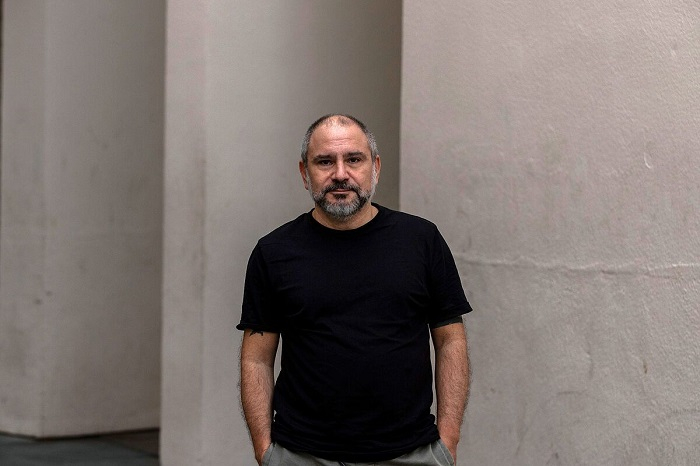
Umut Özkırımlı is a Senior Research Fellow at the Barcelona Institute for International Studies (IBEI) and a Senior Research Associate at the Barcelona Centre for International Affairs (CIDOB). He has previously held positions at Istanbul Bilgi University and Lund University (Sweden) in the fields of Political Science and International Relations. He is the author of the widely acclaimed Theories of Nationalism: A Critical Introduction (Palgrave Macmillan, 1st ed. 2000; 2nd ed. 2010; 3rd ed. 2017) — the most widely used textbook on nationalism globally — and, most recently, Cancelled: The Left Way Back from Woke (Polity, 2023), published in Spanish as Cancelados: Dejar atrás lo woke por una izquierda más progresista (Ediciones Paidós, 2023). His books have been translated into several languages, including Spanish, Turkish, Greek, Arabic, Persian, and Chinese. He is currently working on three new books: the fourth revised and updated edition of Theories of Nationalism (Bloomsbury Academic, 2027); an edited volume, A Research Agenda for Nationalism (Edward Elgar, 2028); and a crossover book, Nationalism Today (under negotiation with several publishers). His writings have appeared in The Guardian, openDemocracy, and Times Higher Education, among others, and he regularly contributes to the Spanish public debate through articles and interviews with El País, RTVE, El Periódico, El Mundo, La Vanguardia, ABC, and Diari Ara. In an exclusive interview, he answered our questions as follows:
Gulan: In your writings, you contend that nationalism is a political instrument influenced by social and historical settings rather than something that is fundamentally destructive or progressive. Do crises inherently bolster nationalist politics at a time of wars, geopolitical competition, and increasing insecurity, or can they also present chances for more inclusive forms of political identity?
Prof. Umut Özkırımlı: I'm working on two new books and one of them will be for a general, one of them is the fourth edition of my textbook, Theories of Nationalism, but I'm also writing, for the first time actually, in 25 years, a more general public book on nationalism today, where I'm trying to both give an idea about what kind of a thing nationalism is, but answer the basic questions. I mean, it's just an introduction to it. I will answer the questions, what is nationalism? And what types of nationalism do we have? And exactly as your question, is nationalism a good force for progress, or something that is exclusionary? And now the new concept, in my new conceptualization, and that's what I'll tell you, I mean, nationalism is more than a doctrine, or a political doctrine. It's more like, instead of comparing it to liberalism, socialism, things like that, we need to compare it with religion, for example. It's a belief, it’s a way of seeing the world and everything. And it works through three different mechanisms. I mean, one is the institutions. So, I mean, in Kurdistan, you have the state, the autonomy. It works through a particular narrative. In each case, there are different ones, Kurds, for example, are for a fact, is the largest nation without a state. And then there's your history. Turks came up, invented their own history. So, the history can be invented or real. It doesn't matter. You need the narrative, the story. And then these two, the institutions and the narrative, produce the emotions, the affect, people are mobilized on the basis of these two things. They're told the story. That story is told and supported by the institutions. And in the end, people respond to it in a positive way, or they're mobilized. Now, if you look at it this way, I think it's much better to, instead of distinguishing between civic, ethnic, political, cultural, nationalism, it's better to think of nationalism as a kind of one long line, continuum. So, on one side, you have these destructive forms. What I mean, in the literature, there are different names for it. You can call it exclusionary, virulent, hot nationalism, etc. On the other hand, you have the nicer version, the patriotism, etc. And this, what we call the everyday nationalism. I mean, the things that make you remember that you belong in this world, that you have your own people, and then your enemies. That could be Baghdad, that could be Ankara, that could be Israel, you know. We all have our own others. So, the answer to your question then, precisely, is it can be both. Now, the crisis usually makes nationalism much more visible, it comes to the surface. When do we see or notice nationalism? When it's, when there is some kind of a celebration, a ritual, the Independence Day, Referendum Day, those kinds of things. But also, when you are being attacked by another country, for example. So, depending on the nature of the crisis, depending on the politicians who are in control of the narrative and the institutions, it can produce good results. It can produce both results. If you're attacked in Kobani, in Syria, obviously, people fight for their country. But I mean, what is Netanyahu doing, you know, using the Hamas attacks, which are, of course, unacceptable terrorist attacks. But he built on this a completely different narrative to justify a genocide. So, the answer, unfortunately, is not black or white, you know. I'm not saying it can be gray. It will produce the white or the black, depending on the crisis and depending on if you're being attacked by another country. If, we remember what happened after the referendum in 2017, about 40% of your land is being, including Kurdistan, occupied, then for the Kurds, that was a white outcome because you fight for your country and you solve the problem. But if it's, let's just say that in this case, you have a completely different type of leader, then this can become something. I mean, Saddam was basically doing the same thing. Well, actually, he constructed, fabricated a crisis out of nothing. And then, gassed the Kurds, basically. And that's the black version. So, it goes both ways. And it goes both ways in all nationalism.
Gulan: You also have written about populism. So, there are many populist groups present or portray themselves as the defender of the people against domestic allies, against international organizations. So, the question is, is populism repackaging long-standing nationalist narratives for creating new political movement, or populism has fundamentally changed the nationalism?
Prof. Umut Özkırımlı: They do both, the first important thing for your readers is to say that populism and nationalism, because, people writing in other newspapers in the West, usually, think that they're similar things. They're not. I mean, there is a differentiation. Now, it doesn't like socialist nationalism or liberal, they can work together, that's fine. But in general, they're separate. Populism distinguishes, vertically between the people and the elites. Nationalism distinguishes horizontally between outsiders, insiders. But of course, they very much like to use each other, because that increases their popularity, their justification, their appeal. So, the nationalists say that, the elites of the country are also, representing the interests of the global, whatever, intelligentsia, they are against the rights of the people and all. So, they use each other very, very efficiently, used it in their ways. So, again, like nationalism, populism could be good and bad. But in this case, the populist far-right leaders especially, in order to justify their political campaigns and their agendas, they're using nationalism by presenting the existing elites as representatives or as puppets of foreign forces. So, Trump says Biden and the Democrats are communists, whatever that means. Elon Musk says the same thing, etc. So, they're using it very efficiently because it works better when you combine them. Let me continue with the metaphors, it's one, on the one hand, you have pita, on the other hand, you have cheese. If you put them together, it's a better thing, you know. They're separate, but they go well, really well together.
Gulan: So, what about the emergence of digital communication, artificial intelligence and social media algorithms, as they have been used for formation and maintenance of political identities. So, what's your assessment of the impacts of these new technologies on the formation of national identities? Can we say that digital communication has replaced common historical experiences and is driving nationalism more and more?
Prof. Umut Özkırımlı: The answer to your question is yes. I mean, nobody reads, buys a paper and reads them anymore. I mean, we are all here living in these little boxes. But these two important factors here speed up and facilitate the spread of nationalism. In the past, in the 19th century, it took months for ideas to travel. In the early 20th century, with print media and television, etc., it became like daily and short periods. With this, social media, it's now instantaneous. It's immediate. So, the first thing is this. The second thing is, obviously, this kind of accelerating impact, this speeding up thing, works in favor of right-wing nationalists a lot. But because internet is not something you can control completely, and it also opens up possibilities for challenging the dominant narratives, like for democratization, for different types of discourses as well. So, in the past, because all these media can be easily controlled by the state, you didn't have that chance. And the only country that manages, well, the only examples of countries that manage them, they realize that they cannot control social media. So, what do they do? In North Korea, complete cutoff. In China, they have their own closed internet system. Everything is closed. Like, they don't have Amazon. And to order food, they have their own apps. Turkey does it. But what do we do? Just download ExpressVPN, pay 10 euros a month, and then, you know, I can bypass anything I want.
Gulan: How do you see the interaction or interplay between nationalism and identity politics? Are they opposing forces, or they come together to create a new kind or form of political movement that go beyond traditional left and right divide?
Prof. Umut Özkırımlı: Of course, identity politics is, considered to be a left-wing progressive force. My argument is very simple. In the beginning, and in the past, when the people who coined the term identity politics were socialist, black, African-American women. So, it was a really progressive thing. They were not only doing demonstrations for their own rights, but they were demonstrating for Vietnam, for Palestine, for this and that. So, it was a progressive force. But in the 90s and the 2000s, with post-modernism it has become what we call woke. I think identity politics is a mini version of nationalism. it's instead of becoming a progressive force, which is inclusive, it has become something of tribalism. So, it's like, you know, it has become all of a sudden something that is against anyone who doesn't think like me. Look at the left today in the West. We don't have these luxuries in countries like Iraq, Turkey, and all of that. So, that's, what is the Turks? Imagine what kind of an opposition force would exist in Turkey, if the secular party, CHP, would unite with the Kurds. They're becoming close to 50%, of course, literally, but no. Why? Because they're Kemalists, and the Kurds are, you know, we love them, but, but, but, but, but, you know, and then Erdogan is the pragmatic, you know, he does, he talks to Öcalan, he's, the guy has been in power for now 24 years, because he's good with Putin, he's good with Trump, he's good with Barzani, he's good with anyone.
Gulan: What insights your research, provide for managing conflicting identities without jeopardizing states' cohesiveness in multinational states like Iraq, where religious, ethnic identities collide? So, can civic nationalism eventually be successful in countries characterized by deep or profound historical divisions?
Prof. Umut Özkırımlı: Actually, you don't have any other option. You have to have some version of a democratic civic nationalism, because it's a multinational state. You have the Sunnis, you have the Shiites, you have Kurds, and then there are several other smaller, you know, groups, Yazidis. And right now, I am now updating myself, because in the new book that I'm writing for a general audience book, I'm referring to a lot of cases, and, of course the Palestinians and the Kurds are there. It's one of the things that you have to mention is this autonomous, like, being a nation doesn't require necessarily a state. You can achieve it in different ways too. The Iraqi Kurds tried this, the Kurdish situation is probably good, but, it's the most difficult thing. I mean, like, you have four countries. Internal divisions, on the one hand, but also the four countries, none of them democratic.
Iraq is better than the others, maybe, right at this point, but, still, it's not a democratic state. I mean, otherwise, they wouldn't go on and fight the Peshmerga in 2017. So, basically, I am glad that at least we can refer to one Kurdish entity as free. The Syrian Kurds will exist, and they will keep their autonomy to a certain extent, but it's not going to work like in Iraq. Iran is a complete lost case, and Turkey, there are talks, but nothing happened. There's nothing on Turkish social media anywhere about the Kurdish question. Nothing. Just a few odd letters or statements by Demirtaş, and that's it.
Gulan: In your opinion, what will be the biggest challenge facing nationalism research in the coming 10 years?
Prof. Umut Özkırımlı: Well, we're doing that. I mean, I'm very much involved in that now, because, you know, I lost my son in 2018, and then, you know, I changed my areas, and when I came back, I worked on populism, etc., these kinds of stuff, but now I'm back, and I'm in touch with the community. I mean, we're like a couple of hundred, maybe a thousand people doing these works, and the tendency right now, and with a couple of colleagues, we're pushing for that, and in the new books, too, the old debate was a very useful one about, what is the nation, theories of nationalism, Benedict Anderson, Gellner, Smith, but they are all dead, and they were our friends or our professors, so we respect them, we love them, but the debate needs to move to a new level, and we need to start discussing, I think, two things. One, that we should forget about coming up with one theory of nationalism, because as you asked in your first question, there is variety, so we need to be able to capture this and focus on new things, like digital nationalism, like the environmentalist movement, some of them are fascist, eco-nationalist, we call them eco-fascists, you know, they want to keep the environment, protect the environment, but protect the environment for themselves, not for immigrants, not for this and that, so, we need a kind of diversify the field. The second thing we need to do is, and that shocks when I say this to people, because I had always been an internationalist, but since I started living in Catalonia, from 2018 onwards, I realized that, you have to give it to nationalism, I mean, this can be really a unifying force, you just need to be very, very carefully control it, manage it, and then it works, I go to my generations of students, undergrads, now I'm not teaching them, for four years I do, like 19 year old kids, they come here and they say, you know, Catalan nationalism, and I ask them, okay, let's consider me, I'm a foreigner, just tell me, why do you need it, they say, first of all, what does it mean, they say language, for them it's language, for Kurds too, it's very important, and the second thing is, why do you want your own state, I mean, you have everything that all the others, like the Kurds would like that, you have a parliament, you have your own everything, and they say, you know, we still want our state, now they tried and they failed too, now there's no support for statehood, but I learned to respect beliefs, people's beliefs. So I am now focused on a democratic conception of nationalism, and we're using my case, because I have three homes, I have Turkey, I live in Spain, and I have a Swedish citizenship, and I had my son in Sweden, so we're working with Swedish colleagues on social democracy, and what kind of a nationalism we can come up with now, the best example of it, the Norwegian Vikings thing, that's a good thing, I mean, who does it harm, nobody, do they bring people together, yes, that's it, and the Kurds, they have their own languages, let them speak their language, let them practice whatever they want.