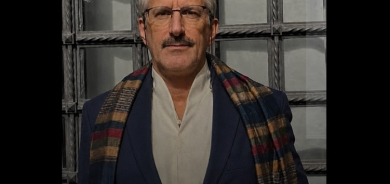
Professor Dr. Wolfgang Streeck to Gulan: Ending Modern Capitalism requires a comprehensive transformation of an established civilization
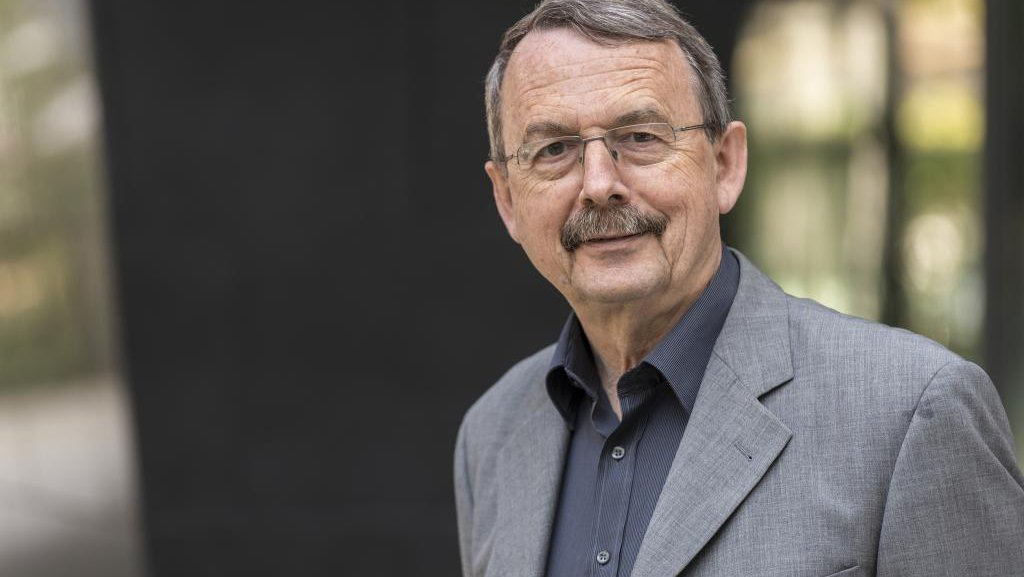
Professor Dr. Wolfgang Streeck is Emeritus Director of the Max Planck Institute for the Study of Societies and one of the world's leading scholars of political economy. His research focuses on the political economy of modern capitalism, institutional change, and labor markets and labor relations. Through influential works such as How Will Capitalism End?, he has critically examined the evolving relationship between capitalism, democracy, and the state, offering important insights into the structural challenges facing contemporary societies. The relationship between markets, states, and democracy is changing as a result of the significant economic, political, and technological changes that modern capitalism is going through. Globalization, growing inequality, economic nationalism, democratic legitimacy, and the quick development of artificial intelligence have all sparked new debates about capitalism's future and its ability to maintain social and political stability. In this interview, Professor Dr. Wolfgang Streeck examines these important questions, including whether capitalism is about to undergo a period of structural change, the potential for democratic renewal, the evolving role of the state, and the institutional innovations that could characterize the next stage of the global political economy.
Gulan: In “How Will Capitalism End?”, you contend that rather than being replaced by a logical alternative, modern capitalism is about to enter a protracted era of systemic breakdown. If capitalism is truly disintegrating into what you refer to as a "post-social order," what institutional innovations or political creativity may still stop this trend toward inequality and fragmentation, and where, if anywhere, do you find historical antecedents for such changes?
Professor Dr. Wolfgang Streeck: Let me elaborate a bit on what I wrote a number of years ago. Modern capitalism is not just a way of extracting surplus value; it is a way of life, a culture, perhaps even a religion. Ending it requires a comprehensive transformation of an established civilization, from the cradle to the grave, from production to consumption to reproduction. Such a transition takes time. It needs much more than someone in power, an individual or a party, to declare capitalism out and socialism in, unlike what Lenin believed or pretended to believe he was doing – and also unlike Yeltsin, who could decree at a press conference that from tomorrow on capitalism would replace communism. Unlike Lenin and Yeltsin, we do not have a blueprint of the new order to follow the old one, nor do we have an agent to put it in place from above, a communist party or an American friend. Before capitalism will be over, there will a long time of crisis, or crises, of frictions between institutions and expectations that no longer fit together, of contested experiments trying to restore the old order or to introduce a new one, under high uncertainty, with support and resistance from unexpected quarters. Also, dismantling a civilization is one thing; replacing it with another, another. We are not talking about an act of social engineering here, to be completed in one generation, but about a long march into an unknown future, a new social settlement after a long intermission without one, or with only the fragments of one. For a West European, the best analogue might be the end of the pagan Roman Empire and the rise of the Christian civilization of the early Middle Ages, which took about 500 years, depending on how you count. This time, we may hope, it might go a little faster, but clearly not as fast as some impatient people on the Left expect.
Gulan: The increasing conflict between democratic legitimacy and the structural requirements of global capitalism is brought to light by your analysis. Do you think democratic institutions can still restrain capitalism in a time when markets seem more and more immune to democratic oversight, or has the balance of power changed so drastically that democracy itself has to be reimagined in order to have any political significance?
Professor Dr. Wolfgang Streeck: Democracy is a complex concept. Are we talking about liberal, social, political, industrial, economic, direct or indirect, representative or syndicalist democracy? Or any combination of these? And what role will be played in it by the state? Liberal-representative democracy without industrial democracy, as today after the demise of trade unions, is clearly not suited, and is not meant to be suited, to restrain capitalism, as you call it. My sense is that in order to re-empower democracy and with it “the people” we must much more radically address the issue of property rights, in preparation for socialism as a new and better way of life. By this I mean, among other things, that we must through political mobilization expand the range of communally owned and self-administered collective goods in our societies – and of institutions like cooperatives, credit unions, neighborhood parks, protected by democratic politics against takeover by capitalist firms, inviting and requiring participation of citizens-owners, where voluntary cooperation is a non-material reward on top of the material ones. (As a side-effect this would make it unnecessary to set up ministries of loneliness, as in a growing number of capitalist countries today.) Ultimately, democracy cannot exhaust itself in asking state bureaucracies and the parties that have appropriated them to send you whatever benefits you believe you are entitled to, in exchange for your vote every four or five years. A democratic state should be one that empowers its citizens and strengthens their capacity to be masters of their lives, as a foretaste of socialism after capitalism.
Gulan: You examine the prospect of governments regaining political power following decades of globalization? How much do you think the current rise in nationalism and state intervention is a true structural re-empowerment of the state, as opposed to being a reaction to the social and political upheavals brought forth by global capitalism?
Professor Dr. Wolfgang Streeck: Of states, yes, not just governments – states that, if they can be brought under democratic control, are needed to return power to the people, beyond capitalism and its relegation of the vast majority of citizens to passive dependence. “The state”, incidentally, is a concept too general to be used without care. States differ, not least in their role vis-à-vis capitalism, just as they do with respect to their position in the global system of states – where some enjoy effective sovereignty while others are subject to imperial rule by a hegemonic global or regional power. Nationalism is one thing, state intervention another. What I believe, in any case, is that democracy requires decentralization of decisions, down to where the people are, and that current right-wing nationalisms must be explained as misconceived and indeed potentially dangerous expressions of a widespread feeling of having been deprived of control over one’s own life, by politicians and bureaucrats who are a class of their own, having nothing to offer anymore to ordinary people except empty promises.
Gulan: The conflict between democratic sovereignty and the limitations imposed by transnational economic integration is frequently highlighted in your research. Do you see a way for democratic governments to restore significant autonomy in a world where economic networks are still highly globalized without inciting protectionism, fragmentation, or new types of geopolitical instability?
Professor Dr. Wolfgang Streeck: Protectionism and fragmentation, as you call it, come from below, in defense against unified free markets. Governments enter where they have learned, often painfully, that demands for protection against unregulated markets and for a more responsive politics, must be somehow accommodated by them or else their legitimacy will erode. I have called this a politics of scale – its progressive wing trying to bring political decisions as close as possible to those affected by them, ultimately turning policy-takers into policy-makers. This requires an international system that is accommodating of local self-determination and of local diversity of interests and problems, a system based on cooperation between sovereign states representing different societies, rather than an imperialist order that seeks to manufacture unity and stability from above, by command, instead of than letting them rise from below, through voluntary cooperation. In this sense, I see fragmentation and protectionism as an indispensable element of a democratic-socialist alternative to globalized capitalism. In my most recent book, Taking Back Control?, I have discussed some of the parameters of a state system that may be able to return “power to the people”.
Gulan: According to your research, effective democracy needs to permeate both the political and economic spheres. What institutional changes do you believe are most essential to achieving post-industrial justice in a time of diminishing union authority and increasingly fragmented labor markets? More precisely, is it feasible to reconstitute workplace democracy inside modern capitalism, or does it necessitate a more significant overhaul of the economic system?
Professor Dr. Wolfgang Streeck: Workplace democracy is not sustainable without at least a modicum of economic democracy. In this sense workplace democracy necessitates, as you put it, a “significant overhaul of the economic system”, allowing for a capacity of workers and their unions to participate in and influence economic decisions, in particular on investment and long-term business development. This is obviously more difficult in an international than in a national economy. But without economic democracy, workplace democracy is always at risk of being circumvented or preempted by employers-as-capital.
Gulan: You contend that institutional changes and political concessions between democratic demands and markets have historically stabilized capitalism. Do you believe that recent developments—such as growing economic nationalism, geopolitical fragmentation, and the increasing influence of digital monopolies—support your claim that capitalism needs to be politically re-embedded in order to survive, or do they imply that the conventional reform mechanisms you outline are becoming structurally weaker?
Professor Dr. Wolfgang Streeck: Let’s distinguish between two kinds of re-embedding: authoritarian and democratic, or statist and social. Today’s capitalist economy cannot continue without either the one or the other. The difference is that re-embedding in states may give rise to oligarchic state capitalism, even crony capitalism, whereas re-embedding in society may transform capitalism into democratic capitalism, with the prospect of a further transformation into democratic socialism. We may think of two sorts of Keynesianism here, warfare and welfare, both superseding the neoliberal globalism of the American-capitalist era after the “end of history”. Warfare Keynesianism may come in the form of an authoritarian regression of liberal democracy under the pretense of a national emergency, justifying democracy being converted into “militant democracy”, domestically and internationally. This is what I see to be underway not just in the United States but also in Western Europe. Welfare Keynesianism, by competition, would divert public resources from preparations for war to protection of human life and the natural environment. It is what we could reasonably expect fight for, with a chance of winning.
Gulan: Your observations demonstrate how political theories and scholarly discussions influence capitalism's institutional development. Do you believe that current political and intellectual movements represent a true break with the ideological framework that supported late-twentieth-century capitalism, or are they mostly functioning within the same conceptual constraints that you critically examine, given the current discussions surrounding post-neoliberalism, economic sovereignty, and social justice?
Professor Dr. Wolfgang Streeck: The ideological framework after 1990 was globalization, neoliberalism, Washington Consensus, rule-based international order, all codewords in effect for the United States ruling the world through US-dominated international organizations and institutions and, not to forget, capitalist mega-corporations. This worked for a while until it, as it were, outlived itself: the United States government neglected its home country in the “War on Terror” and with its willful de-industrialization, while inside the New World Order China and Russia prospered until they were considered by the United States to be too powerful to fit into American political hegemony – just as Germany and Japan were seen by the United States as rivals for industrial hegemony in the 1980s. Now, in what is indeed a “true break”, formulas are sought for a multipolar world and the struggle over how its poles will relate to each other, in particular what the place in it will be of the United States, the Great Power of the thirty years of neoliberal Americanism. Among the many things that I find interesting here is that at least in Western Europe, it is not so much on the fringes that new concepts of political economy arise but at the center. There, a new military-industrial complex is thriving based on quite old-fashioned war propaganda – the designation of existential enemies, like Russia and China – and on attempts to make domestic opponents appear like a fifth column of foreign enemies.
Gulan: Finally, how do you see the future trajectory of capitalism in the decades ahead, given the exponential and exceedingly rapid development of AI?
Professor Dr. Wolfgang Streeck: Much depends on the future structure of the international state system and the politics of leading states and their societies. Considering AI in isolation, the direction of development seems less uncertain: concentration of the industry in a few countries that can furnish the necessary electricity and guarantee not just political stability but also effective military protection of the headquarters of the global AI oligopolies, similar to those of James Bond villains like Dr. No, from where the new rulers would hope to rule. Add to this the immense lobbying power of the new oligarchs, their control over the new global infrastructure of commodification and entertainment, and the role they play already now in the military particularly of the United States, where they can apparently decide who wins and who loses a war by switching their satellites and quantum computers off or on, not to mention their settlements on the moon and elsewhere in space.