UAE Lodges Strong Protest with Iraq Over Militia Attacks on Gulf States
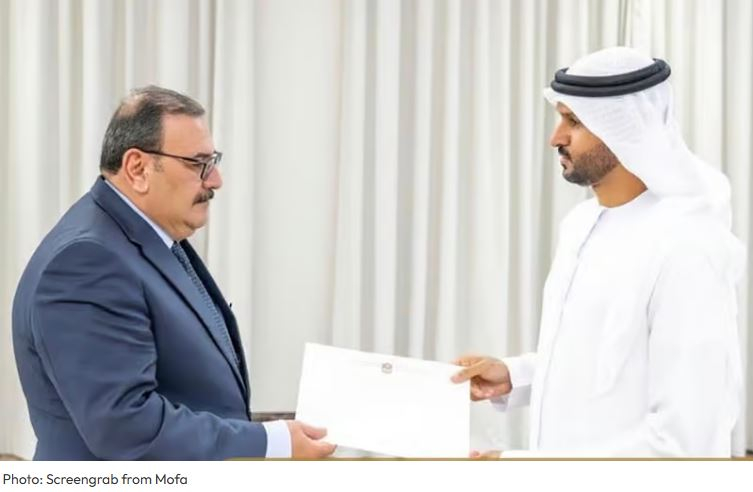
The United Arab Emirates has delivered a strongly worded protest letter to Iraq over attacks launched from Iraqi territory by Iran-aligned armed groups targeting facilities in Gulf Arab countries, warning that such actions could place relations between the two countries under serious strain.
The Emirati Ministry of Foreign Affairs announced that it summoned Omar al-Obaidi, the chargé d'affaires at the Iraqi embassy in Abu Dhabi, to formally convey its “strongest condemnation and denunciation” of the attacks. The ministry described the incidents as “heinous terrorist attacks launched from Iraqi territory” by factions and militias loyal to Iran.
According to the statement, the UAE expressed its “absolute rejection” of the continued strikes, which have taken place despite a two-week ceasefire between Iran, the United States, and Israel. Emirati officials said the attacks targeted vital facilities across Gulf Cooperation Council (GCC) countries, including Bahrain, Kuwait, Oman, Qatar, Saudi Arabia, and the UAE.
The ministry emphasized that these strikes represent “a flagrant violation of sovereignty and airspace” and constitute a breach of international law.
The diplomatic protest comes in the aftermath of a major regional conflict that began on February 28, when the United States and Israel launched a coordinated military campaign against Iran. The fighting ended with a two-week truce brokered by Pakistan last week.
According to the US Central Command (CENTCOM), American forces struck more than 13,000 targets across Iran during the conflict, while Israel reported hitting more than 10,000 additional targets.
Tehran responded with thousands of missile and drone strikes across the Middle East, targeting what it described as US military assets and interests, particularly in Gulf states, while also launching retaliatory attacks against Israel.
The conflict also involved forces aligned with the Iran-led “Axis of Resistance,” including armed groups in Iraq that carried out numerous attacks on alleged US targets inside Iraq and in the Kurdistan Region.
In its protest note, the UAE warned that continued attacks by Iran and its affiliated militias threaten regional stability and could place relations with Iraq “under highly sensitive strain,” potentially affecting cooperation and ties between Baghdad and GCC countries.
Abu Dhabi called on the Iraqi government to prevent hostile actions originating from its territory and directed at Gulf states, urging Baghdad to address the issue “immediately and decisively.”
The Emirati government also stressed the importance of Iraq’s role in promoting regional stability and preserving its sovereignty while acting as a responsible partner within the region.
During the six-week conflict, Iran launched at least 6,413 missiles and drones, with the majority reportedly targeting GCC countries, particularly the UAE, Kuwait, and Saudi Arabia. The strikes caused significant damage to energy infrastructure, international airports, and civilian areas.
Several of the attacks were claimed by Iraqi armed groups operating under the banner of the Islamic Resistance in Iraq (IRI), which said the strikes were aimed at US bases and interests across the region.