Kurdistan Region Governors Meet Iranian President to Strengthen Bilateral Ties
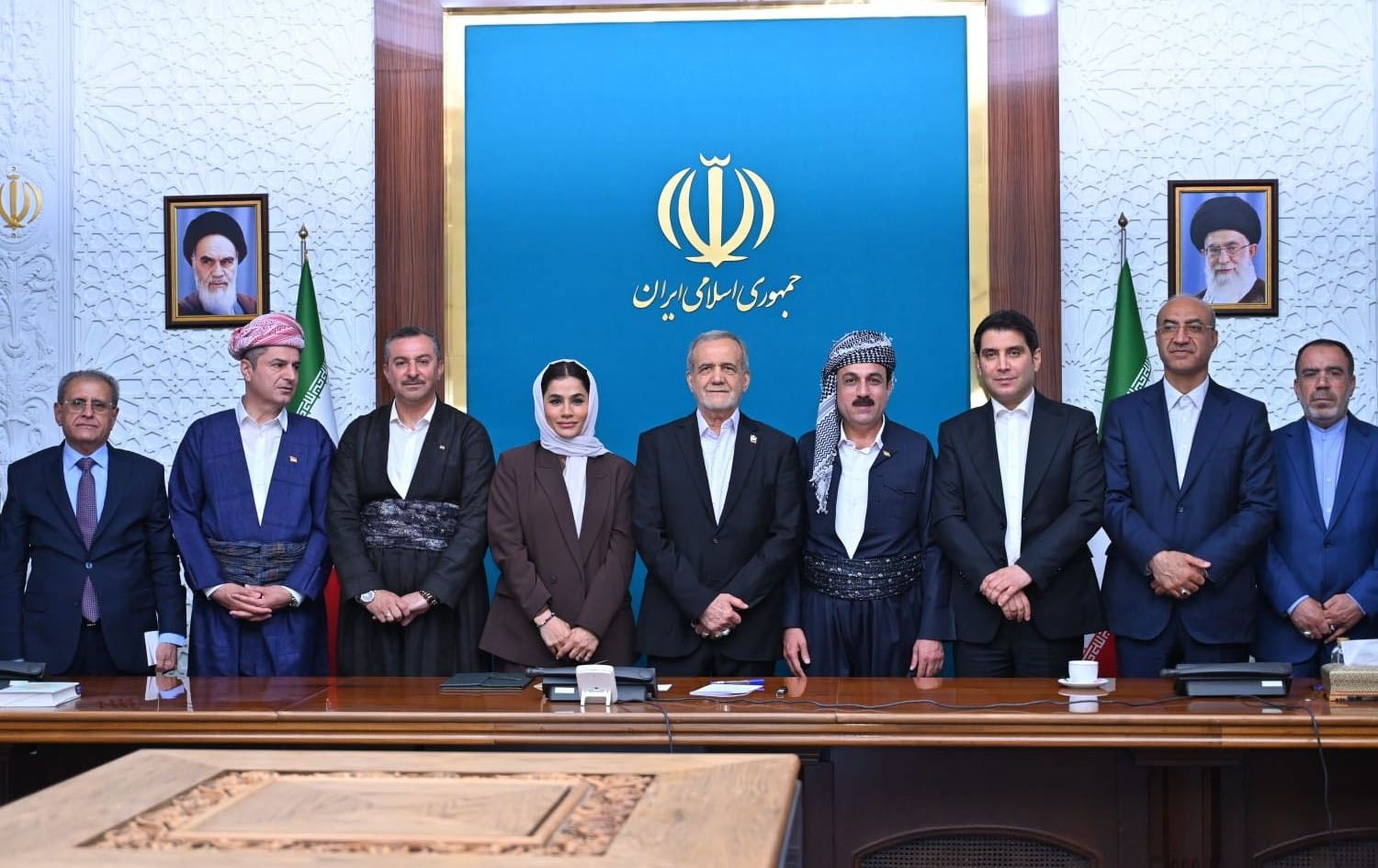
The governors of Erbil, Sulaimani, Duhok, and Halabja met with Iranian President Masoud Pezeshkian in Tehran on Thursday to discuss enhancing cooperation across various sectors, including trade, infrastructure, and regional stability.
In a statement posted on Facebook, Erbil Governor Omed Xoshnaw said President Pezeshkian expressed satisfaction with the current level of relations between Iran and the Kurdistan Region’s border provinces and reaffirmed Iran’s support for bilateral agreements.
"The president emphasized Iran's desire for coexistence, brotherhood, stability, and peace in the region and stressed the importance of expanding joint cooperation," Xoshnaw said, noting the Region’s commitment to maintaining strong historical and political ties with Tehran.
The delegation, which also included Sulaimani Governor Haval Abubakir, Duhok Governor Ali Tatar, and Halabja Governor Nuxsha Nasih, held separate meetings with officials from Iran’s Kurdistan, Kermanshah, and West Azerbaijan provinces during their visit to western Iran (Rojhelat).
President Pezeshkian highlighted the deep cultural and familial ties between the two sides, calling for sustainable development to strengthen relations. His office stated that he urged scholars from both regions to develop a comprehensive cooperation plan covering scientific, cultural, agricultural, industrial, communications, energy, and mineral sectors to ensure a peaceful future for coming generations.
The Iranian president also criticized the United States, accusing it of fueling regional conflicts by selling weapons and exploiting resources. "The U.S. extracts capital from Islamic countries and sells arms to sow discord among Muslims. Scholars and intellectuals must counter these conspiracies," he said.
Sulaimani Governor Abubakir raised challenges facing border areas, including drought and infrastructure deficits. He proposed extending Iran’s railway network to the Bashmakh crossing and granting special trade status to certain border gates to boost economic activity.
Halabja Governor Nasih addressed the issue of missing persons from the 1988 chemical attack by Saddam Hussein’s regime, urging Iranian assistance in locating children who were allegedly adopted by Iranian families.
Duhok Governor Tatar described the meeting as productive, with discussions focusing on regional development and future coordination.
The visit follows a summit in Sanandaj, Iran, where officials explored ways to enhance cross-border economic cooperation. Annual trade between the Kurdistan Region and Iran is estimated at $6 billion, facilitated through key border crossings like Haji Omran, Bashmakh, and Parviz Khan.
Both sides are working to deepen economic relations through high-level agreements, potential joint free zones, and increased Iranian business presence in the Kurdistan Region.
This marks the third such meeting between governors from both sides, signaling a continued push for stronger bilateral ties amid regional challenges.