Over 350 Displaced Persons Return Home from Erbil Camps
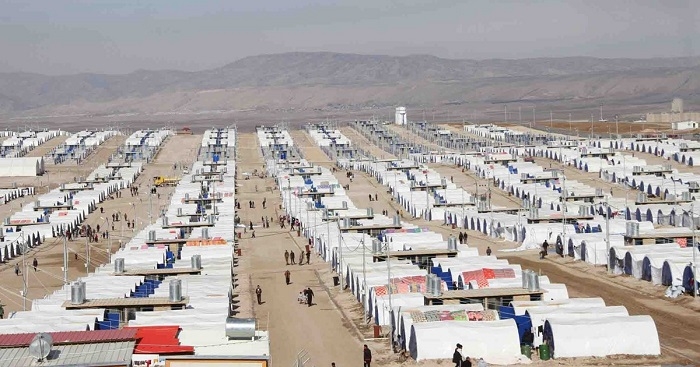
Over 350 internally displaced persons (IDPs) residing in the Bahrka camp in northern Erbil have returned to their homes in the Nineveh and Salahaddin provinces, according to the Iraqi Ministry of Migration. The ministry's spokesperson, Ali Abbas, confirmed on Friday that 67 displaced families, totaling 379 individuals, left the camp on Thursday to return to their areas of origin.
Despite the return of these families, approximately 20,000 families remain in IDP camps across the Kurdistan Region. The United Nations’ International Organization for Migration (IOM) had previously reported in April that there were still over 1 million IDPs in Iraq, with many residing in the Kurdistan Region, particularly in Duhok, Erbil, Nineveh, Kirkuk, and Sulaimani provinces. To date, nearly 5 million people have returned to their homes following the defeat of ISIS.
The Iraqi government had initially set July 30 as the deadline for the Kurdistan Region to close its camps, but this timeline has since been extended. The Kurdistan Regional Government (KRG) has refused to forcibly close the camps, leading to a legal dispute with Baghdad. However, after recent discussions involving a Kurdish delegation, UN representatives, and the Iraqi Ministry of Migration, Baghdad agreed to halt legal proceedings in light of KRG's cooperation in implementing a plan to close the camps and fully address the displacement issue.
Baghdad has offered a financial incentive of four million dinars (approximately $3,050) to families who voluntarily return to their homes. Despite this offer, many families remain hesitant to leave due to ongoing violence in their places of origin, insufficient reconstruction of destroyed homes, and the lack of basic services.
Human rights advocates have raised concerns about the push to close the camps, emphasizing that all returns must be voluntary, safe, and dignified. Currently, over 630,000 IDPs reside in the Kurdistan Region, with the majority living outside the 23 established camps across Duhok, Erbil, and Sulaimani provinces. IOM data from April to June 2024 indicates that nearly one-fifth of displaced persons did not return to their original locations and are now considered secondarily displaced.