French Cinema Icon Alain Delon Dies at 88
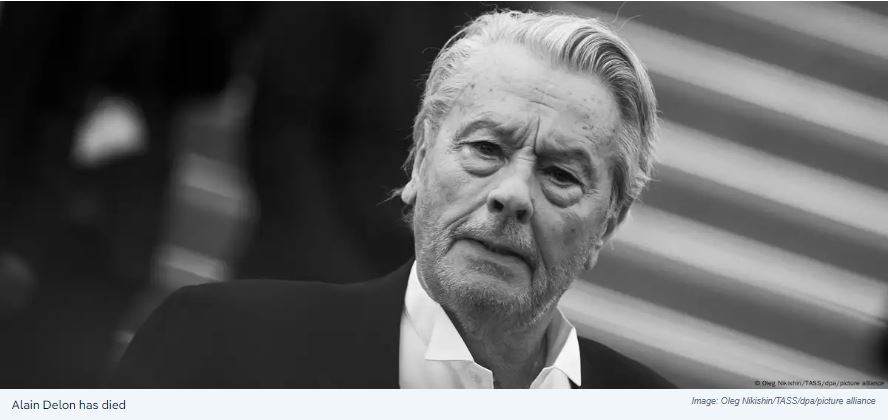
Alain Delon, one of the most celebrated actors in European cinema, passed away at the age of 88 after a prolonged period of ill health, French media reported on Sunday.
Delon, known for his striking looks and powerful screen presence, rose to stardom in the 1960s with major roles in films such as Luchino Visconti's Rocco and His Brothers (1960) and The Leopard (1963). His career spanned several decades, during which he became a symbol of French cinema, often portraying gangsters and anti-heroes in films like Le Samouraï (1967) and La Piscine (1969).
Born on November 8, 1935, just outside Paris, Delon's early life was marked by turmoil. After his parents' divorce, he was placed in foster care at the age of four. His youth was troubled, with frequent run-ins at boarding schools and a stint in the Marines, serving in Indochina during the 1950s. His film career began shortly after his return to France, where an American talent scout discovered him at the Cannes Film Festival.
Delon's later years were overshadowed by a stroke in 2019 and a public family feud over his care. His last major public appearance was in May 2019, when he received an honorary Palme d'Or at the Cannes Film Festival. Despite his controversies, including outspoken views on the death penalty and gay marriage, Delon remained a beloved figure in France. He was a close friend of Jean-Marie Le Pen, founder of the far-right National Front, yet also a vocal supporter of Ukraine in its struggle against the Russian invasion, for which he received Ukraine's top order of merit.
French President Emmanuel Macron paid tribute to Delon on Sunday, calling him a "French monument" and acknowledging his influence in cinema and beyond. "Alain Delon played legendary roles and made the world dream. Lending his unforgettable face to turn our lives upside down," Macron wrote on X, formerly Twitter. "Melancholy, popular, secretive, he was more than a star: He was a French monument."
Delon leaves behind a complex legacy, marked by his cinematic achievements and his often-controversial personal views. His death marks the end of an era for French and European cinema.