Kurdistan Parliament meets to vote on contested reform package
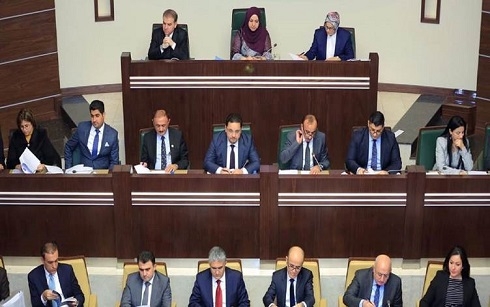
The bill, titled Reform of Pensions, Salaries, Allowances, Grants and other Benefits, underwent a second parliamentary reading on Sunday in the presence of Kurdistan Regional Government (KRG) ministers. Debate of the bill’s clauses continued well into the night, with a reading of just 4 of 19 articles completed.
Parliament initially passed the bill, which introduces salary reforms to the salaries and institutionalizes the pensions of public employees including Peshmerga forces, on February 27, 2018.
However, the bill was not ratified after widespread public protests broke out against parliamentarians, who were accused of using the bill to effectively set their own wages.
The majority of the Region’s revenues go towards paying the allowances and salaries of over a million civil sector staff and Peshmerga.
Through the new legislation, it is hoped the KRG can retrieve tens of millions of dollars by preventing people from illegally receiving more than one salary and eliminating “ghost employees”.
Key features of the bill include securing the “rights and entitlements of families of martyrs” and slashing the income of high-ranking officials in half, Hevidar Ahmed, a Kurdistan Democratic Party (KDP) MP and deputy of the parliament’s Finance Committee told Rudaw on Thursday.
The reform package also prevents any “special rank” retirement, providing a higher pension, unless individuals have been in the role for at least 15 years.
"You will no longer see anyone retiring out of nowhere as a general manager or a senior adviser without ever holding such posts,” Ahmed said.
Special ranks include retired ministers, deputy ministers, consultants, general directors, and some Peshmerga who were awarded the position in return for their service to the Kurdish struggle for freedom before the formation of the KRG.
The bill had originally set the minimum monthly pension for public employees at 300,000 Iraqi dinars (about $253), while allocating a 4 million dinar (about $3,375) monthly pension for Kurdish MPs.
To sway influence in elections, the Region’s establishment parties have built large, expensive patronage networks over recent years. These entrenched party interests have made passage of the bill through parliament difficult.
Omed Sabah, head of the Council of Ministers' office said once the bill is passed, they will need 60 days to implement it.
"We will need to set regulations and mechanisms for the implementation of the bill," Sabah said.
Rudaw