Kurdish landlord leases land to Arabs, stoking ethnic tensions in Kirkuk
Jameel Talabani, a Kurdish landowner and tribal leader, recently leased 180 dunams of land (1 dunam equals 2,500 square meters) and three villages in the Dubiz area to Arabs. The 20-year deal sees Talabani paid 500,000 Iraqi dinars ($419) per dunam annually and pulls the ground out from under the feet of Kurds who had been leasing the land for years.
Rudaw learned that when the Kurdish farmers tried to renew their contract, Jameel Talabani asked them for a whopping five million dinars ($4,192) per dunam of land per year.
The farmers are now considering their options, including the possibility of buying the land outright. They hope Kurdish political parties with influence in the area will intercede with the landlord on their behalf.
Qaradaray Bichuk and Sarbiry Kon, two villages with a total of 65 houses typically occupied only during the farming season, have now been vacated. The third village, Amsha, is home to another 45 Kurdish households, totaling more than 200 people, who are refusing to leave their homes.
Kirkuk is an ethnically diverse province, historically home to Arabs, Kurds, Turkmen, and other minorities. It is claimed by both Erbil and Baghdad and has a long history of forced demographic change.
In 1948, some Bedouin Arabs set up their tents near the villages. They were never granted official residency in Kirkuk, but during the Arabization process under the Baath regime, many Arab Bedouins were given land and housing in the area. They remained there until the fall of Saddam Hussein in 2003, when they left and exiled Kurds returned.
Kirkuk fell under the control of the Kurdish Regional Government in 2014, when Iraqi government forces fled from the Islamic State (ISIS) and the Kurdish Peshmerga forces stepped in to defend the city.
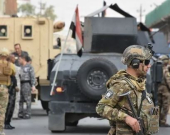
In October 2017, Iraqi forces retook control of Kirkuk and the disputed territories surrounding it when the Kurdish Peshmerga withdrew. The Iraqi government in Baghdad sacked the Kurdish governor and installed an Arab governor named Rakan al-Jabouri.
Kurds in the Dubiz area claim Jabouri has supported a re-Arabization process in Kirkuk province. In turn, Jabouri has denied the claim and accused the ousted Kurdish administration of conducting its own demographic change.
"They have brought Arabs, populated all this area with them. Do you think the Arabs will ever leave here?" Omer Hamadameen, an elderly resident of Amsha, told Rudaw.
In Amsha village, Hamadameen claimed he and other Kurdish villagers are being barred from the land. "They [the landowners] don't allow our herd to go out to pasture, nor allow us to farm the land. What do we do with our herd? Are we to sit at home? They tell us they will destroy our house on our head. Saddam Hussein didn't do that to us, but they will," he said.
The houses in the village belong to the sheikhs of the Kurdish Talabani tribe, according to Hazim Mohammed, a resident of Amsha. The current tribe leader, Jameel Talabani, has Ottoman-era documentation of ownership and has chosen to lease the land and houses to Arab families.
"The impact on us is that these people say they will farm everything, even the [fields] we are already working," said Mohammed. He claimed that Kurds are also being forced from their homes.
Speaking anonymously, a member of the landlord’s family said there have been daily troubles in the area between Kurds and Arabs since October 2017, and it was easier to lease the land to Arabs, thus avoiding the "headache" of having to intervene between sparring Kurds and Arabs.
Sheikh Nazim, chieftain of Amsha village, confirmed they were caught off guard by Jameel Talabani’s decision. "This is another type of Arabization, that these lands are given to non-Kurds,” he said.
Over the past two months, about 1,250 dunams of land have been given to Arabs who have relocated to Dubiz from other parts of Iraq. In nearby Sargaran, nearly 480,000 dunams of land are subject to ownership disputes.
Rudaw